
Dallas Fed warns tokenized deposits could raise US credit costs
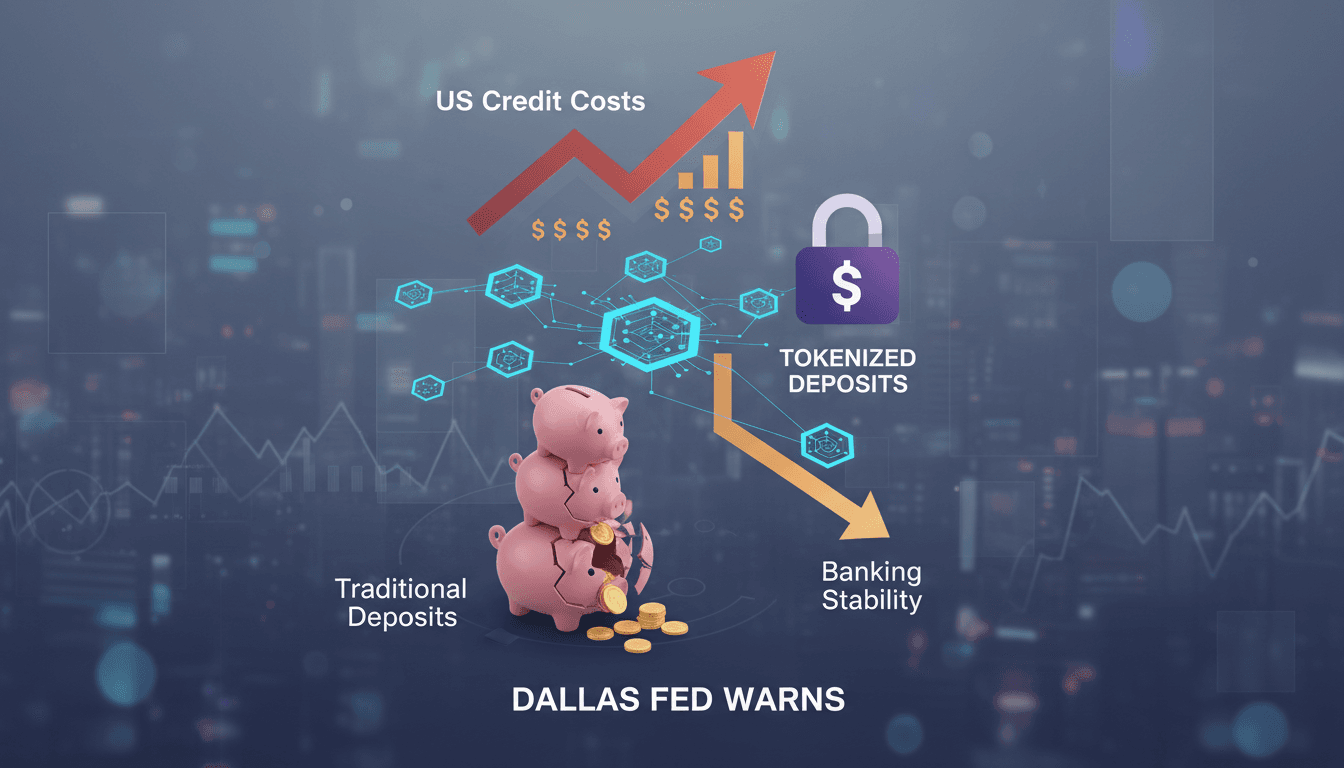
Here's what it means for you.
If you rely on credit, the rise of tokenized deposits could lead to higher borrowing costs.
Why it matters
The shift towards tokenized deposits may destabilize traditional banking practices, impacting credit availability and costs.
What happened (in 30 seconds)
- Dallas Fed economists warned that tokenized deposits could increase US credit costs due to reduced deposit stability.
- Research findings indicate that banks may need to hold more liquid assets, leading to higher borrowing costs for consumers and businesses.
- Banks are advancing blockchain networks for tokenized deposits, aiming for 24/7 settlement while keeping funds within the banking system.
The context you actually need
- Tokenized deposits are being explored as regulated alternatives to stablecoins, particularly after the 2025 GENIUS Act.
- The BankChain Alliance, formed by 39 state banking associations, is working alongside major banks to develop these systems.
- Recent advancements in cross-border tokenized transactions highlight the growing interest in blockchain technology among financial institutions.
What's really happening
On August 25, 2026, economists Rosie Levy and Srini Ramaswamy from the Dallas Fed published a pivotal analysis regarding the implications of tokenized deposits on the US banking system. Their research suggests that as banks adopt programmable, instant-settlement tokenized deposits, the stability of traditional deposits may be compromised. This instability could lead banks to increase their holdings of liquid assets or turn to more expensive wholesale funding sources. The result? Higher credit costs for households and businesses.
The analysis estimates that if deposits become 10% more sensitive to interest rates, US banks could see a reduction of approximately $700 billion in their capacity to manage long-term interest-rate exposure. This figure underscores the potential scale of the impact on lending practices and credit availability. As banks navigate this new landscape, they may prioritize liquidity over long-term investments, which could further strain credit markets.
The backdrop to this development is the ongoing exploration of blockchain technology by US banks. Following the enactment of the GENIUS Act in 2025, which aimed to regulate stablecoins, banks have been keen to create tokenized deposits that can operate within the existing financial framework. Initiatives like the BankChain Alliance and collaborations among major banks through The Clearing House are indicative of a broader shift towards integrating blockchain solutions into traditional banking.
As banks advance their tokenized deposit networks, they are also exploring cross-border transactions. For instance, Standard Chartered and HSBC have been working with Swift to facilitate these transactions, signaling a growing acceptance of blockchain technology in global finance. However, the Dallas Fed's warning highlights a critical tension: while tokenized deposits promise efficiency and innovation, they also pose risks to the stability of the banking system and the cost of credit.
Who feels it first (and how)
- Consumers: Higher borrowing costs could affect personal loans, mortgages, and credit cards.
- Small businesses: Increased credit costs may limit access to financing for growth and operations.
- Banks: Institutions may face pressure to adapt their funding strategies, impacting profitability.
- Investors: Those holding bank stocks may see volatility as the market reacts to changes in credit availability.
What to watch next
- Banking sector responses: Monitor how banks adjust their funding strategies in light of the Dallas Fed's findings.
- Legislative developments: Watch for any regulatory changes that may arise from the ongoing discussions about tokenized deposits.
- Market reactions: Keep an eye on credit markets and interest rates as banks implement new deposit strategies.
Tokenized deposits are being developed as alternatives to stablecoins.
Increased credit costs for consumers and businesses as banks adjust to new deposit dynamics.
The long-term impact on global financial stability and cross-border payments remains to be seen.
Frequently Asked Questions
- Why it matters?
- The shift towards tokenized deposits may destabilize traditional banking practices, impacting credit availability and costs.
- What happened (in 30 seconds)?
- Dallas Fed economists warned that tokenized deposits could increase US credit costs due to reduced deposit stability. Research findings indicate that banks may need to hold more liquid assets, leading to higher borrowing costs for consumers and businesses. Banks are advancing blockchain networks for tokenized deposits, aiming for 24/7 settlement while keeping funds within the banking system.
- What's really happening?
- On August 25, 2026, economists Rosie Levy and Srini Ramaswamy from the Dallas Fed published a pivotal analysis regarding the implications of tokenized deposits on the US banking system. Their research suggests that as banks adopt programmable, instant-settlement tokenized deposits, the stability of traditional deposits may be compromised. This instability could lead banks to increase their holdings of liquid assets or turn to more expensive wholesale funding sources. The result? Higher credit co
- Who feels it first (and how)?
- Consumers: Higher borrowing costs could affect personal loans, mortgages, and credit cards. Small businesses: Increased credit costs may limit access to financing for growth and operations. Banks: Institutions may face pressure to adapt their funding strategies, impacting profitability. Investors: Those holding bank stocks may see volatility as the market reacts to changes in credit availability.
- What to watch next?
- Banking sector responses: Monitor how banks adjust their funding strategies in light of the Dallas Fed's findings. Legislative developments: Watch for any regulatory changes that may arise from the ongoing discussions about tokenized deposits. Market reactions: Keep an eye on credit markets and interest rates as banks implement new deposit strategies.
Covers blockchain, cryptocurrency news, project analysis, and market insights.
"Cointelegraph is a leading crypto-focused media outlet known for timely news, analysis, and educational content related to blockchain and digital assets."
— A47 Editor
Tokenized deposits could raise US credit costs: Dallas Fed economists
Economists from the Dallas Federal Reserve have raised concerns that the emergence of tokenized deposits could destabilize bank funding, potentially increasing credit costs for borrowers. They suggest that these programmable deposits may lead to rapi...
Real-time updates, analysis, and reports on the blockchain and cryptocurrency sectors.
"Crypto News delivers real-time updates, analysis, and reports on the blockchain and cryptocurrency sectors."
— A47 Editor
Tokenized deposits could raise borrowing costs, Fed economists warn
Economists from the Dallas Federal Reserve have warned that the introduction of tokenized deposits could lead to a significant reduction in banks' lending capacity, estimating a potential decrease of $700 billion if depositors become more sensitive t...
Covers blockchain, cryptocurrency news, project analysis, and market insights.
"CoinDesk is a well-established cryptocurrency and blockchain news provider, offering comprehensive insights, market data, and industry research."
— A47 Editor
Dallas Fed warns tokenized deposits could strip $700 billion from U.S. banks' lending capacity
The Dallas Federal Reserve has issued a warning that the rise of tokenized deposits could potentially reduce U.S. banks' lending capacity by $700 billion, as these programmable deposits may facilitate rapid and automated bank switching for better yie...