
US Treasury Proposes Sanctions on Banque Misr UAE Branches Over Iran-Linked Transactions
Here's what it means for you.
If you rely on Banque Misr's UAE branches for USD transactions, expect potential delays and increased compliance requirements.
Why it matters
This regulatory action could disrupt financial flows between the UAE and the US, impacting businesses and individuals relying on these banking services.
What happened (in 30 seconds)
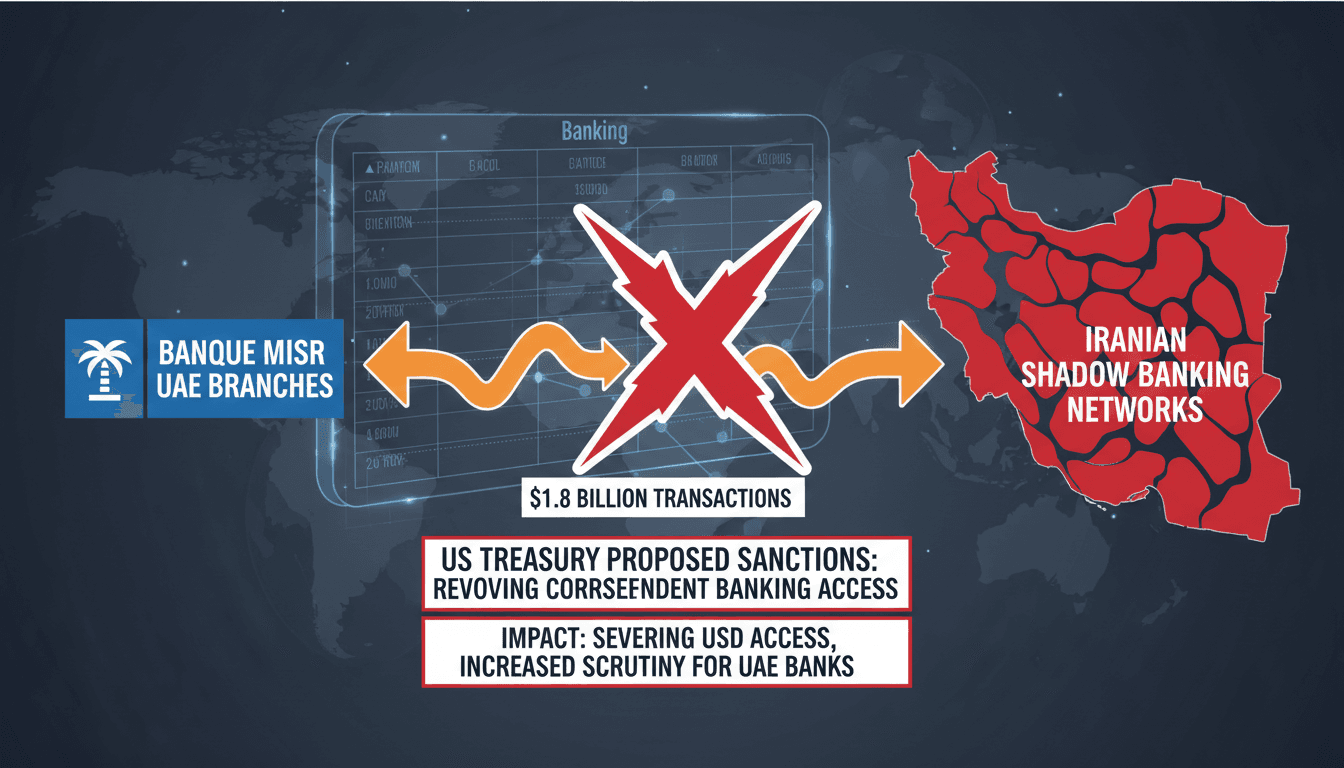
- On August 28, 2026, the US Treasury proposed to revoke correspondent banking access for Banque Misr's UAE branches due to alleged Iran-linked transactions.
- Approximately $1.8 billion in transactions were flagged as potentially supporting Iranian shadow banking networks from January 2024 to June 2026.
- Banque Misr and the Central Bank of Egypt clarified that the proposed restrictions apply only to USD services in the UAE, not affecting operations in Egypt or other branches.
The context you actually need
- Intensified US economic pressure on Iran has led to stricter sanctions, with the Treasury's Operation Economic Outcast aiming to cut off Iran's access to the US dollar.
- Banque Misr's UAE branches were identified as conduits for transactions that may support sanctioned Iranian entities, raising concerns about money laundering.
- The proposed rule is currently under a 30-day public comment period and has not yet been finalized, leaving room for potential adjustments.
What's really happening
The US Treasury's proposed restrictions on Banque Misr's UAE branches stem from a broader strategy to tighten economic sanctions against Iran, particularly in light of ongoing geopolitical tensions. The Treasury's Financial Crimes Enforcement Network (FinCEN) has identified Banque Misr as a potential facilitator of transactions linked to Iranian shadow banking networks, which are designed to circumvent existing sanctions.
The $1.8 billion in transactions processed by Banque Misr's UAE branches for 103 companies raises significant concerns about compliance with US laws, particularly the Patriot Act. This proposed rule aims to prohibit US financial institutions from maintaining correspondent accounts for the bank, effectively limiting its ability to conduct USD transactions. Such a move would require any future USD transfers to undergo enhanced scrutiny by the Office of Foreign Assets Control (OFAC), further complicating the bank's operations.
Banque Misr and the Central Bank of Egypt have responded swiftly, emphasizing that the proposed restrictions are limited in scope and do not affect their operations in Egypt or other foreign branches. They have assured clients that non-USD transactions and domestic services will continue unaffected. This response highlights the bank's commitment to regulatory compliance and its ongoing engagement with US authorities.
The implications of these proposed restrictions are significant for the banking sector in the UAE, particularly for businesses and individuals who rely on Banque Misr for international transactions. While the immediate impact appears contained, the potential for increased compliance requirements and delays in USD transactions could create friction in financial operations.
Moreover, the broader context of US sanctions against Iran suggests that this is part of a larger trend of tightening financial regulations aimed at isolating Iran economically. As the situation evolves, the banking sector will need to navigate these complexities while maintaining compliance with both US and local regulations.
Who feels it first (and how)
- Businesses in the UAE using Banque Misr for USD transactions may face delays and increased compliance checks.
- Individuals relying on remittances through Banque Misr could experience disruptions in their financial transactions.
- Financial institutions in the UAE may need to adjust their compliance frameworks to accommodate the proposed changes.
What to watch next
- Public comments on the proposed rule: The feedback received during the 30-day comment period could influence the final decision and implementation timeline.
- Reactions from other banks: Watch how other financial institutions in the UAE respond to these developments, particularly regarding compliance and operational adjustments.
- Geopolitical developments: Ongoing tensions between the US and Iran may lead to further sanctions or adjustments in financial regulations, impacting the broader banking landscape.
The US Treasury has proposed restrictions on Banque Misr's UAE branches due to alleged Iran-linked transactions.
Increased scrutiny and compliance requirements for USD transactions involving Banque Misr in the UAE.
The final outcome of the proposed rule and its long-term implications for Banque Misr and its clients.
Frequently Asked Questions
- Why it matters?
- This regulatory action could disrupt financial flows between the UAE and the US, impacting businesses and individuals relying on these banking services.
- What happened (in 30 seconds)?
- On August 28, 2026, the US Treasury proposed to revoke correspondent banking access for Banque Misr's UAE branches due to alleged Iran-linked transactions. Approximately $1.8 billion in transactions were flagged as potentially supporting Iranian shadow banking networks from January 2024 to June 2026. Banque Misr and the Central Bank of Egypt clarified that the proposed restrictions apply only to USD services in the UAE, not affecting operations in Egypt or other branches.
- What's really happening?
- The US Treasury's proposed restrictions on Banque Misr's UAE branches stem from a broader strategy to tighten economic sanctions against Iran, particularly in light of ongoing geopolitical tensions. The Treasury's Financial Crimes Enforcement Network (FinCEN) has identified Banque Misr as a potential facilitator of transactions linked to Iranian shadow banking networks, which are designed to circumvent existing sanctions. The $1.8 billion in transactions processed by Banque Misr's UAE branches
- Who feels it first (and how)?
- Businesses in the UAE using Banque Misr for USD transactions may face delays and increased compliance checks. Individuals relying on remittances through Banque Misr could experience disruptions in their financial transactions. Financial institutions in the UAE may need to adjust their compliance frameworks to accommodate the proposed changes.
- What to watch next?
- Public comments on the proposed rule: The feedback received during the 30-day comment period could influence the final decision and implementation timeline. Reactions from other banks: Watch how other financial institutions in the UAE respond to these developments, particularly regarding compliance and operational adjustments. Geopolitical developments: Ongoing tensions between the US and Iran may lead to further sanctions or adjustments in financial regulations, impacting the broader banking la
Pan-Arab news coverage spanning politics, business, sports, and regional affairs.
"Asharq Al-Awsat reflects a broad Arab editorial perspective with strong attention to regional geopolitics."
— A47 Editor
«بنك مصر» بالإمارات في مرمى الإجراءات الأميركية
A source from the Egyptian banking sector has downplayed the impact of U.S. actions against the Egypt-based branch of Bank Misr in the UAE on the overall Egyptian banking sector and economy.
Arabic-language coverage of international news and geopolitics.
"RT Arabic is a Russian state-funded outlet often criticized for promoting Kremlin-aligned narratives."
— A47 Editor
لماذا استهدفت واشنطن بنك مصر في الإمارات؟.. قصة الـ1.8 مليار دولار
The U.S. Department of the Treasury has announced measures targeting the branches of Bank Misr in the UAE, citing their involvement in facilitating funds linked to Iranian banking networks. This action does not extend to the bank's branch in Egypt or...
Arabic-language coverage of international news and geopolitics.
"RT Arabic is a Russian state-funded outlet often criticized for promoting Kremlin-aligned narratives."
— A47 Editor
بنك مصر يعتزم التواصل مع الخزانة الأمريكية بشأن فرعه في الإمارات
Bank Misr announced its intention to communicate with the U.S. Treasury for further information and cooperation regarding its branch in the UAE, aiming to take necessary actions and provide a response to relevant authorities within the specified time...