
Yen Surges Ahead of Bank of Japan Rate Decision Amid Carry Trade Unwind
Here's what it means for you.
If you’re involved in global finance, the yen's recent surge could impact your investment strategies and currency exposure.
Why it matters
The yen's volatility signals potential shifts in global interest rates, affecting investment flows and currency valuations worldwide.
What happened (in 30 seconds)
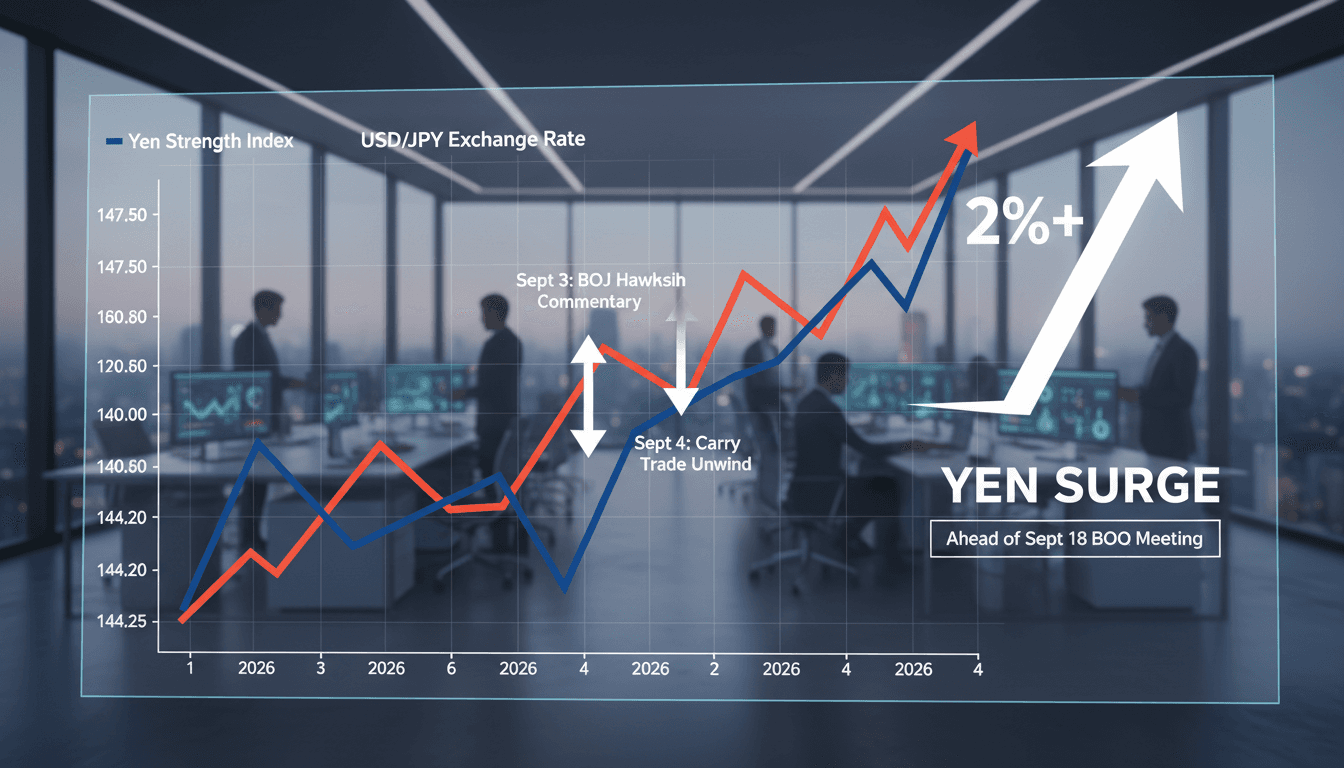
- Yen surged: On September 3-4, 2026, the Japanese yen rose over 2% against the U.S. dollar, reaching a one-month high.
- Traders reacted: The surge was driven by traders unwinding yen-funded carry trades ahead of the Bank of Japan's policy meeting on September 18.
- Hawkish signals: Comments from BOJ officials indicated potential for rate hikes, prompting market adjustments.
The context you actually need
- Carry trade dynamics: The yen carry trade involves borrowing in yen at low rates to invest in higher-yielding assets, which became popular as the BOJ began normalizing rates in 2024.
- Record short positions: By mid-2026, record short positions in the yen indicated a strong market bet against the currency, driven by persistent interest rate differentials.
- Inflation pressures: Recent hawkish rhetoric from BOJ officials has heightened expectations for accelerated tightening, influencing trader behavior.
What's really happening
The recent surge in the yen can be traced back to a combination of market sentiment and strategic positioning ahead of the Bank of Japan's (BOJ) upcoming policy meeting. Traders have been unwinding yen-funded carry trades, which involve borrowing in yen to invest in higher-yielding foreign assets. This strategy gained traction after the BOJ began normalizing its monetary policy from negative rates in 2024, leading to record short positions against the yen by mid-2026.
The catalyst for the recent unwind was the hawkish commentary from BOJ Governor Kazuo Ueda and board member Hajime Takata on September 2-3, 2026. Their remarks highlighted upside risks to inflation and the possibility of nimble or outsized rate hikes, which prompted traders to reassess their positions. As a result, the yen advanced over 2% on September 3, holding those gains into the following day. This movement reflects a reduced appeal for carry trades as Japanese yields began to rise, narrowing the interest rate differential between Japan and the U.S.
The broader context includes ongoing global foreign exchange volatility, where traders are increasingly sensitive to shifts in monetary policy. The market is now pricing in a 25% chance of back-to-back quarter-point hikes in September and October, indicating a significant shift in expectations. The rise in Japanese government bond yields, particularly following a successful 30-year auction, further underscores the changing landscape.
While the yen's surge has not immediately impacted broader risk assets, traders remain vigilant for potential interventions from the Japanese Ministry of Finance. The lack of confirmed intervention has left the market in a state of alert, as participants weigh the implications of the BOJ's decisions against the backdrop of U.S. economic data.
Who feels it first (and how)
- Global hedge funds: These traders are directly impacted by currency fluctuations and may adjust their strategies based on yen movements.
- Japanese exporters: Companies that rely on exports may face challenges if the yen continues to strengthen, affecting their competitiveness abroad.
- Investors in Japanese bonds: Rising yields could attract more investment, impacting bond market dynamics and investor returns.
What to watch next
- BOJ policy meeting on September 18: This will provide clarity on future interest rate adjustments and could further influence the yen's trajectory.
- U.S. economic data releases: Key indicators from the U.S. could affect global interest rate expectations and, consequently, currency markets.
- Market reactions to inflation trends: Ongoing inflation data will be critical in shaping expectations for both the BOJ and the Federal Reserve.
The yen surged over 2% against the dollar on September 3-4, 2026.
Traders will continue to adjust positions based on BOJ signals and U.S. economic data.
The extent of potential interventions by the Japanese Ministry of Finance remains uncertain.
Frequently Asked Questions
- Why it matters?
- The yen's volatility signals potential shifts in global interest rates, affecting investment flows and currency valuations worldwide.
- What happened (in 30 seconds)?
- Yen surged: On September 3-4, 2026, the Japanese yen rose over 2% against the U.S. dollar, reaching a one-month high. Traders reacted: The surge was driven by traders unwinding yen-funded carry trades ahead of the Bank of Japan's policy meeting on September 18. Hawkish signals: Comments from BOJ officials indicated potential for rate hikes, prompting market adjustments.
- What's really happening?
- The recent surge in the yen can be traced back to a combination of market sentiment and strategic positioning ahead of the Bank of Japan's (BOJ) upcoming policy meeting. Traders have been unwinding yen-funded carry trades, which involve borrowing in yen to invest in higher-yielding foreign assets. This strategy gained traction after the BOJ began normalizing its monetary policy from negative rates in 2024, leading to record short positions against the yen by mid-2026. The catalyst for the recen
- Who feels it first (and how)?
- Global hedge funds: These traders are directly impacted by currency fluctuations and may adjust their strategies based on yen movements. Japanese exporters: Companies that rely on exports may face challenges if the yen continues to strengthen, affecting their competitiveness abroad. Investors in Japanese bonds: Rising yields could attract more investment, impacting bond market dynamics and investor returns.
- What to watch next?
- BOJ policy meeting on September 18: This will provide clarity on future interest rate adjustments and could further influence the yen's trajectory. U.S. economic data releases: Key indicators from the U.S. could affect global interest rate expectations and, consequently, currency markets. Market reactions to inflation trends: Ongoing inflation data will be critical in shaping expectations for both the BOJ and the Federal Reserve.
Global markets, investing, and macroeconomics from a premier financial newsroom.
"Bloomberg is respected for in-depth financial reporting and data-driven analysis."
— A47 Editor
Carry Trade Exodus Fuels Yen Surge Ahead of BOJ Rate Decision
A significant surge in the Japanese yen against the dollar has been observed, attributed to a rush to unwind yen-funded carry trades as traders anticipate further interest rate hikes from the Bank of Japan (BOJ). This movement has propelled the yen t...
Currency market headlines, FX rates, central-bank chatter, and macro drivers moving major pairs.
"Investing.com’s forex stream is useful for fast updates across USD, EUR, JPY, GBP and emerging-market FX."
— A47 Editor
Yen soars to one-month high against dollar amid intervention, rate hike chatter
The Japanese yen has surged to a one-month high against the US dollar, driven by recent government interventions and speculation surrounding potential interest rate hikes by the Federal Reserve. This rise follows a period of significant depreciation,...
UK and international business news, economics, and corporate coverage.
"The Guardian’s business section covers finance and markets with a progressive editorial tone."
— A47 Editor
Yen soars as Bank of Japan tipped to raise interest rates
The Japanese yen has surged over 2% against the dollar, reaching its highest level in a month at 155.57, amid speculation that the Bank of Japan is poised to raise interest rates. This increase follows a 0.9% rise the previous day, indicating a signi...
International coverage from The Guardian's global desks.
"The Guardian is known for its progressive editorial stance and in-depth analysis."
— A47 Editor
Yen soars as Bank of Japan tipped to raise interest rates
The Japanese yen has surged over 2% against the dollar, reaching its highest level in a month at 155.57, amid speculation that the Bank of Japan is poised to raise interest rates. This increase follows a 0.9% rise the previous day, indicating a signi...