
US Sanctions and Naval Blockade Intensify Economic Pressure on Iran
Here's what it means for you.
If you rely on global oil markets, the tightening of US sanctions on Iran could lead to increased prices and supply chain disruptions.
Why it matters
The ongoing economic pressure on Iran is reshaping global oil supply dynamics and could impact energy prices worldwide.
What happened (in 30 seconds)
- US sanctions intensified: In September 2026, the US escalated sanctions and a naval blockade against Iran, significantly restricting its oil exports.
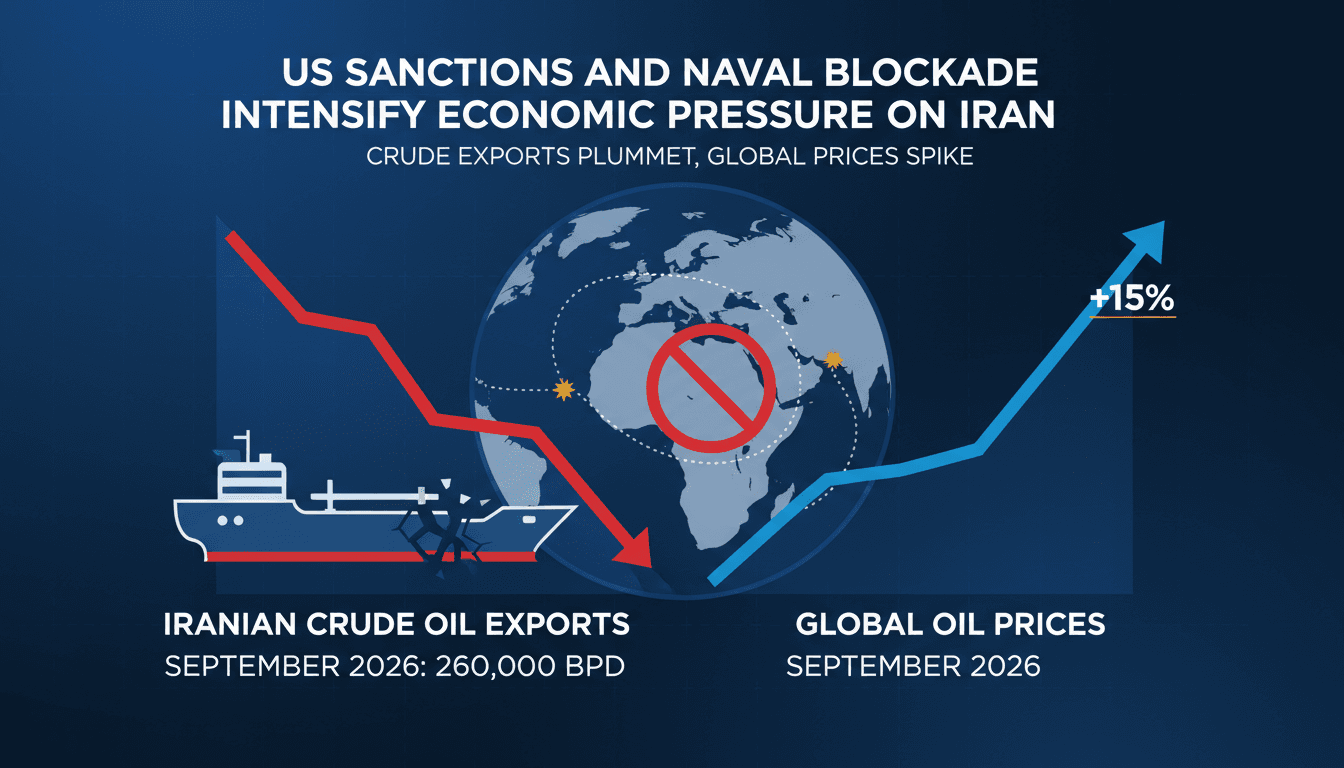
- Crude exports plummeted: Iranian crude oil exports fell to approximately 260,000 barrels per day, down from 1.7 million a year earlier.
- Economic contraction: The Iranian rial hit record lows, and gasoline supplies dwindled, leading to a 25-35% contraction in total trade.
The context you actually need
- Historical sanctions: Previous sanctions since 2018 had been partially evaded, but the latest measures target secondary sanctions across various sectors, including digital assets and shipping.
- Military backdrop: The sanctions follow a six-month conflict initiated by US-Israel military actions against Iran, marking a shift from military to economic warfare.
- Regional implications: The UAE has halted trade with Iranian entities, disrupting a key commercial hub and affecting supply chains in the Gulf region.
What's really happening
The intensified US sanctions and naval blockade against Iran represent a strategic shift in Washington's approach to exerting pressure on Tehran. Following the onset of military action in February 2026, the US Treasury Department launched Operation Economic Outcast, targeting a wide array of sectors to cripple Iran's economy. This operation has expanded secondary sanctions, making it increasingly difficult for Iranian entities to engage in international trade without facing repercussions.
As a result, Iranian crude oil exports have plummeted to approximately 260,000 barrels per day in September 2026, a staggering decline from 1.7 million barrels per day just a year prior. This sharp drop is attributed to the withdrawal of intermediaries from the market, who are now demanding higher fees or completely avoiding dealings with Iranian counterparts due to the heightened risks of sanctions. The Iranian rial has depreciated beyond 2 million per USD, reflecting the severe economic strain on the country.
The blockade has also led to critical shortages in gasoline supplies, despite some domestic production. Senior Iranian officials have acknowledged the economic squeeze, indicating that while stored oil reserves remain outside the blockade zone, the immediate impact on trade and currency stability is profound. The Iranian government is now under pressure to implement economic management measures to address inflation and livelihood challenges, as articulated by President Masoud Pezeshkian.
Moreover, the regional dynamics have shifted, with the UAE enforcing compliance with US sanctions, further isolating Iran economically. This has disrupted longstanding trade routes and financial networks that have historically facilitated commerce in the Gulf region. As a result, localized supply chain frictions are emerging, leading to elevated costs for imported commodities and contributing to broader market volatility.
The implications of these developments extend beyond Iran, as global oil benchmarks are experiencing upward pressure due to reduced supply. The interconnectedness of global energy markets means that any significant disruption in Iranian oil exports can ripple through to consumers and businesses worldwide, potentially leading to higher energy prices and economic uncertainty.
Who feels it first (and how)
- Oil traders: Increased volatility and potential price hikes in global oil markets.
- Consumers: Higher gasoline prices and energy costs as supply tightens.
- Businesses in the Gulf: Disruptions in trade and elevated costs for imported goods.
- Iranian citizens: Direct impact on living standards due to inflation and shortages.
What to watch next
- Oil price fluctuations: Monitor global oil prices for signs of volatility as Iranian supply diminishes.
- Iran's economic measures: Watch for potential policy changes from the Iranian government in response to economic pressures.
- Regional trade dynamics: Observe how Gulf states adjust their trade relationships and compliance with US sanctions.
Iranian crude oil exports have significantly decreased.
Continued economic contraction in Iran and rising oil prices globally.
The potential for negotiation breakthroughs or regime change in Iran.
Frequently Asked Questions
- Why it matters?
- The ongoing economic pressure on Iran is reshaping global oil supply dynamics and could impact energy prices worldwide.
- What happened (in 30 seconds)?
- US sanctions intensified: In September 2026, the US escalated sanctions and a naval blockade against Iran, significantly restricting its oil exports. Crude exports plummeted: Iranian crude oil exports fell to approximately 260,000 barrels per day, down from 1.7 million a year earlier. Economic contraction: The Iranian rial hit record lows, and gasoline supplies dwindled, leading to a 25-35% contraction in total trade.
- What's really happening?
- The intensified US sanctions and naval blockade against Iran represent a strategic shift in Washington's approach to exerting pressure on Tehran. Following the onset of military action in February 2026, the US Treasury Department launched Operation Economic Outcast, targeting a wide array of sectors to cripple Iran's economy. This operation has expanded secondary sanctions, making it increasingly difficult for Iranian entities to engage in international trade without facing repercussions. As a
- Who feels it first (and how)?
- Oil traders: Increased volatility and potential price hikes in global oil markets. Consumers: Higher gasoline prices and energy costs as supply tightens. Businesses in the Gulf: Disruptions in trade and elevated costs for imported goods. Iranian citizens: Direct impact on living standards due to inflation and shortages.
- What to watch next?
- Oil price fluctuations: Monitor global oil prices for signs of volatility as Iranian supply diminishes. Iran's economic measures: Watch for potential policy changes from the Iranian government in response to economic pressures. Regional trade dynamics: Observe how Gulf states adjust their trade relationships and compliance with US sanctions.
Pan-Arab political news and analysis.
"Al-Quds Al-Arabi is a London-based Arabic newspaper known for political coverage."
— A47 Editor
بدء ظهور أثر الضغوط الأمريكية على إيران مع تشديد العقوبات والحصار
Three high-ranking Iranian sources have reported that the U.S. campaign to strangle the Iranian economy through oil export restrictions and sanctions evasion has intensified, putting significant pressure on Tehran. In recent weeks, Washington has esc...
Regional and international reporting focused on Middle Eastern politics, diplomacy, and economics.
"Asharq Al-Awsat is a Saudi-owned international newspaper reflecting mainstream Gulf political perspectives."
— A47 Editor
US Pressure on Iran Starting to Tell, as Sanctions and Blockade Bite
The United States has intensified its sanctions and blockade against Iran, leading to significant economic strain on the Iranian economy, with reports indicating a nearly 35% decline in trade activity. This pressure is seen as a tactic to compel Iran...
Regional coverage and analysis focused on politics, diplomacy, and business across the Middle East.
"Al-Monitor is known for analytical reporting on Middle East politics and policy developments."
— A47 Editor
US pressure on Iran starting to tell, as sanctions and blockade bite
The United States has intensified its economic pressure on Iran through sanctions and a blockade aimed at crippling its oil exports, leading to significant challenges for the Iranian economy, as reported by senior Iranian sources.