
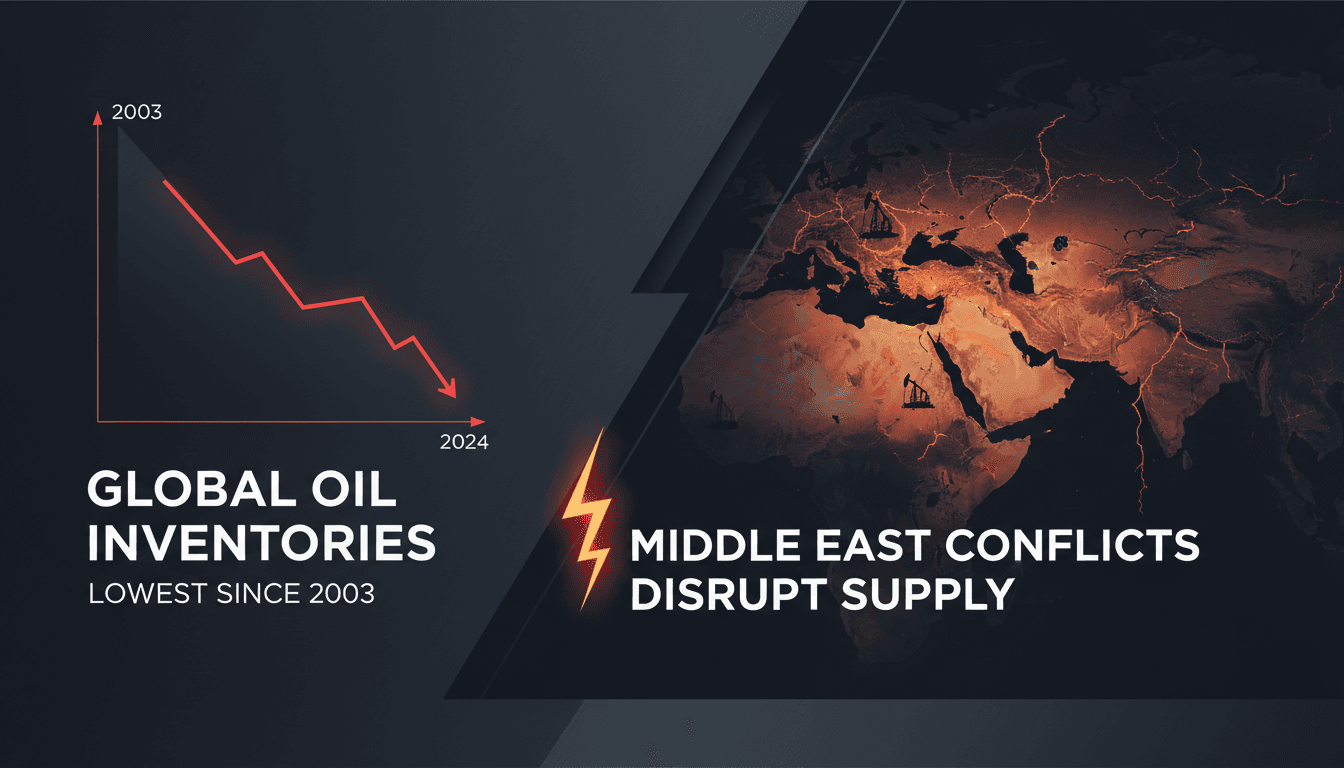
Global oil inventories hit lowest levels since 2003 amid Middle East conflicts
Here's what it means for you.
The sharp decline in global oil inventories signals potential instability in energy markets, which could have widespread implications for economies dependent on consistent oil supplies. As petroleum prices surge, businesses and consumers alike may face increased costs, affecting everything from transportation to manufacturing. Policymakers will need to monitor these developments closely to mitigate economic fallout.
What happened
The U.S. Energy Information Administration (EIA) has reported a significant drop in global oil inventories, reaching levels not seen since 2003. This decline is primarily attributed to ongoing geopolitical tensions in the Middle East, which have disrupted supply chains and contributed to rising petroleum prices. The situation has raised alarms about the stability of future oil supplies, prompting concerns among market analysts and stakeholders.
As inventories dwindle, the market is reacting with a notable spike in petroleum prices. The last time global oil inventories were this low was two decades ago, underscoring the severity of the current situation. The EIA's warnings about the state of oil stockpiles highlight the urgency of addressing these supply challenges.
The Context
The geopolitical climate, particularly conflicts in the Middle East, plays a crucial role in the current state of global oil inventories. These tensions have not only disrupted supply chains but have also created an environment of uncertainty that affects pricing and availability. Stakeholders, including governments and energy companies, are closely monitoring the situation as it unfolds.
The implications of low oil inventories extend beyond immediate price increases; they could lead to long-term volatility in the energy market. Economies that rely heavily on stable energy supplies may find themselves vulnerable to fluctuations, prompting a need for strategic planning and policy adjustments. The timing of these developments is critical, as they coincide with ongoing global economic recovery efforts.
Takeaway
As geopolitical tensions persist, the oil market is likely to experience further volatility, which could have significant implications for global economies. Stakeholders should keep a close eye on developments in the Middle East, as any escalation could exacerbate supply issues. Additionally, fluctuations in petroleum prices will be a key indicator to watch in the coming months.
Monitoring these trends will be essential for businesses and policymakers alike, as they navigate the challenges posed by dwindling oil inventories. The current situation serves as a reminder of the interconnectedness of global energy markets and the potential for rapid changes in supply dynamics.
International coverage of politics, security, and social issues.
"Global News is a mainstream Canadian outlet with a centrist editorial stance, focusing on factual reporting."
— A47 Editor
Global oil inventories headed to lowest level in decades, U.S. EIA warns
The U.S. Energy Information Administration (EIA) has reported that global oil inventories are declining to their lowest levels since 2003, primarily due to ongoing conflicts in the Middle East, which have led to significant disruptions in oil supply ...
Oil, metals, and agriculture: supply/demand headlines, OPEC chatter, inventories, and price action.
"Solid tape for energy and metals traders tracking macro and micro catalysts."
— A47 Editor
Oil inventories headed toward multi-decade lows, US EIA warns
The US Energy Information Administration (EIA) has issued a warning that oil inventories are on track to reach multi-decade lows. This development highlights a significant shift in the oil market, indicating potential supply constraints in the near f...
Oil, metals, and agriculture: supply/demand headlines, OPEC chatter, inventories, and price action.
"Solid tape for energy and metals traders tracking macro and micro catalysts."
— A47 Editor
Global oil inventories head toward lowest level since 2003, EIA says
The Energy Information Administration (EIA) reported that global oil inventories are heading toward their lowest levels since 2003, indicating a significant tightening in the oil market. This development is attributed to a series of declines in U.S. ...