
France Champagne Production Expected to Halve by 2026 Due to Climate Crisis
Why it matters
The drastic reduction in Champagne production signals broader agricultural vulnerabilities linked to climate change, impacting global luxury markets.
What happened (in 30 seconds)
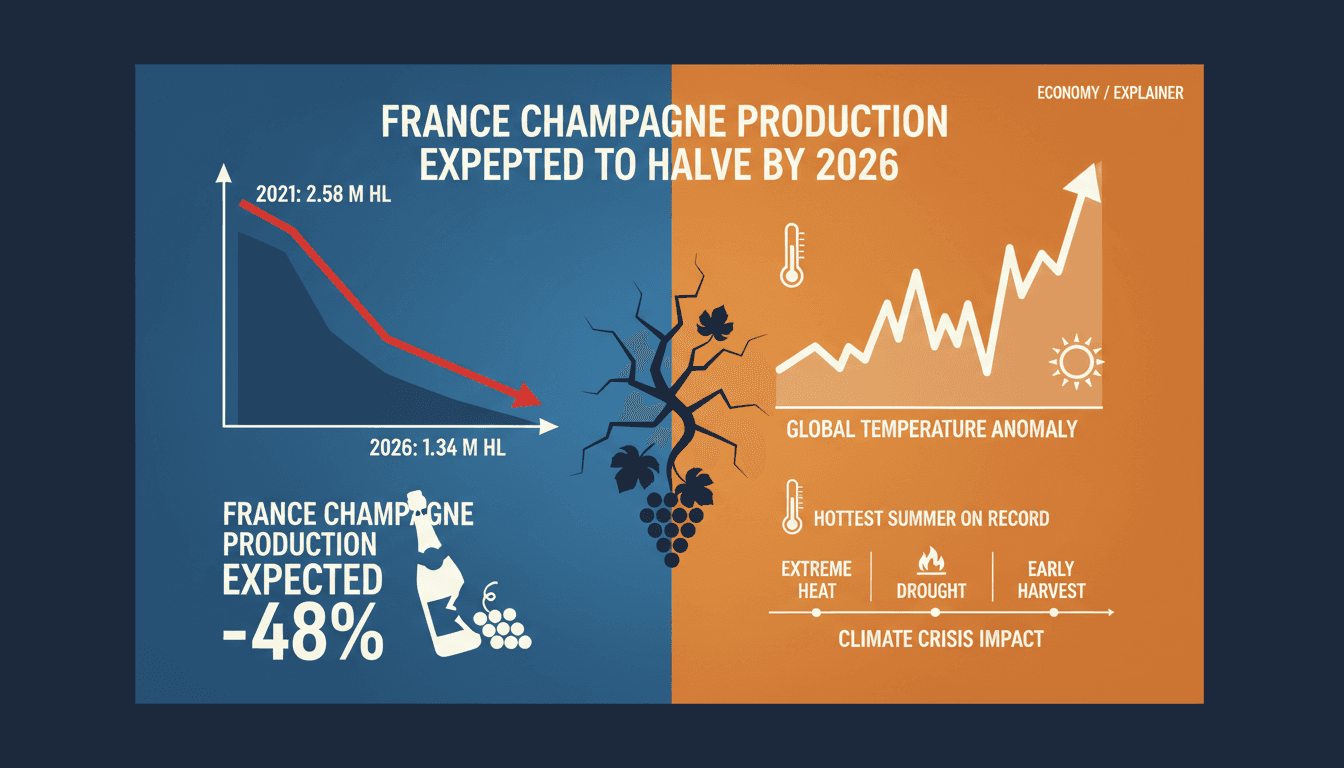
- Champagne output is projected to fall to 1.34 million hectoliters in 2026, a 48% decline from 2025 levels, due to extreme heat and drought.
- Harvesting began two weeks earlier than usual, marking the earliest recorded harvest in the Champagne region, driven by accelerated grape ripening.
- Overall French wine production is forecasted to decline by 6% year-on-year, with the Champagne region facing the most significant impacts.
The context you actually need
- France experienced its hottest summer on record in 2026, exacerbating soil drought and damaging grapevines through sunscald and shriveling.
- Previous years saw reduced vineyard areas and weak harvests, with 2024 and 2025 already indicating declining trends in wine production.
- Producers are planning to utilize reserve wines to maintain supply and quality, despite the lower overall production volume.
What's really happening
The Champagne industry is facing a critical juncture as climate change intensifies the frequency and severity of extreme weather events. The French Agriculture Ministry's recent estimates reveal a staggering 48% decline in Champagne production for 2026, dropping to 1.34 million hectoliters. This decline is primarily attributed to the hottest summer on record, which has led to severe soil drought and direct damage to grapevines. The impact of these conditions has been profound, with grape damage manifesting as sunscald and shriveling, ultimately resulting in an early harvest—approximately two weeks ahead of schedule.
The broader context reveals that this is not an isolated incident. France's wine production is forecasted to decrease by 6% year-on-year, with the Champagne region suffering the most significant losses. The situation is compounded by previous weak harvests in 2024 and 2025, which had already set a concerning precedent for the industry. While some regions, such as Bordeaux and Languedoc-Roussault, may see rebounds, the Champagne sector is grappling with a unique set of challenges.
Producers are now turning to reserve wines to mitigate the impact of reduced yields. This strategy aims to maintain the quality and consistency of Champagne offerings, even as overall production declines. Interestingly, early assessments suggest that the 2026 vintage could be exceptional, despite the lower volumes. This paradox highlights the complex interplay between climate conditions and wine quality, where adverse weather can sometimes lead to concentrated flavors and unique characteristics in the grapes.
The French government has recognized the urgency of the situation, announcing over €1 billion in emergency aid for farmers affected by the extreme weather. This financial support aims to stabilize the agricultural sector and help producers adapt to the changing climate. However, market observers are already speculating about potential long-term shifts in pricing and sourcing strategies, as the industry adjusts to these new realities.
As the Champagne market navigates these challenges, consumers can expect gradual price adjustments and selective availability in the medium term. While immediate shortages are unlikely due to existing stocks, the long-term implications of climate change on luxury goods like Champagne are becoming increasingly evident.
Who feels it first (and how)
- Champagne producers: Facing reduced yields and potential financial strain.
- Luxury consumers: Likely to experience price increases and limited availability.
- Agricultural workers: Affected by climate-induced changes in farming practices and potential job instability.
- Importers and distributors: May need to adjust sourcing strategies and pricing models.
What to watch next
- Price adjustments: Monitor how Champagne prices evolve in response to reduced production and reserve blending.
- Climate adaptation strategies: Observe how producers innovate to cope with ongoing climate challenges.
- Consumer demand trends: Watch for shifts in consumer preferences as the market adjusts to new realities.
Champagne production will decline significantly in 2026.
Price adjustments and selective availability will occur in luxury markets.
The long-term impact on consumer demand and sourcing strategies remains to be seen.
Frequently Asked Questions
- Why it matters?
- The drastic reduction in Champagne production signals broader agricultural vulnerabilities linked to climate change, impacting global luxury markets.
- What happened (in 30 seconds)?
- Champagne output is projected to fall to 1.34 million hectoliters in 2026, a 48% decline from 2025 levels, due to extreme heat and drought. Harvesting began two weeks earlier than usual, marking the earliest recorded harvest in the Champagne region, driven by accelerated grape ripening. Overall French wine production is forecasted to decline by 6% year-on-year, with the Champagne region facing the most significant impacts.
- What's really happening?
- The Champagne industry is facing a critical juncture as climate change intensifies the frequency and severity of extreme weather events. The French Agriculture Ministry's recent estimates reveal a staggering 48% decline in Champagne production for 2026, dropping to 1.34 million hectoliters. This decline is primarily attributed to the hottest summer on record, which has led to severe soil drought and direct damage to grapevines. The impact of these conditions has been profound, with grape damage
- Who feels it first (and how)?
- Champagne producers: Facing reduced yields and potential financial strain. Luxury consumers: Likely to experience price increases and limited availability. Agricultural workers: Affected by climate-induced changes in farming practices and potential job instability. Importers and distributors: May need to adjust sourcing strategies and pricing models.
- What to watch next?
- Price adjustments: Monitor how Champagne prices evolve in response to reduced production and reserve blending. Climate adaptation strategies: Observe how producers innovate to cope with ongoing climate challenges. Consumer demand trends: Watch for shifts in consumer preferences as the market adjusts to new realities.
Global markets, investing, and macroeconomics from a premier financial newsroom.
"Bloomberg is respected for in-depth financial reporting and data-driven analysis."
— A47 Editor
France Champagne Output Set to Halve on Heat Waves and Drought
France's Champagne production is projected to decline by nearly 50% starting in 2025 due to the adverse effects of extreme weather, including heat waves and drought, which are significantly impacting grape yields.
UK and international business news, economics, and corporate coverage.
"The Guardian’s business section covers finance and markets with a progressive editorial tone."
— A47 Editor
French winemakers forecast 30-year low harvest after severe drought and heat
French winemakers are anticipating a harvest that could be the lowest in 30 years due to severe drought and heatwaves, with production expected to fall to just under 34 million hectolitres, a 6% decrease from last year and 17% below the 2021-2025 ave...
International coverage from The Guardian's global desks.
"The Guardian is known for its progressive editorial stance and in-depth analysis."
— A47 Editor
French winemakers forecast 30-year low harvest after severe drought and heat
French winemakers are anticipating a harvest that could be the lowest in 30 years due to severe drought and heatwaves, with production expected to fall to just under 34 million hectolitres, a 6% decrease from last year and 17% below the 2021-2025 ave...
French national news and cultural affairs.
"France 24 is viewed as a globally focused outlet with balanced coverage and a European perspective."
— A47 Editor
French wine yields drop to new historic low after searing summer heat
French wine production is projected to face its worst harvest in nearly 70 years, with the agriculture ministry forecasting a 6 percent drop in output due to extreme summer heat, heatwaves, and drought conditions. This situation has been exacerbated ...