
Yen Strengthens Amid BOJ Rate Hike Speculations
Here's what it means for you.
If you engage in international trade or hold yen-denominated assets, the recent yen strength could impact your costs and returns.
Why it matters
The yen's appreciation signals a potential shift in monetary policy that could influence global currency markets and trade dynamics.
What happened (in 30 seconds)
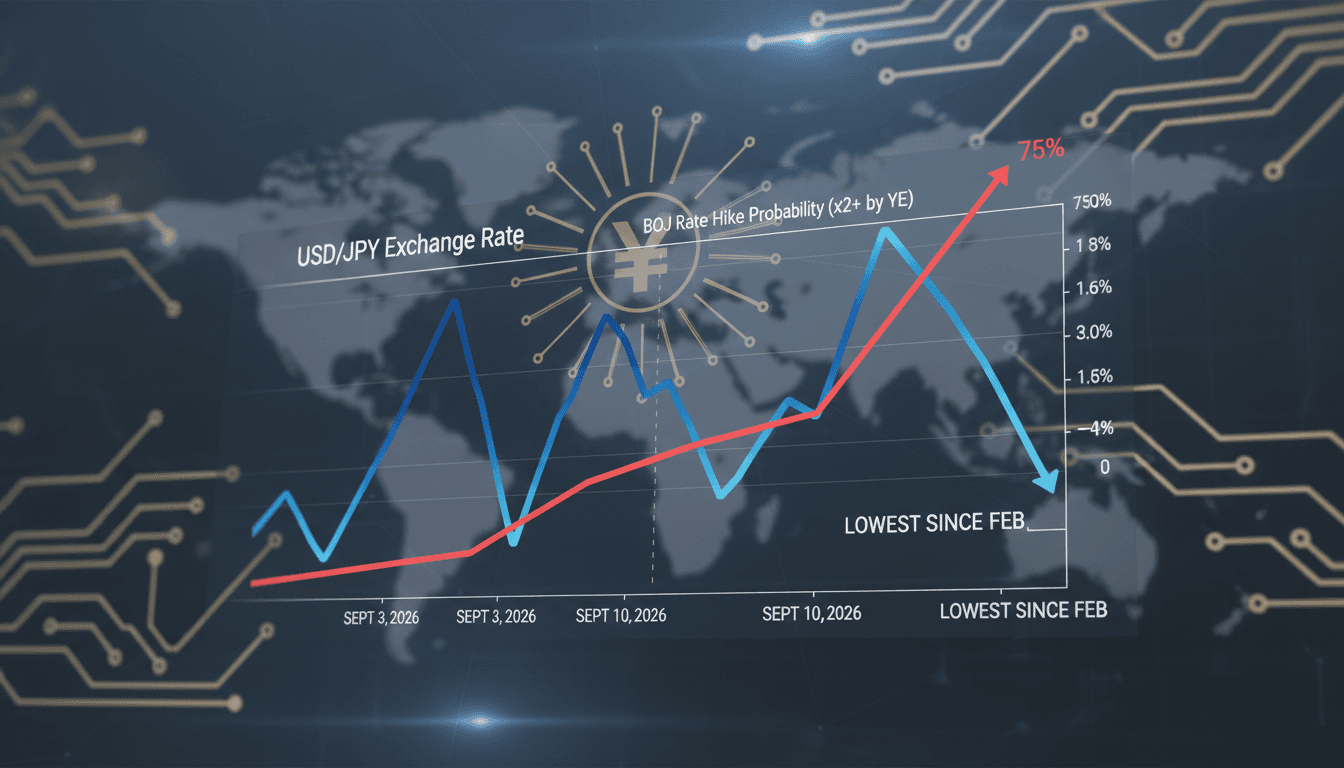
- Yen strengthened against the US dollar from September 3-10, 2026, reaching levels near 153 per dollar.
- Market expectations for two or more Bank of Japan (BOJ) rate hikes by year-end surged following comments from BOJ officials.
- Investors reacted to domestic inflation data and external pressures, reversing previous declines in the yen.
The context you actually need
- Prior weakness: The yen had weakened significantly, hitting near 40-year lows around 164 per dollar in July 2026 due to interest rate differentials.
- Economic indicators: Recent data showed resilient growth and wage increases in Japan, contributing to inflationary pressures.
- External influences: US Treasury commentary and global market dynamics added pressure for the BOJ to accelerate its tightening measures.
What's really happening
The recent strengthening of the yen is primarily driven by heightened expectations for monetary policy adjustments by the Bank of Japan (BOJ). On September 3, 2026, BOJ board member Hajime Takata indicated a more aggressive approach to rate hikes, suggesting that the central bank could implement larger or consecutive increases based on economic data. This statement catalyzed a significant market response, with traders pricing in a near-certain 25 basis point (bp) hike at the upcoming September 17-18 meeting.
The yen's rally, which saw it surge nearly 2% initially, reflects a broader market sentiment that the BOJ is moving towards policy normalization after a prolonged period of ultra-low interest rates. Analysts are now anticipating a repricing of approximately 45-100 bps of tightening by the end of the year, although scenarios involving aggressive 50 bp moves remain unlikely. The combination of stronger-than-expected Q2 GDP revisions and robust wage growth in July has bolstered the case for these anticipated hikes.
Moreover, the yen's appreciation is also a response to external pressures, particularly from the US. Comments from US Treasury officials regarding interest rates and inflation have influenced global forex markets, prompting traders to reassess their positions on the yen. The interplay between domestic economic indicators and external commentary creates a complex environment where the yen's strength is both a reflection of Japan's economic resilience and a reaction to global market dynamics.
As the yen strengthens, bond yields in Japan have adjusted accordingly, with 10-year yields declining amid flattening curves. This indicates that while the market is pricing in higher rates, there is also a cautious approach to the pace of tightening. Economists have revised their forecasts upward for the BOJ's tightening pace, with polls showing near-unanimous expectations for the September hike and increasing odds of a follow-up by year-end.
Who feels it first (and how)
- Traders and investors: Those holding yen-denominated assets will see improved returns.
- Importers in Dubai: Businesses relying on Japanese imports may experience reduced costs due to yen strength.
- Tourism sector: Limited direct impact on tourism, but currency fluctuations can affect travel costs for Japanese tourists.
What to watch next
- Upcoming BOJ meeting: The September 17-18 meeting will be crucial for confirming market expectations of a rate hike.
- Inflation data: Continued monitoring of Japan's inflation metrics will influence future BOJ decisions and market sentiment.
- Global economic indicators: Changes in US economic data and Federal Reserve commentary could impact the yen's trajectory and global forex markets.
The yen has strengthened significantly against the dollar.
The BOJ will implement a rate hike at the September meeting.
The extent of future rate hikes and their impact on global markets remains uncertain.
Frequently Asked Questions
- Why it matters?
- The yen's appreciation signals a potential shift in monetary policy that could influence global currency markets and trade dynamics.
- What happened (in 30 seconds)?
- Yen strengthened against the US dollar from September 3-10, 2026, reaching levels near 153 per dollar. Market expectations for two or more Bank of Japan (BOJ) rate hikes by year-end surged following comments from BOJ officials. Investors reacted to domestic inflation data and external pressures, reversing previous declines in the yen.
- What's really happening?
- The recent strengthening of the yen is primarily driven by heightened expectations for monetary policy adjustments by the Bank of Japan (BOJ). On September 3, 2026, BOJ board member Hajime Takata indicated a more aggressive approach to rate hikes, suggesting that the central bank could implement larger or consecutive increases based on economic data. This statement catalyzed a significant market response, with traders pricing in a near-certain 25 basis point (bp) hike at the upcoming September 1
- Who feels it first (and how)?
- Traders and investors: Those holding yen-denominated assets will see improved returns. Importers in Dubai: Businesses relying on Japanese imports may experience reduced costs due to yen strength. Tourism sector: Limited direct impact on tourism, but currency fluctuations can affect travel costs for Japanese tourists.
- What to watch next?
- Upcoming BOJ meeting: The September 17-18 meeting will be crucial for confirming market expectations of a rate hike. Inflation data: Continued monitoring of Japan's inflation metrics will influence future BOJ decisions and market sentiment. Global economic indicators: Changes in US economic data and Federal Reserve commentary could impact the yen's trajectory and global forex markets.
Markets desk coverage, trading insights, and investor updates.
"WSJ’s markets reporting provides in-depth analysis and context for investors."
— A47 Editor
Yen Strengthens on Prospects of Two BOJ Rate Hikes by Year-End
The Japanese yen has strengthened against the dollar and other currencies, buoyed by expectations that the Bank of Japan (BOJ) may implement two interest rate hikes by the end of the year. This surge follows a notable increase of over 2% against the ...
Currency market headlines, FX rates, central-bank chatter, and macro drivers moving major pairs.
"Investing.com’s forex stream is useful for fast updates across USD, EUR, JPY, GBP and emerging-market FX."
— A47 Editor
Yen extends rally as BOJ hike bets gather pace
The Japanese yen has extended its rally as speculation grows regarding potential interest rate hikes by the Bank of Japan (BOJ). This follows a period where the yen faced significant depreciation, nearing a 40-year low against the US dollar, promptin...
Currency market headlines, FX rates, central-bank chatter, and macro drivers moving major pairs.
"Investing.com’s forex stream is useful for fast updates across USD, EUR, JPY, GBP and emerging-market FX."
— A47 Editor
Yen surges to 6-month high on aggressive BOJ rate bets ; dollar slips
The Japanese yen has surged to a six-month high against the U.S. dollar, driven by increasing speculation that the Bank of Japan (BOJ) is likely to raise interest rates. This movement follows a notable rise of over 2% against the dollar, reflecting a...