
S&P 500 Declines as Brent Crude Exceeds $100 Amid US-Iran Tensions
Here's what it means for you.
Rising oil prices can lead to increased costs for consumers and businesses, impacting your wallet.
Why it matters
The interplay between energy prices and stock market performance can signal broader economic trends that affect your financial decisions.
What happened (in 30 seconds)
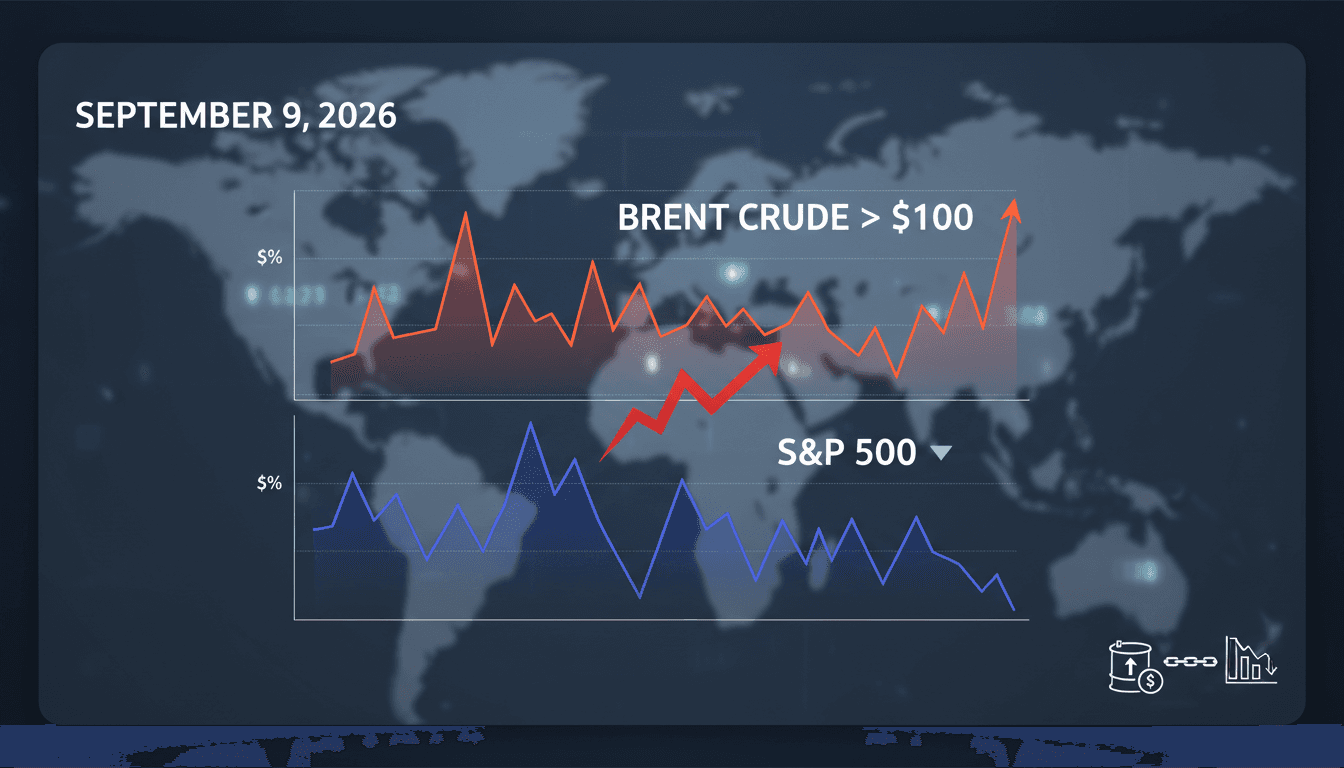
- S&P 500 closed down 0.48% on September 9, 2026, as Brent crude oil prices surpassed $100 per barrel.
- Wall Street equities declined amid rising energy costs linked to escalating US-Iran tensions.
- Energy sector stocks outperformed while most other sectors faced losses, reflecting market caution.
The context you actually need
- US-Iran conflict has intensified, raising concerns about regional stability and oil supply disruptions.
- Strategic petroleum reserves have been significantly depleted, leaving markets vulnerable to geopolitical shocks.
- Federal Reserve's interest rate decisions are under scrutiny as inflation pressures mount from higher energy prices.
What's really happening
On September 9, 2026, the S&P 500 index closed lower as Brent crude oil prices crossed the $100 mark for the first time since July. This decline in equities is primarily attributed to the ongoing US-Iran conflict, which has escalated over the past seven months, leading to fears of broader regional instability and potential disruptions in oil supply. The market's reaction was swift, with investors adjusting their positions in anticipation of key inflation data and potential Federal Reserve policy changes.
The surge in oil prices is not merely a reflection of supply and demand dynamics; it is deeply intertwined with geopolitical tensions. Renewed military actions and tanker attacks in the Middle East have heightened fears among traders, prompting them to react to the possibility of further escalations. As a result, energy stocks have seen a rise, contrasting with the overall decline in major indices like the Dow Jones and Nasdaq.
The depletion of strategic petroleum reserves has left markets more exposed to shocks. With reserves drawn down significantly, any disruption in supply can lead to rapid price increases, as seen with Brent crude. This situation is compounded by the anticipation of Federal Reserve interest rate hikes, which are expected to respond to inflationary pressures stemming from elevated energy costs. Investors are now closely monitoring upcoming Consumer Price Index (CPI) and Producer Price Index (PPI) data releases, which will provide insights into inflation trends and potential Fed actions.
The market's cautious stance is reflected in elevated Treasury yields and reduced expectations for near-term rate cuts. As energy prices continue to rise, the implications for consumers and businesses are significant. Higher oil prices can lead to increased transportation and production costs, which may ultimately be passed on to consumers in the form of higher prices for goods and services.
In summary, the current market dynamics are a complex interplay of geopolitical tensions, energy prices, and monetary policy expectations. As these factors evolve, they will continue to shape the economic landscape, influencing both market performance and consumer behavior.
Who feels it first (and how)
- Consumers: Higher fuel and energy costs will impact household budgets.
- Businesses: Increased operational costs, especially in transportation and manufacturing sectors.
- Investors: Those holding equities in sectors sensitive to energy prices may see volatility in their portfolios.
- Economists: Analysts will closely monitor inflation data and Fed responses to gauge economic health.
What to watch next
- Upcoming CPI and PPI data releases: These will provide insights into inflation trends and potential Fed actions, influencing market sentiment.
- Federal Reserve policy announcements: Any changes in interest rates could significantly impact market dynamics and consumer spending.
- Geopolitical developments in the Middle East: Further escalations could lead to additional volatility in oil prices and broader market reactions.
S&P 500 closed lower as oil prices surged.
Continued volatility in energy prices will affect consumer costs and market performance.
The long-term impact of the US-Iran conflict on global oil supply and economic stability.
Frequently Asked Questions
- Why it matters?
- The interplay between energy prices and stock market performance can signal broader economic trends that affect your financial decisions.
- What happened (in 30 seconds)?
- S&P 500 closed down 0.48% on September 9, 2026, as Brent crude oil prices surpassed $100 per barrel. Wall Street equities declined amid rising energy costs linked to escalating US-Iran tensions. Energy sector stocks outperformed while most other sectors faced losses, reflecting market caution.
- What's really happening?
- On September 9, 2026, the S&P 500 index closed lower as Brent crude oil prices crossed the $100 mark for the first time since July. This decline in equities is primarily attributed to the ongoing US-Iran conflict, which has escalated over the past seven months, leading to fears of broader regional instability and potential disruptions in oil supply. The market's reaction was swift, with investors adjusting their positions in anticipation of key inflation data and potential Federal Reserve policy
- Who feels it first (and how)?
- Consumers: Higher fuel and energy costs will impact household budgets. Businesses: Increased operational costs, especially in transportation and manufacturing sectors. Investors: Those holding equities in sectors sensitive to energy prices may see volatility in their portfolios. Economists: Analysts will closely monitor inflation data and Fed responses to gauge economic health.
- What to watch next?
- Upcoming CPI and PPI data releases: These will provide insights into inflation trends and potential Fed actions, influencing market sentiment. Federal Reserve policy announcements: Any changes in interest rates could significantly impact market dynamics and consumer spending. Geopolitical developments in the Middle East: Further escalations could lead to additional volatility in oil prices and broader market reactions.
Macro commentary, policy analysis, growth/inflation themes, and global outlooks.
"Contextual macro coverage that complements day-to-day market headlines."
— A47 Editor
S&P 500 ends down as oil tops $100 per barrel
The S&P 500 index closed lower as oil prices surged past $100 per barrel, reflecting a negative sentiment in the markets. This decline is attributed to heightened geopolitical tensions, particularly involving Iran, which has raised concerns about pot...
Markets desk coverage, trading insights, and investor updates.
"WSJ’s markets reporting provides in-depth analysis and context for investors."
— A47 Editor
Oil Near $100 Threatens U.S. Stocks’ Stellar Run
Brent crude oil prices have surged above $99 a barrel, raising concerns about the potential impact on U.S. stocks, which have recently experienced a strong performance. This spike in oil prices is attributed to escalating geopolitical tensions, parti...
U.S. business news, corporate developments, and economy.
"The Wall Street Journal is respected for deep financial and economic reporting with a center-right editorial perspective."
— A47 Editor
Oil Near $100 Threatens U.S. Stocks’ Stellar Run
Brent crude oil prices have surged above $99 a barrel, raising concerns about the potential impact on U.S. stocks, which have recently enjoyed a strong performance. This spike in oil prices is attributed to escalating geopolitical tensions, particula...
Stock market news, investing ideas, and trading analysis.
"TheStreet provides market news and retail-investor-focused analysis."
— A47 Editor
Stock Market Today (Sept. 8, 2026): Dow, S&P 500 dip as oil prices test $100/bbl; 10Y nears two-decade high
On September 8, 2026, the Dow and S&P 500 indices experienced a decline as oil prices surged, nearing the $100 per barrel mark amid escalating tensions with Iran, which has threatened to take action against perceived threats.