
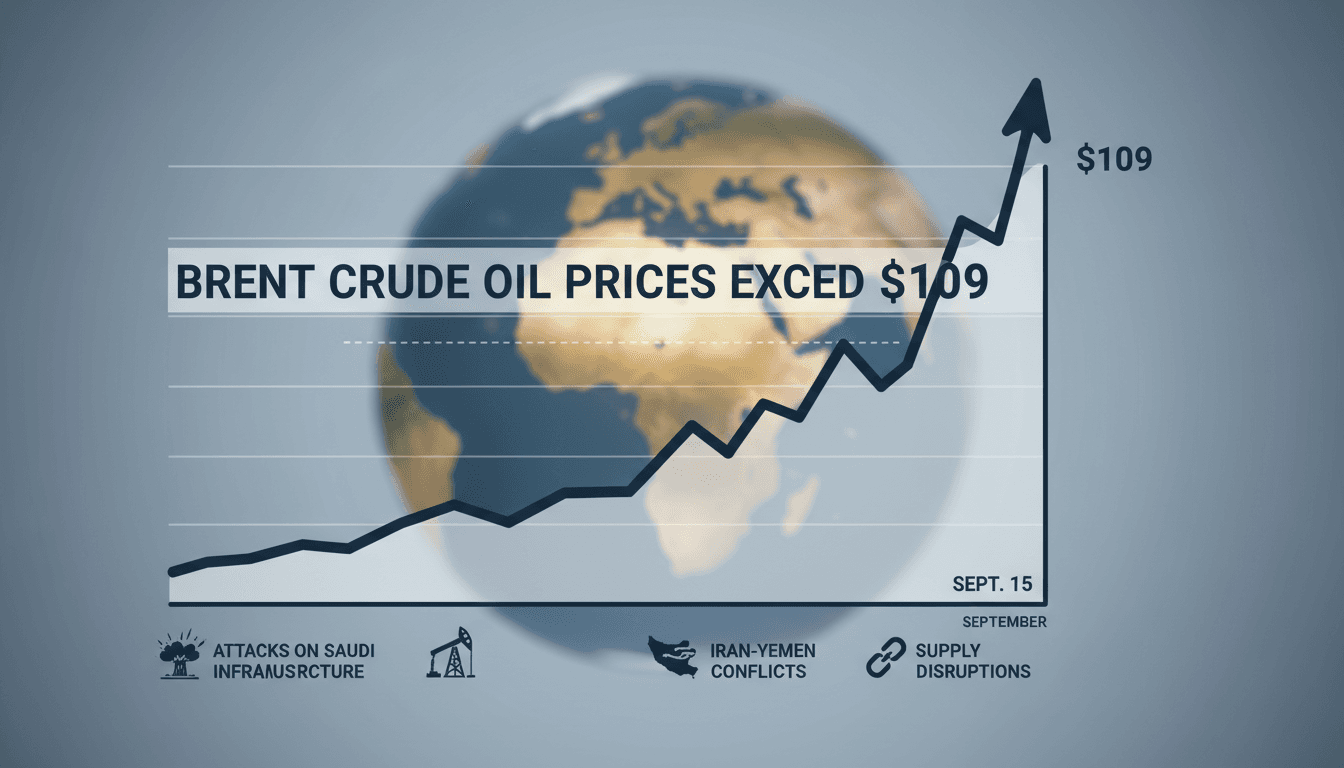
Brent Crude Oil Prices Exceed $109 Amid Middle East Supply Disruptions
Why it matters
This price surge signals significant instability in global oil supply, which can have cascading effects on economies worldwide.
What happened (in 30 seconds)
- Brent crude oil futures exceeded $109 per barrel on September 15, 2026, driven by geopolitical tensions in the Middle East.
- Saudi Arabian infrastructure disruptions and regional conflicts have heightened concerns over oil supply stability.
- Global markets reacted with increased volatility, leading to declines in Gulf stock exchanges and rising premiums for immediate oil delivery.
The context you actually need
- Ongoing conflicts in the Middle East, particularly involving Saudi Arabia, Yemen, and Iran, have created a precarious situation for oil supply.
- Infrastructure attacks on Saudi Arabia's East-West pipeline and disruptions at the Yanbu port have compounded supply concerns.
- The U.S.-Iran conflict, which escalated earlier in 2026, has already affected oil flow forecasts and market stability.
What's really happening
On September 15, 2026, Brent crude oil futures opened higher and continued to climb throughout the day, ultimately peaking at $109.39 per barrel. This increase of over 3.5% reflects a market reacting to a series of supply disruptions primarily originating from Saudi Arabia. The East-West pipeline, a critical artery for oil transport, has faced multiple attacks, leading to significant operational challenges. Concurrently, the Yanbu port, another vital loading point for oil shipments, has seen suspended operations, further straining supply lines.
The situation is exacerbated by ongoing conflicts in the region, particularly the Houthi actions in Yemen, which have escalated tensions with Saudi Arabia. Additionally, shipping risks in the Strait of Hormuz, a crucial passage for global oil transport, have raised alarms among traders and analysts. The combination of these factors has led to a sharp increase in oil prices, as traders anticipate further disruptions and potential escalation of conflicts.
Market analysts have noted that the price spike is not just a reaction to immediate events but also reflects broader concerns about the stability of oil supplies from the Middle East. With the U.S.-Iran conflict already impacting oil flows since early 2026, the current situation has prompted financial institutions to revise their forecasts upward, indicating prolonged disruptions ahead. The immediate aftermath saw Gulf stock exchanges decline, signaling investor anxiety over the potential for further inflationary pressures.
As the situation develops, the implications for global oil prices and economic stability are significant. Higher oil prices can lead to increased costs for consumers and businesses, affecting everything from transportation to manufacturing. The interconnectedness of global markets means that disruptions in one region can have ripple effects worldwide, making it crucial for stakeholders to monitor developments closely.
Who feels it first (and how)
- Consumers: Higher fuel and energy costs will directly impact household expenses.
- Businesses: Increased transportation and logistics costs may lead to higher prices for goods and services.
- Investors: Volatility in Gulf stock markets can affect investment portfolios, particularly in energy sectors.
- Expatriates in Dubai: Rising living costs due to increased fuel prices may strain budgets and alter spending habits.
What to watch next
- Supply Chain Developments: Monitor any further disruptions in Saudi infrastructure or regional conflicts, as these will directly impact oil prices.
- Geopolitical Tensions: Keep an eye on U.S.-Iran relations and any diplomatic efforts that could stabilize the region.
- Market Reactions: Watch for shifts in Gulf stock markets and oil futures, as these will indicate investor sentiment and potential economic impacts.
Brent crude oil prices have surpassed $109 per barrel due to geopolitical tensions and supply disruptions.
Continued volatility in oil prices and potential inflationary pressures on global economies.
The duration and extent of the current geopolitical tensions and their long-term impact on oil supply stability.
Frequently Asked Questions
- Why it matters?
- This price surge signals significant instability in global oil supply, which can have cascading effects on economies worldwide.
- What happened (in 30 seconds)?
- Brent crude oil futures exceeded $109 per barrel on September 15, 2026, driven by geopolitical tensions in the Middle East. Saudi Arabian infrastructure disruptions and regional conflicts have heightened concerns over oil supply stability. Global markets reacted with increased volatility, leading to declines in Gulf stock exchanges and rising premiums for immediate oil delivery.
- What's really happening?
- On September 15, 2026, Brent crude oil futures opened higher and continued to climb throughout the day, ultimately peaking at $109.39 per barrel. This increase of over 3.5% reflects a market reacting to a series of supply disruptions primarily originating from Saudi Arabia. The East-West pipeline, a critical artery for oil transport, has faced multiple attacks, leading to significant operational challenges. Concurrently, the Yanbu port, another vital loading point for oil shipments, has seen sus
- Who feels it first (and how)?
- Consumers: Higher fuel and energy costs will directly impact household expenses. Businesses: Increased transportation and logistics costs may lead to higher prices for goods and services. Investors: Volatility in Gulf stock markets can affect investment portfolios, particularly in energy sectors. Expatriates in Dubai: Rising living costs due to increased fuel prices may strain budgets and alter spending habits.
- What to watch next?
- Supply Chain Developments: Monitor any further disruptions in Saudi infrastructure or regional conflicts, as these will directly impact oil prices. Geopolitical Tensions: Keep an eye on U.S.-Iran relations and any diplomatic efforts that could stabilize the region. Market Reactions: Watch for shifts in Gulf stock markets and oil futures, as these will indicate investor sentiment and potential economic impacts.
Arabic-language coverage of international news and geopolitics.
"RT Arabic is a Russian state-funded outlet often criticized for promoting Kremlin-aligned narratives."
— A47 Editor
برنت يتجاوز 109 دولارات للبرميل وسط تصاعد التوترات في الشرق الأوسط
Brent crude oil futures for November delivery have surged over 3.5%, trading above $109 per barrel on the London ICE exchange, amid escalating tensions in the Middle East. This increase reflects the ongoing volatility in the global energy market.
Sports reporting with a focus on Saudi and regional competitions.
"Okaz sports coverage is broad and audience-friendly, with strong attention to Saudi teams and leagues."
— A47 Editor
النفط يرتفع.. وبرنت يلامس 107 دولارات للبرميل
Oil prices rose in early Asian trading on Tuesday, continuing their gains in global markets. Brent crude futures increased by $1.24, or 1.18%, reaching $106.93 per barrel, while West Texas Intermediate crude rose by $1.29, or 1.24%, to $102.65 per ba...
Arabic-language coverage of international news and geopolitics.
"RT Arabic is a Russian state-funded outlet often criticized for promoting Kremlin-aligned narratives."
— A47 Editor
أسعار النفط خام برنت تلامس 110 دولارات للبرميل
Oil prices surged by over 4.5% to approach $110 per barrel on Monday, driven by concerns over potential disruptions in oil supplies through the Strait of Hormuz and the Bab el-Mandeb Strait.
Arabic-language coverage of international news and geopolitics.
"RT Arabic is a Russian state-funded outlet often criticized for promoting Kremlin-aligned narratives."
— A47 Editor
قفزة في أسعار النفط مع افتتاح الأسواق.. برنت يتجاوز 108 دولارات
Oil prices surged sharply as global markets reopened on Monday, with Brent crude surpassing $108 per barrel, driven by the rapid developments in the Middle East over the weekend.
Jordanian news and regional updates.
"Roya News is a Jordanian outlet focused on breaking news and local affairs."
— A47 Editor
ارتفاع أسعار النفط بنحو 3% مع افتتاح التداولات وخام برنت يسجل 107 دولارات
Oil prices increased by approximately 3% at the start of the week's trading, with Brent crude reaching $107 per barrel. This rise reflects a positive trend in the oil market, indicating potential recovery and increased demand.