
US Producer Price Index Rises 5.4 Percent Year-over-Year Driven by Energy Costs
Why it matters
This acceleration in the Producer Price Index (PPI) indicates persistent inflationary pressures that could influence monetary policy and economic stability.
What happened (in 30 seconds)
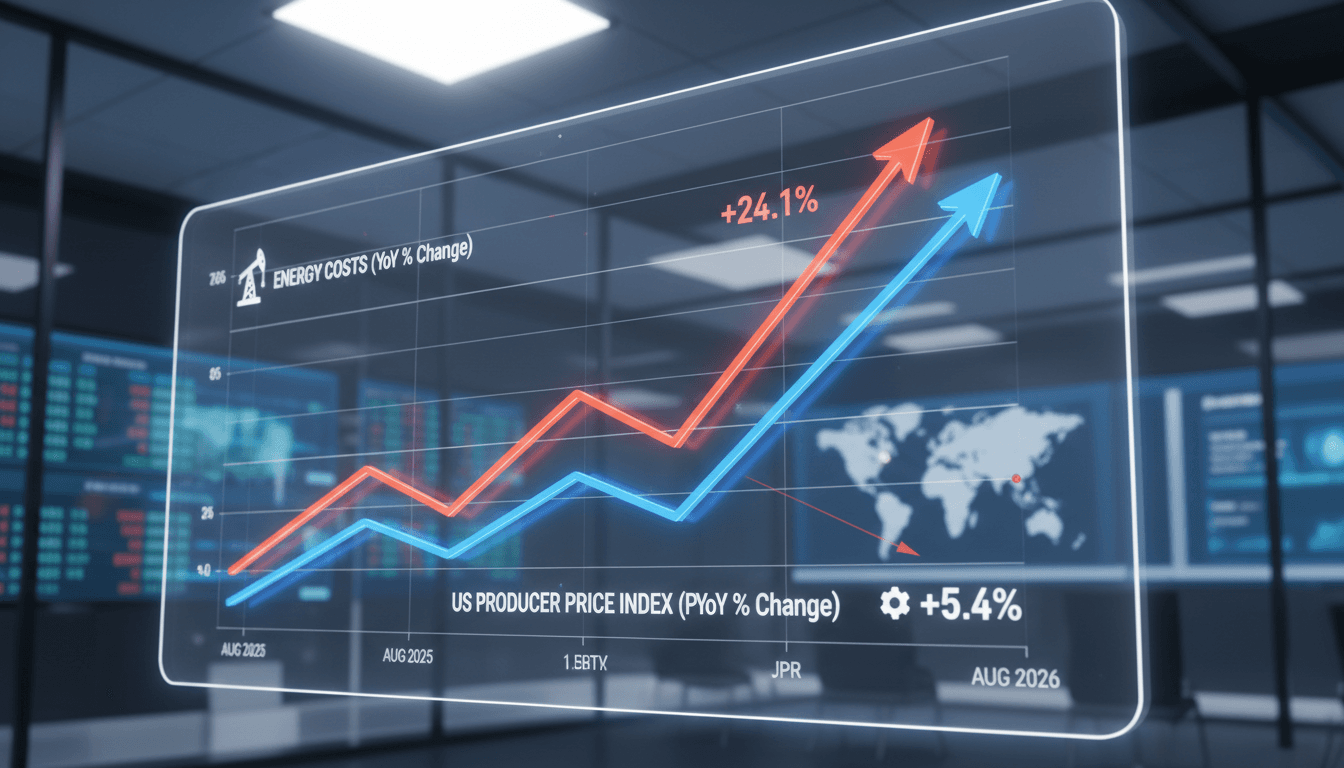
- PPI rose 5.4% year-over-year in August 2026, driven by a significant increase in energy costs.
- Monthly increase of 0.4% matched expectations, marking a notable acceleration from July's revised 0.1% gain.
- Geopolitical tensions with Iran have contributed to rising oil prices, further complicating inflation dynamics ahead of the Federal Reserve's policy meeting.
The context you actually need
- Energy prices rebounded sharply after a period of moderation, with diesel fuel prices surging by 24.1%.
- The Federal Reserve targets a 2% inflation rate, making the current PPI data a critical indicator for future interest rate decisions.
- Markets reacted with increased expectations for a rate hike, particularly affecting technology stocks and the strength of the US dollar.
What's really happening
The recent surge in the US Producer Price Index (PPI) to 5.4% year-over-year reflects a complex interplay of factors, primarily driven by escalating energy costs. The Bureau of Labor Statistics reported a 0.4% increase in the PPI for final demand in August 2026, a significant uptick from the previous month’s revised 0.1% gain. This acceleration is largely attributed to a 1.1% rise in final demand goods prices, with energy costs accounting for over three-quarters of this increase.
The energy sector has been particularly volatile, influenced by renewed geopolitical tensions, especially between the United States and Iran. These tensions have disrupted global oil shipments, pushing Brent crude prices above $105 per barrel. The sharp rise in diesel fuel prices, which surged by 24.1%, exemplifies the broader inflationary pressures stemming from energy volatility. As energy costs rise, they not only affect producers but also have a cascading effect on consumer prices, as businesses pass on these costs to consumers.
The Federal Reserve closely monitors the PPI as a leading indicator for consumer inflation, which it aims to keep around 2%. The current PPI data suggests that inflationary pressures are far from abating, raising the likelihood of interest rate hikes in the near future. Financial markets have already begun to price in these expectations, with futures indicating a potential rate hike at the Federal Reserve's upcoming meeting on September 16. This has led to a strengthening of the US dollar and downward pressure on equity markets, particularly in technology sectors that are sensitive to interest rate changes.
Moreover, the implications of rising producer prices extend beyond the US borders. For instance, in Dubai, elevated global energy prices could lead to higher fuel and transportation costs, impacting import-dependent consumer goods and local business operating expenses. As a major regional energy and logistics hub, Dubai is particularly vulnerable to fluctuations in energy prices, which could affect its economic landscape.
Who feels it first (and how)
- Consumers: Higher prices for goods and services as businesses pass on increased production costs.
- Energy sector producers: Directly impacted by rising costs and potential supply chain disruptions.
- Technology companies: Facing pressure from rising interest rates, which could dampen investment and growth.
- Import-dependent businesses in Dubai: Likely to see increased operating costs due to higher transportation and fuel prices.
What to watch next
- Federal Reserve policy meeting on September 16: Watch for potential interest rate hikes that could further influence market dynamics.
- Global oil prices: Continued volatility in energy markets could exacerbate inflationary pressures and affect consumer prices.
- Consumer Price Index (CPI) data: Upcoming releases will provide insight into how producer price increases are translating to consumer costs.
The PPI rose 5.4% year-over-year in August 2026, driven by energy costs.
The Federal Reserve will consider interest rate hikes in response to persistent inflation.
The long-term impact of geopolitical tensions on energy prices and inflation trends.
Frequently Asked Questions
- Why it matters?
- This acceleration in the Producer Price Index (PPI) indicates persistent inflationary pressures that could influence monetary policy and economic stability.
- What happened (in 30 seconds)?
- PPI rose 5.4% year-over-year in August 2026, driven by a significant increase in energy costs. Monthly increase of 0.4% matched expectations, marking a notable acceleration from July's revised 0.1% gain. Geopolitical tensions with Iran have contributed to rising oil prices, further complicating inflation dynamics ahead of the Federal Reserve's policy meeting.
- What's really happening?
- The recent surge in the US Producer Price Index (PPI) to 5.4% year-over-year reflects a complex interplay of factors, primarily driven by escalating energy costs. The Bureau of Labor Statistics reported a 0.4% increase in the PPI for final demand in August 2026, a significant uptick from the previous month’s revised 0.1% gain. This acceleration is largely attributed to a 1.1% rise in final demand goods prices, with energy costs accounting for over three-quarters of this increase. The energy sec
- Who feels it first (and how)?
- Consumers: Higher prices for goods and services as businesses pass on increased production costs. Energy sector producers: Directly impacted by rising costs and potential supply chain disruptions. Technology companies: Facing pressure from rising interest rates, which could dampen investment and growth. Import-dependent businesses in Dubai: Likely to see increased operating costs due to higher transportation and fuel prices.
- What to watch next?
- Federal Reserve policy meeting on September 16: Watch for potential interest rate hikes that could further influence market dynamics. Global oil prices: Continued volatility in energy markets could exacerbate inflationary pressures and affect consumer prices. Consumer Price Index (CPI) data: Upcoming releases will provide insight into how producer price increases are translating to consumer costs.
English-language digital publication covering business, politics, technology, and current affairs.
"The Arabian Post mixes original and syndicated-style coverage with a broad regional and global business-news orientation."
— A47 Editor
US producer inflation reaches 5.4% in August
US producer prices increased by 5.4% in the year ending August, marking an acceleration from July and slightly exceeding market expectations, primarily driven by rising energy costs. The Bureau of Labor Statistics reported a 0.4% monthly increase in ...
Social/economic commentary and analysis relevant to business and markets.
"WSJ blends data-driven economic insight with commentary on policy and society."
— A47 Editor
Producer-Price Inflation Accelerated Last Month
The Producer-Price Index (PPI) in the U.S. rose by 0.4% in August, a notable increase compared to a 0.1% rise in July, aligning with economists' expectations. This uptick indicates a potential shift in wholesale pricing dynamics, which could influenc...
Key macro releases (CPI, jobs, PMIs), surprise indexes, and market implications.
"Great for data-print awareness and instant read-through to rates and risk assets."
— A47 Editor
U.S. producer prices rise by 0.4% month-on-month in August
In August, U.S. producer prices increased by 0.4% month-on-month, indicating a rise in costs for goods at the wholesale level. This uptick reflects ongoing inflationary pressures within the economy, which can influence consumer prices and overall eco...