
Saudi Arabia advances economic diversification under Vision 2030 reforms
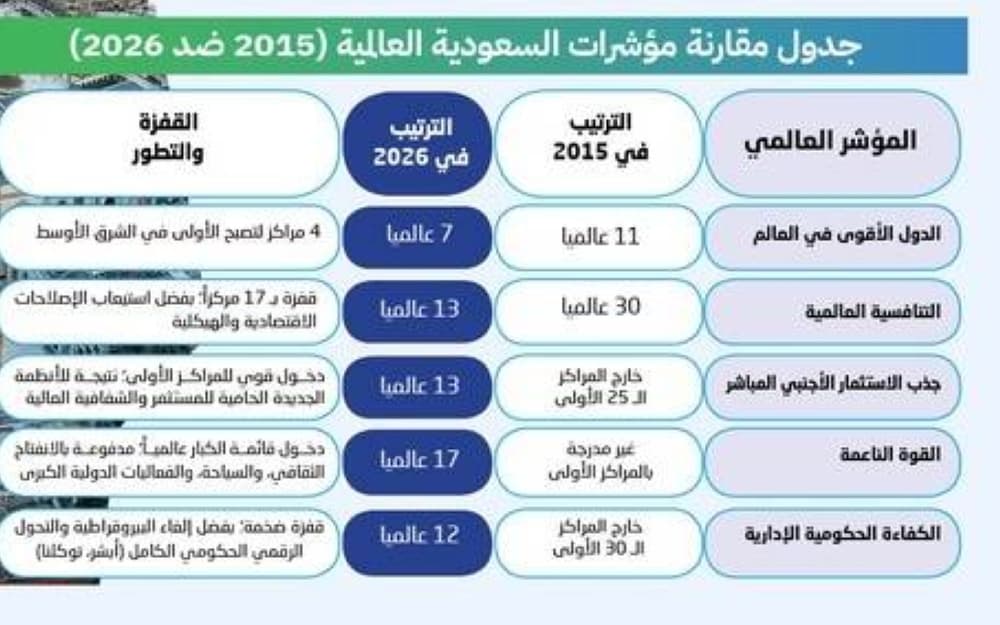
Why it matters
This transformation could redefine regional economic power structures and influence global energy markets.
What happened (in 30 seconds)
- Saudi Arabia initiated Vision 2030 in 2015 to reduce oil dependency and diversify its economy.
- Non-oil sector growth exceeded 51% of GDP, marking a significant shift in economic structure.
- Public Investment Fund assets grew from $192 billion in 2016 to over $940 billion, indicating robust investment strategies.
The context you actually need
- Prior to 2015, Saudi Arabia's economy was heavily reliant on oil revenues, making it vulnerable to price fluctuations.
- Vision 2030 aims to empower youth and women while expanding non-hydrocarbon activities through structural reforms.
- Geopolitical tensions in the region continue to impact energy markets, necessitating a more resilient economic framework.
What's really happening
Saudi Arabia's Vision 2030 represents a strategic pivot from an oil-centric economy to a diversified global player. This transformation began with the accession of King Salman in January 2015, who initiated a comprehensive reform agenda to address the kingdom's structural vulnerabilities. The reforms included consolidating decision-making bodies under the Council of Ministers, which streamlined governance and enhanced coordination between political-security and economic-development sectors.
Digital infrastructure has been a cornerstone of these reforms, with platforms like Absher and Tawakkalna introduced to improve government services and citizen engagement. The 2017 anti-corruption campaign, which recovered hundreds of billions of riyals, further bolstered public trust and investor confidence. Social reforms, such as granting women the right to drive in 2018, have also played a crucial role in reshaping societal norms and expanding the workforce.
The economic impact has been significant. Saudi Arabia's GDP surged from 2.6 trillion to over 4.7 trillion riyals, with non-oil activities now contributing more than 51% to real GDP. This shift is not merely quantitative; it reflects a qualitative change in the economy's structure, moving away from the historical dependence on oil. The Public Investment Fund (PIF) has emerged as a key player in this transformation, with its assets ballooning to over $940 billion, positioning it as one of the largest sovereign wealth funds globally.
Flagship projects like NEOM, which aims for 100% renewable energy, and developments in tourism and entertainment, such as the Red Sea project and Qiddiya, illustrate the kingdom's commitment to diversifying its economic base. These initiatives not only create jobs but also attract foreign investment, further integrating Saudi Arabia into the global economy.
However, this ambitious transformation occurs against a backdrop of ongoing regional geopolitical tensions that affect energy markets. Recent incidents have led to elevated global oil prices, highlighting the need for Saudi Arabia to maintain a stable economic environment while executing its diversification strategy. Credit rating agencies have responded positively, maintaining stable outlooks based on the kingdom's fiscal buffers and the momentum of its diversification efforts.
Who feels it first (and how)
- Investors: Increased opportunities in non-oil sectors may attract foreign direct investment.
- Local businesses: Growth in tourism and entertainment sectors could lead to new market opportunities.
- Saudi workforce: Job creation in diverse sectors will benefit young Saudis and women entering the labor market.
What to watch next
- Continued PIF investments: Monitoring the PIF's asset allocation will indicate the sectors prioritized for growth.
- Employment rates: Tracking unemployment figures will reveal the effectiveness of diversification efforts in job creation.
- Global oil prices: Fluctuations in oil prices will impact the pace of reforms and economic stability in Saudi Arabia.
Non-oil activities now contribute over 51% to GDP.
Continued investment in megaprojects will reshape the economic landscape.
The long-term impact of geopolitical tensions on Saudi Arabia's economic stability remains uncertain.
Frequently Asked Questions
- Why it matters?
- This transformation could redefine regional economic power structures and influence global energy markets.
- What happened (in 30 seconds)?
- Saudi Arabia initiated Vision 2030 in 2015 to reduce oil dependency and diversify its economy. Non-oil sector growth exceeded 51% of GDP, marking a significant shift in economic structure. Public Investment Fund assets grew from $192 billion in 2016 to over $940 billion, indicating robust investment strategies.
- What's really happening?
- Saudi Arabia's Vision 2030 represents a strategic pivot from an oil-centric economy to a diversified global player. This transformation began with the accession of King Salman in January 2015, who initiated a comprehensive reform agenda to address the kingdom's structural vulnerabilities. The reforms included consolidating decision-making bodies under the Council of Ministers, which streamlined governance and enhanced coordination between political-security and economic-development sectors. Dig
- Who feels it first (and how)?
- Investors: Increased opportunities in non-oil sectors may attract foreign direct investment. Local businesses: Growth in tourism and entertainment sectors could lead to new market opportunities. Saudi workforce: Job creation in diverse sectors will benefit young Saudis and women entering the labor market.
- What to watch next?
- Continued PIF investments: Monitoring the PIF's asset allocation will indicate the sectors prioritized for growth. Employment rates: Tracking unemployment figures will reveal the effectiveness of diversification efforts in job creation. Global oil prices: Fluctuations in oil prices will impact the pace of reforms and economic stability in Saudi Arabia.
Arabic-language coverage of political affairs and current events.
"Okaz political coverage typically follows mainstream Saudi framing on national and regional affairs."
— A47 Editor
في عهد الملك سلمان.. السعودية تعيد صياغة ثقلها داخل البيت العربي
Under King Salman bin Abdulaziz Al Saud's leadership, Saudi Arabia has redefined its role within the Arab world, focusing on enhancing the Arab League's capacity to address complex regional crises, including those in Palestine, Sudan, Yemen, and Leba...
Arabic-language reporting focused on domestic developments in Saudi Arabia.
"Okaz is a mainstream Saudi newspaper that often reflects domestic priorities and official-facing coverage."
— A47 Editor
في ذكرى البيعة.. وكالات التصنيف تشيد بمستقبل السعودية المستقر
The anniversary of the pledge of allegiance to King Salman bin Abdulaziz Al Saud highlights Saudi Arabia's significant achievements and transformations under an ambitious vision that prioritizes development, economic diversification, and human empowe...
Arabic-language reporting focused on domestic developments in Saudi Arabia.
"Okaz is a mainstream Saudi newspaper that often reflects domestic priorities and official-facing coverage."
— A47 Editor
ريادة سعودية في الرقمنة وثقافة الحوسبة
Saudi Arabia is rapidly advancing its digital transformation, establishing a robust foundation for a future driven by technology and artificial intelligence. The establishment of the Saudi Data and Artificial Intelligence Authority, as ordered by Kin...
Coverage of political affairs and regional developments from a Saudi perspective.
"Al Watan political coverage typically follows a mainstream Saudi framing of regional and national issues."
— A47 Editor
مؤشرات تتصاعد.. السعودية من الارتهان للنفط إلى صدارة العالم
Since King Salman bin Abdulaziz Al Saud assumed the throne in January 2015, Saudi Arabia has undergone unprecedented structural transformations, moving away from oil dependency towards sustainable growth, guided by the ambitious Vision 2030 spearhead...