
US 10-Year Treasury Yield Exceeds 5% for First Time Since October 2023
Why it matters
The rise in the US 10-year Treasury yield signals increased borrowing costs, impacting everything from mortgages to corporate financing.
What happened (in 30 seconds)
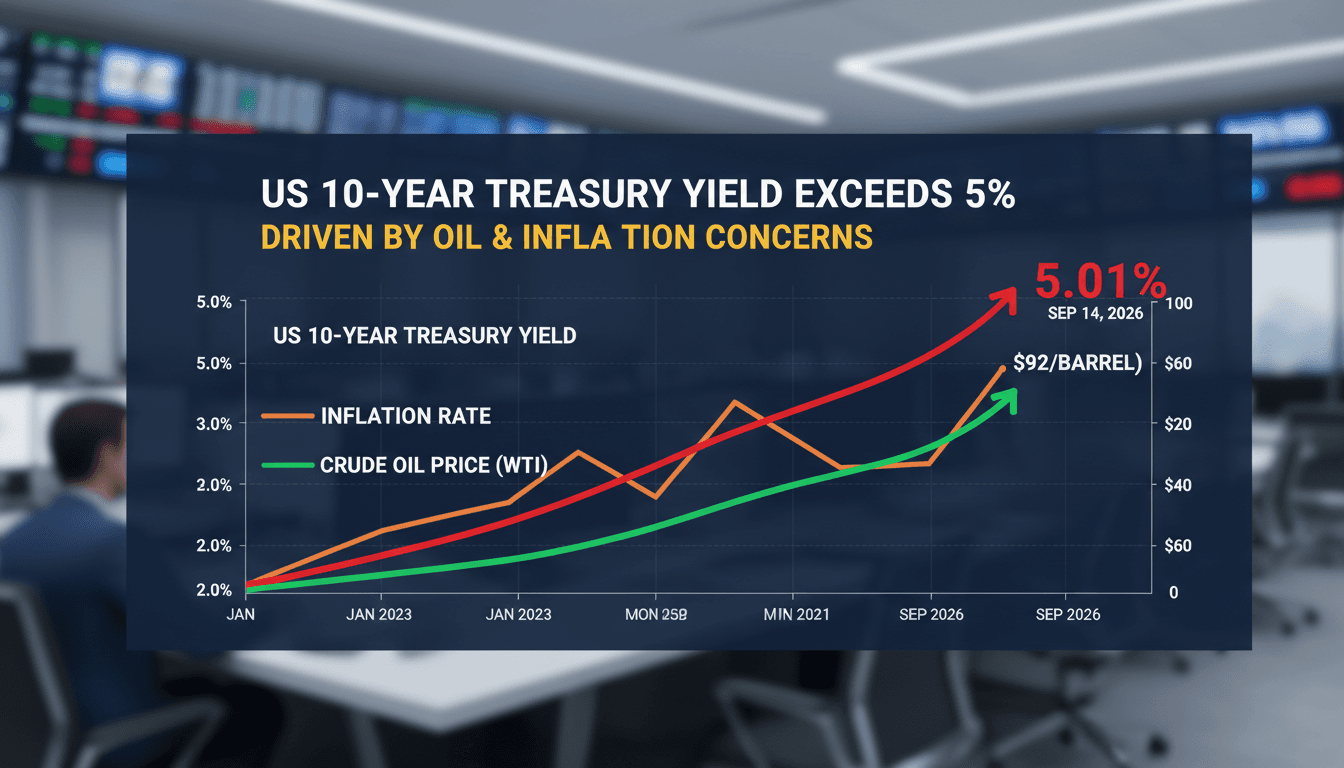
- On September 14, 2026, the US 10-year Treasury yield surged above 5%, reaching an intraday peak of 5.01%.
- This spike was driven by rising oil prices and inflation concerns, prompting traders to anticipate a prolonged high-interest rate environment from the Federal Reserve.
- Equity markets reacted with mixed results, particularly affecting technology stocks, as higher yields diminished the attractiveness of equities.
The context you actually need
- Persistent inflation has remained above the Federal Reserve's 2% target, leading to increased scrutiny of monetary policy.
- Heavy debt issuance from both the government and corporations, particularly in AI sectors, has contributed to rising yields.
- Geopolitical tensions affecting oil supply routes have exacerbated inflation fears, further influencing market expectations.
What's really happening
The recent surge in the US 10-year Treasury yield above 5% is a culmination of several interlinked factors that reflect broader economic conditions. First, persistent inflation has been a significant concern, with rates consistently exceeding the Federal Reserve's target of 2%. This inflationary pressure has prompted the Fed to adopt a more hawkish stance, signaling that interest rates may remain elevated for an extended period.
The backdrop of heavy Treasury and corporate debt issuance, particularly related to investments in artificial intelligence, has also played a crucial role. As companies ramp up borrowing to fund AI infrastructure, the increased supply of bonds has led to downward pressure on prices, thereby pushing yields higher. This dynamic is compounded by widening fiscal deficits, which raise concerns about the sustainability of government borrowing.
Moreover, the recent spike in oil prices, with Brent crude exceeding $108 per barrel, has revived inflation fears. Geopolitical tensions, particularly in the Middle East, have disrupted supply routes, leading to higher energy costs that ripple through the economy. As oil prices rise, so do the costs of goods and services, further entrenching inflationary expectations.
The psychological significance of crossing the 5% threshold cannot be understated. This level is often viewed as a critical benchmark that can influence investor behavior across various asset classes. Higher yields typically lead to increased borrowing costs for mortgages, consumer loans, and corporate debt, which can dampen economic growth. As borrowing becomes more expensive, consumers may cut back on spending, and businesses may delay or scale back investments.
Equity markets have already begun to show signs of strain, particularly in sectors like technology that are sensitive to interest rate changes. As yields rise, the relative attractiveness of equities diminishes, leading to potential sell-offs in stock markets. The Federal Reserve's upcoming policy decisions will be closely monitored, as any adjustments to interest rates could further impact market dynamics.
In summary, the rise in the 10-year Treasury yield is not just a number; it reflects deeper economic trends and has significant implications for borrowing costs, investment strategies, and overall economic health.
Who feels it first (and how)
- Homebuyers: Higher mortgage rates will increase monthly payments, making homes less affordable.
- Corporations: Companies relying on debt for expansion will face higher financing costs, potentially slowing growth.
- Investors: Those in equities may see reduced returns as higher yields make stocks less appealing.
- Consumers: Increased costs for loans and credit cards will impact spending power.
What to watch next
- Federal Reserve policy meetings: Upcoming decisions on interest rates will be crucial in shaping market expectations and economic conditions.
- Inflation reports: Continued monitoring of inflation data will indicate whether the Fed's policies are effective or if further adjustments are needed.
- Oil price movements: Fluctuations in oil prices will influence inflation and economic stability, impacting both consumers and businesses.
The 10-year Treasury yield has surpassed 5%, indicating rising borrowing costs.
Higher yields will continue to pressure equity markets and increase costs for consumers and businesses.
The long-term trajectory of inflation and its impact on Federal Reserve policy remains uncertain.
Frequently Asked Questions
- Why it matters?
- The rise in the US 10-year Treasury yield signals increased borrowing costs, impacting everything from mortgages to corporate financing.
- What happened (in 30 seconds)?
- On September 14, 2026, the US 10-year Treasury yield surged above 5%, reaching an intraday peak of 5.01%. This spike was driven by rising oil prices and inflation concerns, prompting traders to anticipate a prolonged high-interest rate environment from the Federal Reserve. Equity markets reacted with mixed results, particularly affecting technology stocks, as higher yields diminished the attractiveness of equities.
- What's really happening?
- The recent surge in the US 10-year Treasury yield above 5% is a culmination of several interlinked factors that reflect broader economic conditions. First, persistent inflation has been a significant concern, with rates consistently exceeding the Federal Reserve's target of 2%. This inflationary pressure has prompted the Fed to adopt a more hawkish stance, signaling that interest rates may remain elevated for an extended period. The backdrop of heavy Treasury and corporate debt issuance, partic
- Who feels it first (and how)?
- Homebuyers: Higher mortgage rates will increase monthly payments, making homes less affordable. Corporations: Companies relying on debt for expansion will face higher financing costs, potentially slowing growth. Investors: Those in equities may see reduced returns as higher yields make stocks less appealing. Consumers: Increased costs for loans and credit cards will impact spending power.
- What to watch next?
- Federal Reserve policy meetings: Upcoming decisions on interest rates will be crucial in shaping market expectations and economic conditions. Inflation reports: Continued monitoring of inflation data will indicate whether the Fed's policies are effective or if further adjustments are needed. Oil price movements: Fluctuations in oil prices will influence inflation and economic stability, impacting both consumers and businesses.
Macro commentary, policy analysis, growth/inflation themes, and global outlooks.
"Contextual macro coverage that complements day-to-day market headlines."
— A47 Editor
US 10-year yields reach 5%, highest since 2023
U.S. 10-year Treasury yields have reached 5%, marking the highest level since 2023, as investors react to rising inflation concerns and increased borrowing needs from both the government and corporations. This surge reflects a significant shift in ma...
Social/economic commentary and analysis relevant to business and markets.
"WSJ blends data-driven economic insight with commentary on policy and society."
— A47 Editor
U.S. 10-Year Yield Cools After Topping 5%, German Bund Yield Hits 15-Year High
U.S. Treasury yields experienced a decline after surpassing 5% on Monday, as investors reassess the implications of rising borrowing costs amidst fluctuating energy market conditions. This cooling follows a period of heightened yields, reflecting mar...
Markets desk coverage, trading insights, and investor updates.
"WSJ’s markets reporting provides in-depth analysis and context for investors."
— A47 Editor
U.S. 10-Year Yield Cools After Topping 5%, German Bund Yield Hits 15-Year High
U.S. Treasury yields experienced a decline after surpassing 5% on Monday, as investors reassess the implications of rising borrowing costs amidst fluctuating energy market conditions. This cooling follows a period of heightened yields, reflecting mar...