
10-Year U.S. Treasury Yield Hits 5% for First Time Since 2023
Why it matters
The 10-year U.S. Treasury yield is a critical benchmark that influences global interest rates and economic conditions.
What happened (in 30 seconds)
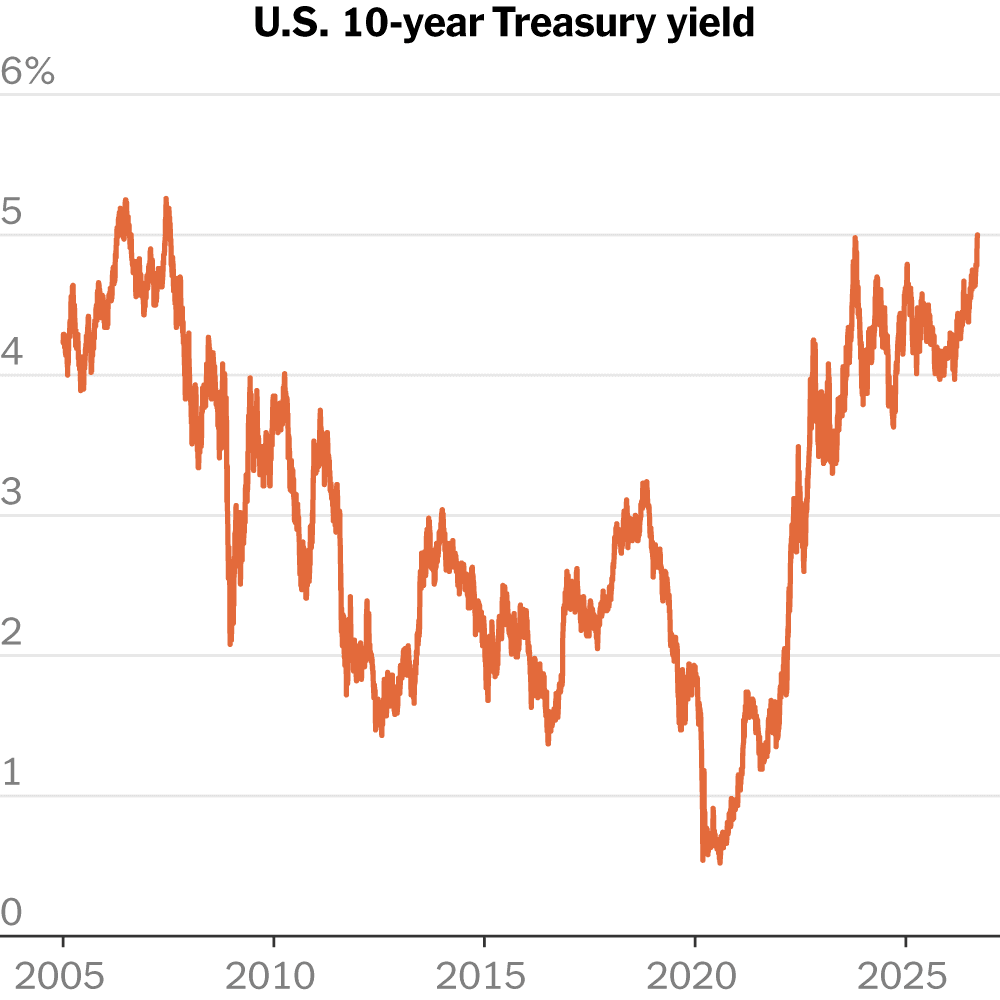
- The yield briefly reached 5% on September 14, 2026, marking the highest level since 2023.
- Inflation concerns and geopolitical tensions in the Middle East contributed to this spike, alongside increased U.S. government spending.
- Market participants anticipate a Federal Reserve rate hike at the upcoming meeting, further influencing borrowing costs.
The context you actually need
- Historical significance: The last time the 10-year yield exceeded 5% was in 2007, prior to the global financial crisis, making this a notable event in financial history.
- Inflationary pressures: Persistent inflation above the Federal Reserve's 2% target has created a challenging environment for monetary policy, pushing yields higher.
- Geopolitical factors: The ongoing conflict in the Middle East, particularly the Iran war, has disrupted oil supplies and contributed to rising oil prices, further complicating economic stability.
What's really happening
On September 14, 2026, the 10-year U.S. Treasury yield opened under pressure from recent inflation data and ongoing geopolitical tensions, particularly related to the Middle East. The yield surged intraday to a peak of 5.014% before closing at approximately 4.98%. This movement reflects a broader trend of rising yields across various maturities, including the 30-year Treasury bond, as investors react to a complex interplay of factors.
The spike in yields is primarily driven by heightened inflation concerns, which have been exacerbated by the ongoing conflict in the Middle East. The war has disrupted oil supplies, pushing Brent crude prices above $100 per barrel. This situation has led to increased costs across the economy, prompting investors to reassess their expectations for future interest rates. The Federal Reserve's upcoming policy meeting is now viewed with heightened scrutiny, as market participants are pricing in a greater than 90% probability of a rate hike.
Additionally, the Trump administration's attempts to lower yields through aggressive Treasury bond buybacks have proven insufficient. The administration's efforts to stabilize the bond market reflect a recognition of the potential risks posed by sustained high yields, including threats to economic growth and equity valuations. Analysts are concerned that elevated borrowing costs could dampen consumer spending and business investment, leading to a slowdown in economic activity.
The implications of this yield increase extend beyond U.S. borders. Global bond yields in countries like the UK and Australia have also exceeded 5%, indicating a synchronized response to inflationary pressures and geopolitical uncertainties. As a result, investors are recalibrating their portfolios, seeking safer assets amid rising uncertainty.
Who feels it first (and how)
- Homebuyers: Rising mortgage rates, now approaching 6.76%, will increase monthly payments and reduce affordability.
- Corporations: Higher borrowing costs for financing projects, particularly in non-oil sectors, which make up about 75% of the UAE's GDP.
- Investors: Those holding bonds may see declines in bond prices as yields rise, impacting portfolio valuations.
What to watch next
- Federal Reserve meeting outcomes: The decisions made on September 15-16 will provide clarity on future interest rate trajectories and market expectations.
- Oil price fluctuations: Continued volatility in oil prices could further influence inflation and yield movements, affecting global economic stability.
- Corporate borrowing trends: Watch for changes in corporate debt issuance as companies react to rising yields and adjust their financing strategies.
The 10-year Treasury yield briefly reached 5% on September 14, 2026.
The Federal Reserve will raise interest rates in response to inflationary pressures.
The long-term impact of sustained high yields on economic growth and equity markets remains uncertain.
Frequently Asked Questions
- Why it matters?
- The 10-year U.S. Treasury yield is a critical benchmark that influences global interest rates and economic conditions.
- What happened (in 30 seconds)?
- The yield briefly reached 5% on September 14, 2026, marking the highest level since 2023. Inflation concerns and geopolitical tensions in the Middle East contributed to this spike, alongside increased U.S. government spending. Market participants anticipate a Federal Reserve rate hike at the upcoming meeting, further influencing borrowing costs.
- What's really happening?
- On September 14, 2026, the 10-year U.S. Treasury yield opened under pressure from recent inflation data and ongoing geopolitical tensions, particularly related to the Middle East. The yield surged intraday to a peak of 5.014% before closing at approximately 4.98%. This movement reflects a broader trend of rising yields across various maturities, including the 30-year Treasury bond, as investors react to a complex interplay of factors. The spike in yields is primarily driven by heightened inflat
- Who feels it first (and how)?
- Homebuyers: Rising mortgage rates, now approaching 6.76%, will increase monthly payments and reduce affordability. Corporations: Higher borrowing costs for financing projects, particularly in non-oil sectors, which make up about 75% of the UAE's GDP. Investors: Those holding bonds may see declines in bond prices as yields rise, impacting portfolio valuations.
- What to watch next?
- Federal Reserve meeting outcomes: The decisions made on September 15-16 will provide clarity on future interest rate trajectories and market expectations. Oil price fluctuations: Continued volatility in oil prices could further influence inflation and yield movements, affecting global economic stability. Corporate borrowing trends: Watch for changes in corporate debt issuance as companies react to rising yields and adjust their financing strategies.
Markets, economy, and company analysis from NYT’s business desk.
"The New York Times is a globally recognized newspaper offering authoritative reporting with a center-left editorial stance."
— A47 Editor
10-Year Treasury Yield Touches 5%, Highest Level in Years
The 10-Year Treasury yield has reached 5%, a level not seen since the global financial crisis, indicating a significant shift in the bond market as investors have rejected attempts by the Trump administration to influence rates.
Markets desk coverage, trading insights, and investor updates.
"WSJ’s markets reporting provides in-depth analysis and context for investors."
— A47 Editor
Wall Street Confronts Prospect of a New Era After Treasury Yield Hits 5%
Wall Street is facing a significant shift as the yield on the 10-year Treasury note has surpassed 5%, a level not seen since the global financial crisis. This development raises questions about the sustainability of current borrowing environments and...
Editor-curated FT homepage stories spanning markets, business, world, and opinion.
"The Financial Times is a globally respected business publication with a centrist/center-left tone and strong markets focus."
— A47 Editor
Ten-year Treasury yield hits 5% for first time since 2023
The ten-year Treasury yield has reached 5% for the first time since 2023, reflecting a significant shift in the financial landscape as inflation concerns persist, particularly in light of ongoing geopolitical tensions stemming from the conflict in Ir...
Global business headlines with AI angles.
"General business outlet that frequently covers AI."
— A47 Editor
The Benchmark U.S. Treasury Yield Topped 5% For The First Time In Years. Odds Of a Rate Hike Climbed Further.
The benchmark U.S. Treasury yield has surpassed 5% for the first time in years, with the 10-year yield approaching 5.2%, a level not seen since July 2007, prior to the global financial crisis. This increase indicates rising interest rates amid ongoin...
Global markets, investing, and macroeconomics from a premier financial newsroom.
"Bloomberg is respected for in-depth financial reporting and data-driven analysis."
— A47 Editor
US 10-Year Breaches 5% as Inflation, Supply Worries Mount
The US 10-year Treasury yield has surpassed 5% for the first time since 2023, driven by increasing inflation concerns and heightened government and corporate borrowing needs. This surge reflects a significant shift in market dynamics, as investors re...
Global markets, investing, and macroeconomics from a premier financial newsroom.
"Bloomberg is respected for in-depth financial reporting and data-driven analysis."
— A47 Editor
A 5% Treasury Yield Is Raising New Risks for Markets, Economy
A significant selloff in Treasury bonds has pushed key yields to nearly 5%, raising concerns across Wall Street and Washington regarding the implications of higher borrowing costs on the U.S. economy. This development signals a growing unease about t...