
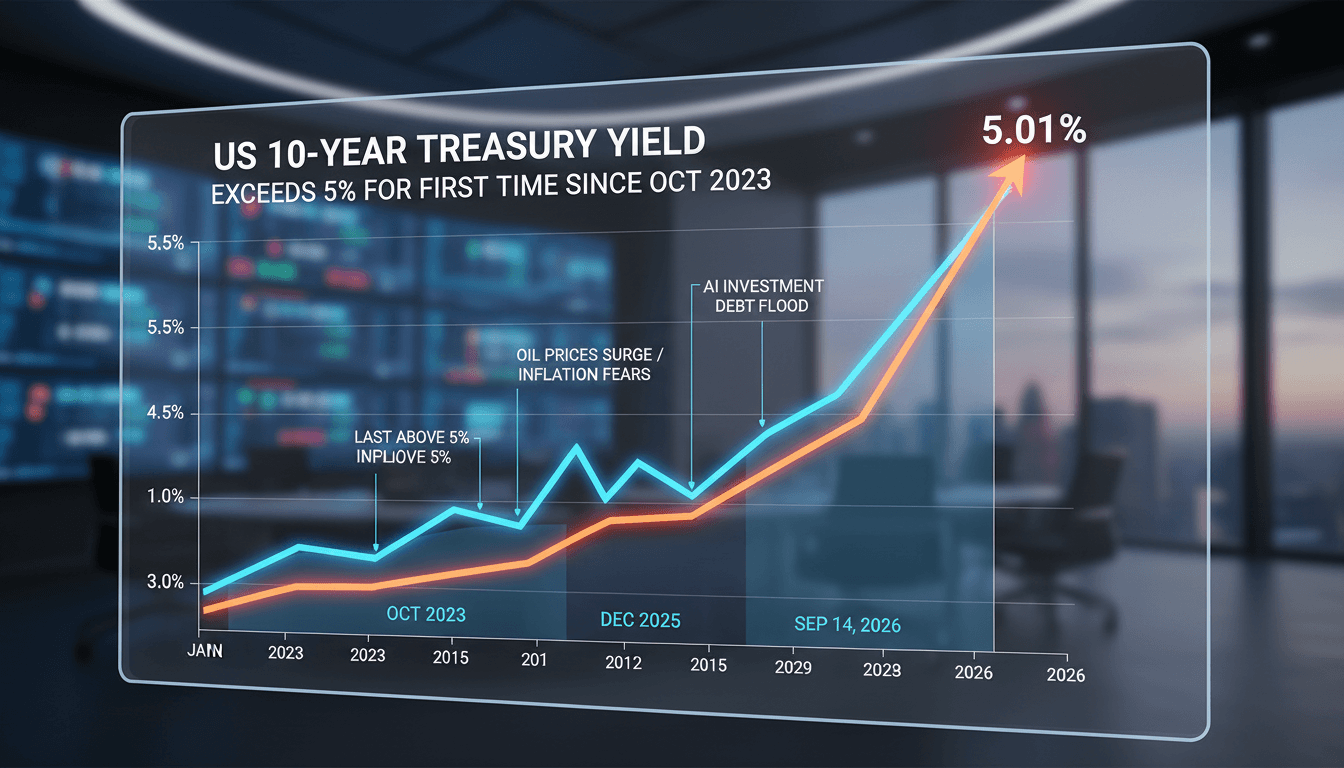
US 10-Year Treasury Yields Exceed 5% for First Time Since October 2023
Why it matters
Higher Treasury yields signal increased borrowing costs, affecting everything from mortgages to corporate loans.
What happened (in 30 seconds)
- Yields surpassed 5%: On September 14, 2026, the US 10-year Treasury yield reached 5.01%, the highest since October 2023.
- Inflation concerns: Surging oil prices and persistent inflation pressures contributed to this rise.
- Market reactions: The increase in yields pressured equity valuations and raised expectations for Federal Reserve rate hikes.
The context you actually need
- Geopolitical tensions: Rising oil prices linked to conflicts, such as the Iran situation, have revived inflation fears.
- Corporate borrowing: Record levels of corporate debt issuance, particularly for AI investments, are influencing yield dynamics.
- Fiscal deficits: Expanding US fiscal deficits are leading to higher term premiums demanded by investors.
What's really happening
On September 14, 2026, the US 10-year Treasury yield opened higher and crossed the critical 5% mark, peaking at 5.01% during trading. This movement reflects a confluence of factors, primarily driven by inflationary pressures stemming from rising oil prices. The geopolitical landscape, particularly tensions in the Middle East, has led to a spike in oil prices, which in turn has revived inflation concerns. The Federal Reserve's ongoing struggle to maintain inflation at its 2% target has created a backdrop of uncertainty, prompting traders to price in a higher likelihood of rate hikes at the upcoming Federal Reserve meeting.
The market's reaction to these developments has been swift. With yields climbing, borrowing costs across various sectors are expected to rise, impacting mortgages, consumer loans, and corporate debt. This increase in yields is not just a domestic issue; it resonates globally, as higher US yields often lead to increased borrowing costs in other countries, including those in the UAE. The correlation between US yields and global financial markets means that investors worldwide are adjusting their strategies in response to these changes.
Moreover, the heavy issuance of Treasury and corporate debt, particularly linked to AI infrastructure investments, has added to the supply in the market, limiting price gains in bonds. As the US government and corporations continue to issue debt to fund various initiatives, the increased supply can exert upward pressure on yields. This dynamic is compounded by concerns over expanding federal deficits, which have led to higher term premiums demanded by investors seeking compensation for increased risk.
In the aftermath, equity markets displayed mixed responses, with higher yields putting pressure on valuations. Money markets began pricing in a near 90% probability of a Federal Reserve rate hike at the September 15-16 meeting, indicating that investors are bracing for further tightening of monetary policy. Analysts have also pointed to potential increases in mortgage rates, which could reach levels around 6.76%, further complicating the borrowing landscape for consumers.
Who feels it first (and how)
- Homebuyers: Higher mortgage rates will increase monthly payments, making homes less affordable.
- Corporations: Companies relying on debt for expansion may face higher interest costs, impacting profitability.
- Investors: Those holding equities may see valuations pressured as borrowing costs rise.
- Consumers: Individuals with variable-rate loans will experience increased payments, affecting disposable income.
What to watch next
- Federal Reserve decisions: Watch for the Fed's upcoming policy announcements, as they will directly influence interest rates and market sentiment.
- Oil price fluctuations: Monitor oil prices, as continued volatility could further impact inflation and Treasury yields.
- Corporate debt issuance trends: Keep an eye on corporate borrowing levels, particularly in sectors like AI, as they will affect overall market dynamics.
Treasury yields have surpassed 5%, impacting borrowing costs.
The Federal Reserve will consider rate hikes in response to inflation pressures.
The long-term trajectory of inflation and its impact on yields remains uncertain.
Frequently Asked Questions
- Why it matters?
- Higher Treasury yields signal increased borrowing costs, affecting everything from mortgages to corporate loans.
- What happened (in 30 seconds)?
- Yields surpassed 5%: On September 14, 2026, the US 10-year Treasury yield reached 5.01%, the highest since October 2023. Inflation concerns: Surging oil prices and persistent inflation pressures contributed to this rise. Market reactions: The increase in yields pressured equity valuations and raised expectations for Federal Reserve rate hikes.
- What's really happening?
- On September 14, 2026, the US 10-year Treasury yield opened higher and crossed the critical 5% mark, peaking at 5.01% during trading. This movement reflects a confluence of factors, primarily driven by inflationary pressures stemming from rising oil prices. The geopolitical landscape, particularly tensions in the Middle East, has led to a spike in oil prices, which in turn has revived inflation concerns. The Federal Reserve's ongoing struggle to maintain inflation at its 2% target has created a
- Who feels it first (and how)?
- Homebuyers: Higher mortgage rates will increase monthly payments, making homes less affordable. Corporations: Companies relying on debt for expansion may face higher interest costs, impacting profitability. Investors: Those holding equities may see valuations pressured as borrowing costs rise. Consumers: Individuals with variable-rate loans will experience increased payments, affecting disposable income.
- What to watch next?
- Federal Reserve decisions: Watch for the Fed's upcoming policy announcements, as they will directly influence interest rates and market sentiment. Oil price fluctuations: Monitor oil prices, as continued volatility could further impact inflation and Treasury yields. Corporate debt issuance trends: Keep an eye on corporate borrowing levels, particularly in sectors like AI, as they will affect overall market dynamics.
Macro commentary, policy analysis, growth/inflation themes, and global outlooks.
"Contextual macro coverage that complements day-to-day market headlines."
— A47 Editor
US 10-year yields reach 5%, highest since 2023
U.S. 10-year Treasury yields have reached 5%, marking the highest level since 2023, as investors react to rising inflation concerns and increased borrowing needs from both the government and corporations. This surge reflects a significant shift in ma...
Markets desk coverage, trading insights, and investor updates.
"WSJ’s markets reporting provides in-depth analysis and context for investors."
— A47 Editor
Wall Street Confronts Prospect of a New Era After Treasury Yield Hits 5%
Wall Street is facing a significant shift as the yield on the 10-year Treasury note has surpassed 5%, a level not seen since the global financial crisis. This development raises questions about the sustainability of current borrowing environments and...
Editor-curated FT homepage stories spanning markets, business, world, and opinion.
"The Financial Times is a globally respected business publication with a centrist/center-left tone and strong markets focus."
— A47 Editor
Ten-year Treasury yield hits 5% for first time since 2023
The ten-year Treasury yield has reached 5% for the first time since 2023, reflecting a significant shift in the financial landscape as inflation concerns persist, particularly in light of ongoing geopolitical tensions stemming from the conflict in Ir...
Social/economic commentary and analysis relevant to business and markets.
"WSJ blends data-driven economic insight with commentary on policy and society."
— A47 Editor
U.S. 10-Year Yield Cools After Topping 5%, German Bund Yield Hits 15-Year High
U.S. Treasury yields experienced a decline after surpassing 5% on Monday, as investors reassess the implications of rising borrowing costs amidst fluctuating energy market conditions. This cooling follows a period of heightened yields, reflecting mar...
Markets desk coverage, trading insights, and investor updates.
"WSJ’s markets reporting provides in-depth analysis and context for investors."
— A47 Editor
U.S. 10-Year Yield Cools After Topping 5%, German Bund Yield Hits 15-Year High
U.S. Treasury yields experienced a decline after surpassing 5% on Monday, as investors reassess the implications of rising borrowing costs amidst fluctuating energy market conditions. This cooling follows a period of heightened yields, reflecting mar...