
Canada Introduces Permanent Productivity Mega Deduction for Capital Investments
Why it matters
This policy positions Canada as a more attractive destination for business investment, potentially reshaping the competitive landscape in the G7.
What happened (in 30 seconds)
- On September 15, 2026, Prime Minister Mark Carney announced the Productivity Mega Deduction, expanding immediate expensing to over 65% of capital assets.
- Eligible assets now include machinery, software, clean energy equipment, and more, aiming to attract nearly $1 trillion in new investments over five years.
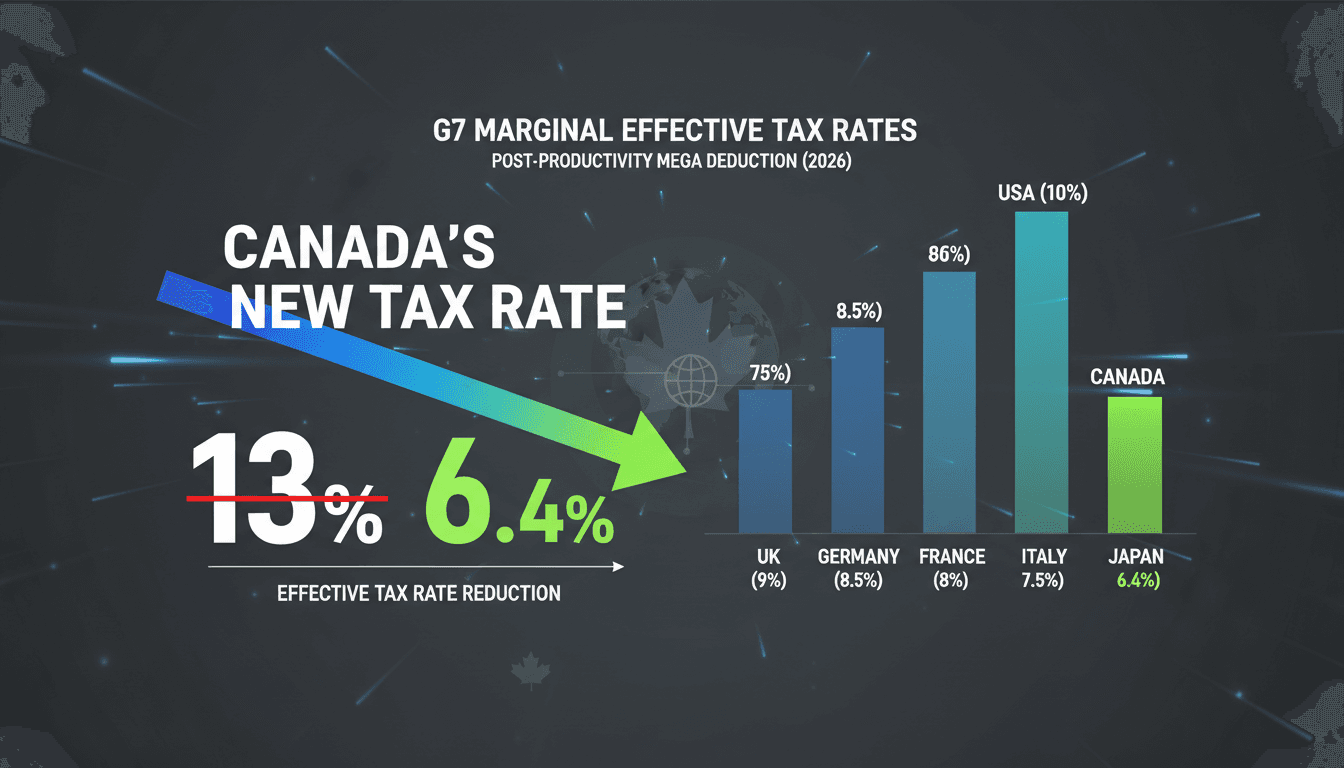
- Projected tax rate on new business investment is expected to drop from 13% to 6.4%, making it the lowest in the G7.
The context you actually need
- Previous measures: This announcement builds on the 2025 Budget's Productivity Super-Deduction, which had limited immediate expensing for manufacturing assets.
- Competitive pressures: The reform responds to U.S. tax changes under President Trump, aiming to counteract Canada's historically lower business investment levels.
- Long-term certainty: By making the expensing permanent, the government seeks to provide stability for businesses planning future investments.
What's really happening
The Productivity Mega Deduction is a strategic move by the Canadian government to enhance its appeal as a business-friendly environment. By allowing immediate expensing for a broader range of capital assets, the policy aims to stimulate investment in key sectors such as clean energy, technology, and infrastructure. This shift is particularly significant given Canada's historical challenges in attracting business investment compared to its G7 counterparts.
The expansion from approximately 15% to over 65% of eligible capital investments represents a substantial increase in the potential for businesses to recover costs quickly. This immediate expensing allows companies to deduct the full cost of qualifying assets in the year they are purchased, rather than spreading the deduction over several years. As a result, businesses can reinvest savings into growth initiatives, research and development, or workforce expansion.
The projected reduction in the marginal effective tax rate from 13% to 6.4% is a critical component of this policy. This rate is expected to be the lowest among G7 nations, positioning Canada as a competitive alternative for businesses considering where to allocate their capital. The government estimates an incremental fiscal cost of C$36 billion over five years, but anticipates that the economic output gains could reach up to C$22 billion annually. This potential for increased economic activity is a key incentive for the government to implement such a sweeping reform.
Moreover, the policy is designed to provide long-term certainty for investors. Unlike previous temporary measures, the permanent nature of the Mega Deduction signals to businesses that Canada is committed to fostering a stable investment climate. This is particularly important in the context of global trade tensions and regulatory challenges that have historically hampered investment in Canada.
International observers have noted that this reform could improve Canada's competitiveness relative to the United States, which has seen significant tax reforms aimed at attracting business investment. The Canadian government is clearly aiming to create a more favorable environment for both domestic and foreign investors, particularly those from regions like the Gulf, where investors are seeking stable, low-tax jurisdictions for energy and technology investments.
Who feels it first (and how)
- Business owners: Particularly in sectors like clean energy, technology, and infrastructure, who will benefit from reduced capital costs.
- Investors: Both domestic and international, especially those looking for favorable tax conditions.
- Economists: Who will analyze the long-term impacts on Canada's economic growth and competitiveness.
What to watch next
- Investment inflows: Monitor the levels of new capital investments in Canada over the next few years to gauge the policy's effectiveness.
- Economic output: Keep an eye on annual economic output gains to see if they align with government projections of up to C$22 billion.
- Comparative tax rates: Watch for any changes in U.S. tax policy that could affect Canada's competitive edge in attracting business investment.
The Productivity Mega Deduction will apply to a broad range of capital assets, significantly increasing immediate expensing eligibility.
The marginal effective tax rate will decrease to 6.4%, making Canada the most tax-competitive G7 country for business investment.
The long-term impact on overall business investment levels and economic growth remains to be seen.
Frequently Asked Questions
- Why it matters?
- This policy positions Canada as a more attractive destination for business investment, potentially reshaping the competitive landscape in the G7.
- What happened (in 30 seconds)?
- On September 15, 2026, Prime Minister Mark Carney announced the Productivity Mega Deduction, expanding immediate expensing to over 65% of capital assets. Eligible assets now include machinery, software, clean energy equipment, and more, aiming to attract nearly $1 trillion in new investments over five years. Projected tax rate on new business investment is expected to drop from 13% to 6.4%, making it the lowest in the G7.
- What's really happening?
- The Productivity Mega Deduction is a strategic move by the Canadian government to enhance its appeal as a business-friendly environment. By allowing immediate expensing for a broader range of capital assets, the policy aims to stimulate investment in key sectors such as clean energy, technology, and infrastructure. This shift is particularly significant given Canada's historical challenges in attracting business investment compared to its G7 counterparts. The expansion from approximately 15% to
- Who feels it first (and how)?
- Business owners: Particularly in sectors like clean energy, technology, and infrastructure, who will benefit from reduced capital costs. Investors: Both domestic and international, especially those looking for favorable tax conditions. Economists: Who will analyze the long-term impacts on Canada's economic growth and competitiveness.
- What to watch next?
- Investment inflows: Monitor the levels of new capital investments in Canada over the next few years to gauge the policy's effectiveness. Economic output: Keep an eye on annual economic output gains to see if they align with government projections of up to C$22 billion. Comparative tax rates: Watch for any changes in U.S. tax policy that could affect Canada's competitive edge in attracting business investment.
Global political, business, and cultural coverage from WSJ international desks.
"The Wall Street Journal offers extensive international reporting with a reputation for financial insight and a center-right editorial stance."
— A47 Editor
Canada Looks to Lure New Investment With Aggressive, Broad Tax Writeoff Terms
Canada is introducing a significant tax reform that allows for the accelerated write-off of capital equipment, aiming to attract nearly $1 trillion in new investments as part of Prime Minister Mark Carney's economic strategy. This initiative is expec...
Canadian and international political developments and policy debates.
"Global News is a mainstream Canadian outlet with a centrist editorial stance, focusing on factual reporting."
— A47 Editor
Canada seeks ‘private investment’ in airports but feds to keep land, assets
The Canadian federal government, led by Prime Minister Mark Carney, has announced a new model for airport management that seeks private investment while retaining ownership of the land and assets of major airports. This approach aims to modernize air...
Global markets, investing, and macroeconomics from a premier financial newsroom.
"Bloomberg is respected for in-depth financial reporting and data-driven analysis."
— A47 Editor
Canada Prime Minister Mark Carney Courts World’s Top Investors at Toronto Summit
Canadian Prime Minister Mark Carney is hosting a summit in Toronto, engaging with some of the world's leading investors to attract more investment into Canada while aiming to reduce reliance on the U.S. and diversify its markets. This initiative come...