
Oil Prices Remain Above $100 per Barrel Amid Middle East Geopolitical Tensions
Why it matters
Elevated oil prices can lead to increased inflation and higher living expenses globally.
What happened (in 30 seconds)
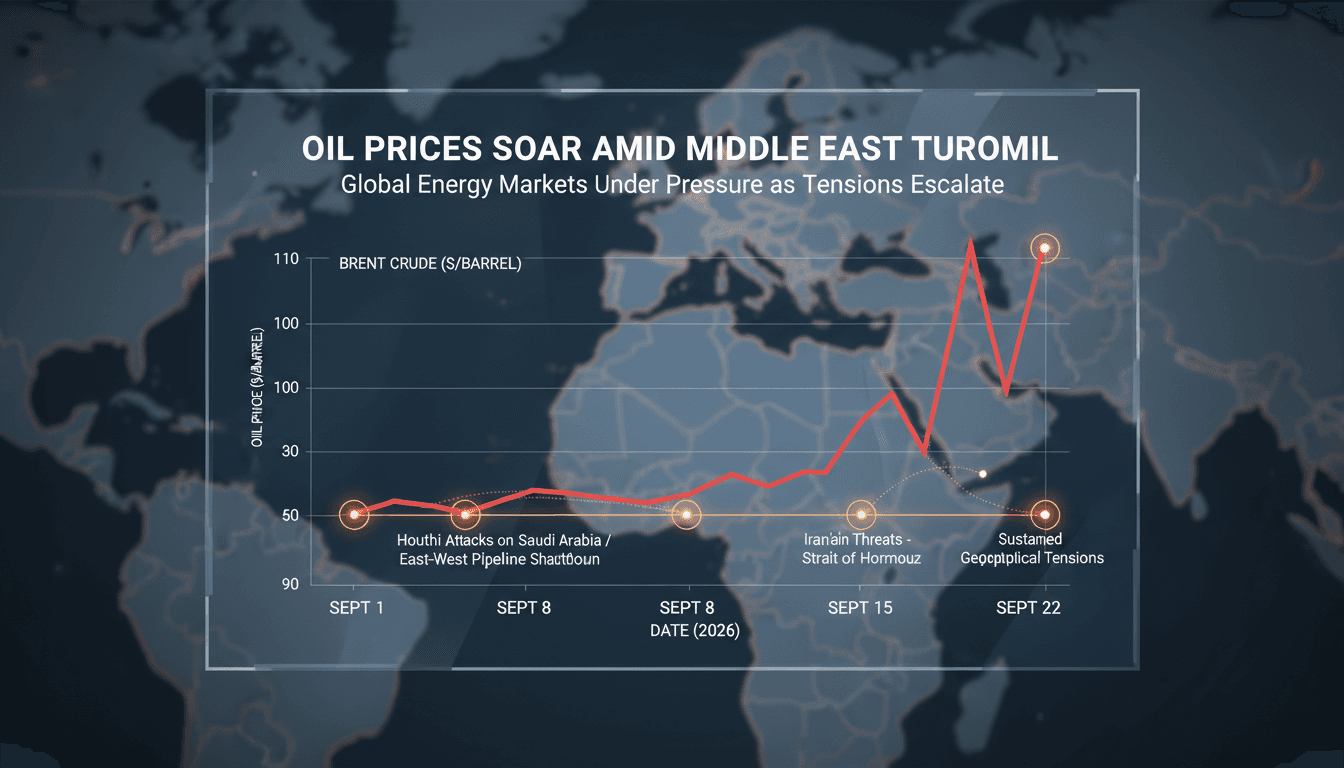
- Oil prices remained above $100 per barrel for the second consecutive week as of September 18, 2026.
- Geopolitical tensions in the Middle East escalated due to Houthi attacks on Saudi Arabia and Iranian threats regarding the Strait of Hormuz.
- Market reactions have largely priced in volatility, with analysts suggesting that prices could stabilize if de-escalation occurs.
The context you actually need
- The conflict began in early 2026, involving the US, Iran, and regional proxies, severely disrupting oil flows through critical transit routes.
- Recent Houthi strikes on Saudi oil facilities and the shutdown of the East-West pipeline have heightened supply concerns.
- Iran's statements about reopening the Strait of Hormuz are tied to changes in US and Israeli leadership, adding further uncertainty to the market.
What's really happening
As of September 18, 2026, Brent crude oil prices hovered around $103.41 per barrel, while West Texas Intermediate (WTI) was at $101.51. This marks a significant increase driven by a combination of geopolitical tensions and supply disruptions. The ongoing conflict in the Middle East, particularly between Saudi Arabia and Yemen's Houthi rebels, has created a precarious situation for oil markets. Houthi drone attacks on Saudi oil facilities have raised alarms about potential supply shortages, leading to a spike in prices earlier in the week.
The situation is compounded by Iran's strategic positioning, as it has linked the reopening of the vital Strait of Hormuz—a key transit route for global oil shipments—to the political landscape in the US and Israel. Iran's insistence on not reopening the Strait until there are changes in leadership in Washington and Jerusalem adds a layer of complexity to the already volatile market. This geopolitical maneuvering has created a "geopolitical premium" on oil prices, which is reflected in the current trading levels.
Despite the volatility, financial markets have largely absorbed the $100-per-barrel price point into their pricing models. Analysts suggest that a price of $160 per barrel would be necessary to trigger significant financial market disruptions. This indicates that while the current prices are elevated, they are not yet at a level that would cause widespread economic panic.
Moreover, the market's response to the recent events has been somewhat muted, with gold prices rising as investors seek safe-haven assets amid uncertainty. The lack of immediate governmental policy shifts suggests that stakeholders are bracing for a prolonged period of elevated oil prices without drastic changes to the status quo.
In summary, the interplay of regional conflicts, strategic posturing by Iran, and the market's ability to absorb price shocks are key factors in understanding the current state of oil prices. The situation remains fluid, and without de-escalation, prices are likely to remain elevated.
Who feels it first (and how)
- Commuters: Higher fuel prices directly impact daily transportation costs.
- Businesses: Companies reliant on logistics and transportation face increased operational costs.
- Consumers: Rising oil prices can lead to higher prices for goods and services, affecting household budgets.
- Investors: Those in energy markets may see volatility in their portfolios as prices fluctuate.
What to watch next
- Geopolitical developments: Monitor any changes in US and Israeli leadership, as these could influence Iranian actions regarding oil transit routes.
- Supply chain disruptions: Keep an eye on any further Houthi attacks or Saudi responses that could impact oil supply.
- Market reactions: Watch for shifts in investor sentiment and how they respond to ongoing tensions, particularly in safe-haven assets like gold.
Oil prices are currently above $100 per barrel due to geopolitical tensions.
Prices will remain elevated without de-escalation in the Middle East.
The long-term impact on global inflation and economic growth remains uncertain.
Frequently Asked Questions
- Why it matters?
- Elevated oil prices can lead to increased inflation and higher living expenses globally.
- What happened (in 30 seconds)?
- Oil prices remained above $100 per barrel for the second consecutive week as of September 18, 2026. Geopolitical tensions in the Middle East escalated due to Houthi attacks on Saudi Arabia and Iranian threats regarding the Strait of Hormuz. Market reactions have largely priced in volatility, with analysts suggesting that prices could stabilize if de-escalation occurs.
- What's really happening?
- As of September 18, 2026, Brent crude oil prices hovered around $103.41 per barrel, while West Texas Intermediate (WTI) was at $101.51. This marks a significant increase driven by a combination of geopolitical tensions and supply disruptions. The ongoing conflict in the Middle East, particularly between Saudi Arabia and Yemen's Houthi rebels, has created a precarious situation for oil markets. Houthi drone attacks on Saudi oil facilities have raised alarms about potential supply shortages, leadi
- Who feels it first (and how)?
- Commuters: Higher fuel prices directly impact daily transportation costs. Businesses: Companies reliant on logistics and transportation face increased operational costs. Consumers: Rising oil prices can lead to higher prices for goods and services, affecting household budgets. Investors: Those in energy markets may see volatility in their portfolios as prices fluctuate.
- What to watch next?
- Geopolitical developments: Monitor any changes in US and Israeli leadership, as these could influence Iranian actions regarding oil transit routes. Supply chain disruptions: Keep an eye on any further Houthi attacks or Saudi responses that could impact oil supply. Market reactions: Watch for shifts in investor sentiment and how they respond to ongoing tensions, particularly in safe-haven assets like gold.
UAE-based English-language newspaper covering regional politics, economics, and global affairs.
"The National reflects Emirati policy perspectives while maintaining international editorial standards."
— A47 Editor
Oil on track to remain above $100 for second straight week as Middle East tensions simmer
Oil prices are on track to remain above $100 per barrel for the second consecutive week, driven by escalating tensions in the Middle East, particularly in the Strait of Hormuz and the Red Sea. These geopolitical risks have raised concerns about poten...
Oil, metals, and agriculture: supply/demand headlines, OPEC chatter, inventories, and price action.
"Solid tape for energy and metals traders tracking macro and micro catalysts."
— A47 Editor
Oil dips, Brent turns negative for the week amid easing Middle East supply fears
Oil prices have dipped, with Brent crude turning negative for the week as fears of supply disruptions from the Middle East ease. This decline follows a period of heightened prices driven by geopolitical tensions, particularly involving military actio...
Markets desk coverage, trading insights, and investor updates.
"WSJ’s markets reporting provides in-depth analysis and context for investors."
— A47 Editor
Oil Futures Pull Back From 4-Month Highs
Oil futures have retreated from four-month highs after reaching their peak due to rising tensions in the Middle East, which have raised concerns about potential disruptions to oil supplies. This pullback follows a period of significant price increase...