
US Treasury Yields Exceed 5% Amid Bond Market Selloff
Why it matters
This surge in yields indicates a fundamental shift in global borrowing costs, affecting everything from mortgages to corporate financing.
What happened (in 30 seconds)
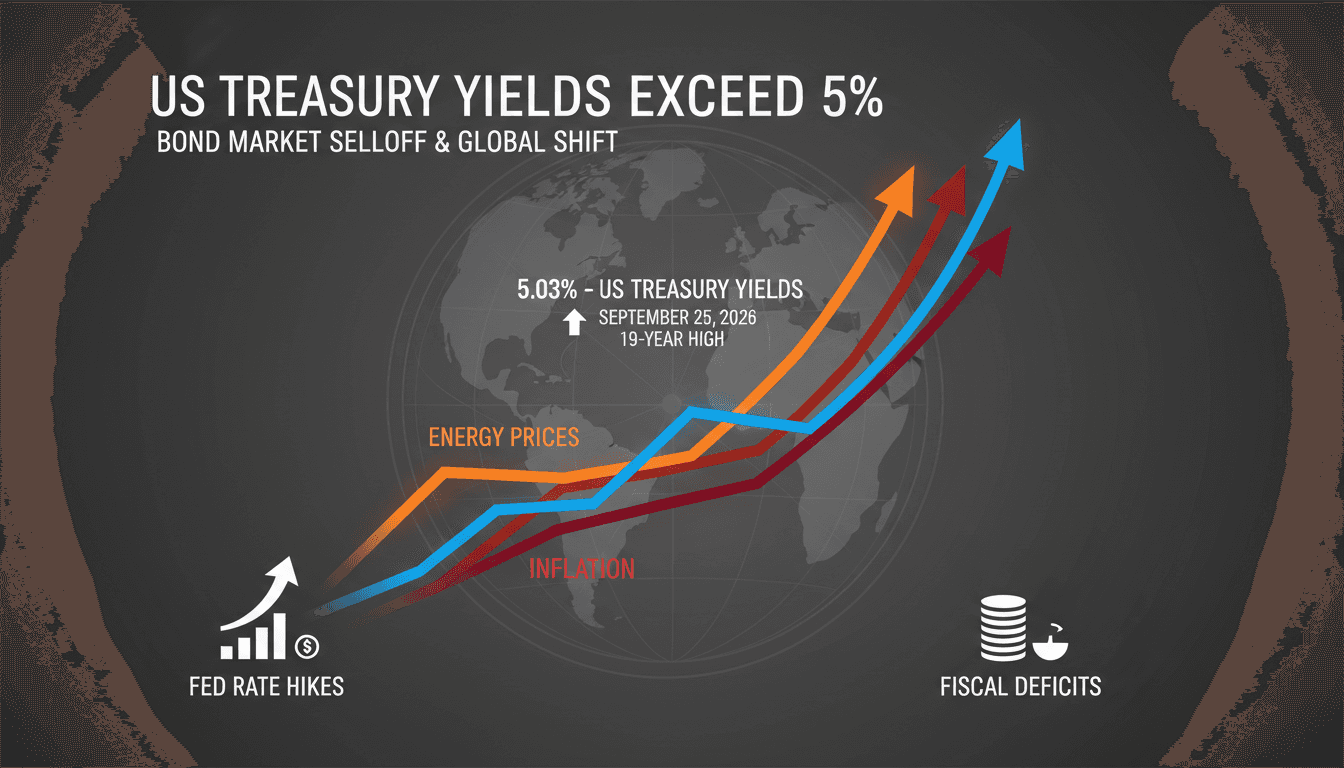
- Yields on US Treasuries surged: The 10-year yield exceeded 5% for the first time since 2007, reaching approximately 5.20-5.22%.
- Driving factors: This spike was fueled by rising energy prices, strong economic data, persistent inflation, and expectations of further Federal Reserve rate hikes.
- Market reactions: Bond markets showed signs of stabilization as oil prices eased, but mortgage rates approached 7%, increasing pressure on asset valuations.
The context you actually need
- Persistent inflation: Inflation rates remain above target, contributing to higher borrowing costs.
- Geopolitical tensions: Elevated oil prices near $100 per barrel have compounded the pressure on government borrowing.
- Fiscal deficits: The US faces massive fiscal deficits, pushing the national debt to approximately $40 trillion, which influences Treasury yields.
What's really happening
The recent surge in US Treasury yields marks a significant moment in financial markets, driven by a confluence of economic factors. As of September 25, 2026, the 10-year Treasury yield reached a peak of 5.22%, the highest level since 2007. This increase is not merely a temporary market correction; it reflects a structural shift in the global borrowing landscape.
Several key elements are at play. First, persistent inflation has remained above the Federal Reserve's target, prompting the central bank to adopt a hawkish stance. The Fed's commitment to combating inflation through potential rate hikes has created an environment where investors demand higher yields to compensate for the increased risk of holding bonds.
Second, robust economic data indicating business activity at five-year highs has fueled optimism, but it also raises concerns about overheating, leading to further tightening by the Fed. The combination of strong economic indicators and inflationary pressures has led to a selloff in the bond market, as investors reassess their expectations for future interest rates.
Additionally, geopolitical tensions have driven energy prices higher, with oil nearing $100 per barrel. This surge in energy costs not only impacts inflation but also affects government borrowing costs, as higher energy prices can lead to increased fiscal deficits. The US Treasury Department is grappling with a national debt that has ballooned to approximately $40 trillion, further complicating the fiscal landscape.
The implications of these developments are profound. Higher yields mean increased borrowing costs for consumers and businesses alike. For instance, mortgage rates are climbing toward 7%, which could dampen housing market activity and affect affordability for potential homebuyers. Moreover, investors in equities may face increased pressure on asset valuations as higher interest rates typically lead to lower stock prices.
In this environment, market participants are recalibrating their strategies. Some see opportunities in the new yield landscape, particularly in sectors that can benefit from higher rates. However, the overall sentiment remains cautious, as the potential for further Fed tightening looms large.
Who feels it first (and how)
- Homebuyers: Rising mortgage rates will increase monthly payments, affecting affordability.
- Investors: Higher yields may lead to lower stock valuations and impact investment strategies.
- Businesses: Increased borrowing costs could slow down expansion plans and capital investments.
- Government: Higher interest payments on national debt may strain fiscal budgets.
What to watch next
- Federal Reserve announcements: Future rate hikes will significantly influence borrowing costs and market sentiment.
- Inflation data: Continued inflation trends will dictate the Fed's monetary policy and impact Treasury yields.
- Energy prices: Fluctuations in oil prices will affect inflation and government borrowing costs, influencing market dynamics.
Yields on US Treasuries have surpassed 5%, indicating a structural shift in borrowing costs.
Further Federal Reserve rate hikes are expected, impacting various sectors.
The long-term effects on asset valuations and consumer behavior remain uncertain.
Frequently Asked Questions
- Why it matters?
- This surge in yields indicates a fundamental shift in global borrowing costs, affecting everything from mortgages to corporate financing.
- What happened (in 30 seconds)?
- Yields on US Treasuries surged: The 10-year yield exceeded 5% for the first time since 2007, reaching approximately 5.20-5.22%. Driving factors: This spike was fueled by rising energy prices, strong economic data, persistent inflation, and expectations of further Federal Reserve rate hikes. Market reactions: Bond markets showed signs of stabilization as oil prices eased, but mortgage rates approached 7%, increasing pressure on asset valuations.
- What's really happening?
- The recent surge in US Treasury yields marks a significant moment in financial markets, driven by a confluence of economic factors. As of September 25, 2026, the 10-year Treasury yield reached a peak of 5.22%, the highest level since 2007. This increase is not merely a temporary market correction; it reflects a structural shift in the global borrowing landscape. Several key elements are at play. First, persistent inflation has remained above the Federal Reserve's target, prompting the central b
- Who feels it first (and how)?
- Homebuyers: Rising mortgage rates will increase monthly payments, affecting affordability. Investors: Higher yields may lead to lower stock valuations and impact investment strategies. Businesses: Increased borrowing costs could slow down expansion plans and capital investments. Government: Higher interest payments on national debt may strain fiscal budgets.
- What to watch next?
- Federal Reserve announcements: Future rate hikes will significantly influence borrowing costs and market sentiment. Inflation data: Continued inflation trends will dictate the Fed's monetary policy and impact Treasury yields. Energy prices: Fluctuations in oil prices will affect inflation and government borrowing costs, influencing market dynamics.
Global markets, investing, and macroeconomics from a premier financial newsroom.
"Bloomberg is respected for in-depth financial reporting and data-driven analysis."
— A47 Editor
Great Bond Shakeout Locks In a 5% World ‘Until Something Breaks’
The recent surge in US Treasury yields, surpassing 5% for the first time since 2023, signals a significant shift in the bond market, driven by factors such as rising oil prices, increased government borrowing costs, and persistent inflation. This tre...
Global business headlines with AI angles.
"General business outlet that frequently covers AI."
— A47 Editor
Wall Street Fears 'Something Is Going to Break' As Treasury Yields Blow Past 5%
Wall Street is expressing concerns as Treasury yields have surged past 5%, a level that historically precedes significant financial disruptions. This rapid increase in the 10-year yield has raised alarms among investors, who fear potential instabilit...
Technology business and AI-related headlines.
"Data-driven tech newsroom with global scope."
— A47 Editor
US Treasury Yields Hit 5% as Wall Street Faces New Rate Regime
US Treasury yields have surpassed 5%, marking a significant shift in the financial landscape as Wall Street and Washington grapple with the implications of this new rate regime. This surge in yields indicates a potential transition from previous econ...
Technology business news, market impacts, and innovation trends.
"Bloomberg is a premier financial and tech news provider, respected for its in-depth reporting and analytical rigor."
— A47 Editor
US Treasury Yields Hit 5% as Wall Street Faces New Rate Regime
US Treasury yields have surpassed 5%, marking a significant shift in the financial landscape as Wall Street and Washington grapple with the implications of this new rate regime. This surge in yields indicates a potential transition from previous econ...
Markets desk coverage, trading insights, and investor updates.
"WSJ’s markets reporting provides in-depth analysis and context for investors."
— A47 Editor
A Perfect Storm Is Raging in the Bond Market
The U.S. bond market is facing significant turmoil as the benchmark Treasury yield surged above 5.1%, marking its largest one-day increase in over a year. This spike is attributed to a deepening selloff in Treasury bonds, driven by rising oil prices ...