
U.S. Dollar Index Reaches Two-Month High Amid Fed Rate Hike Speculation
Why it matters
The U.S. dollar's strength influences global trade dynamics, affecting everything from import prices to investment flows.
What happened (in 30 seconds)
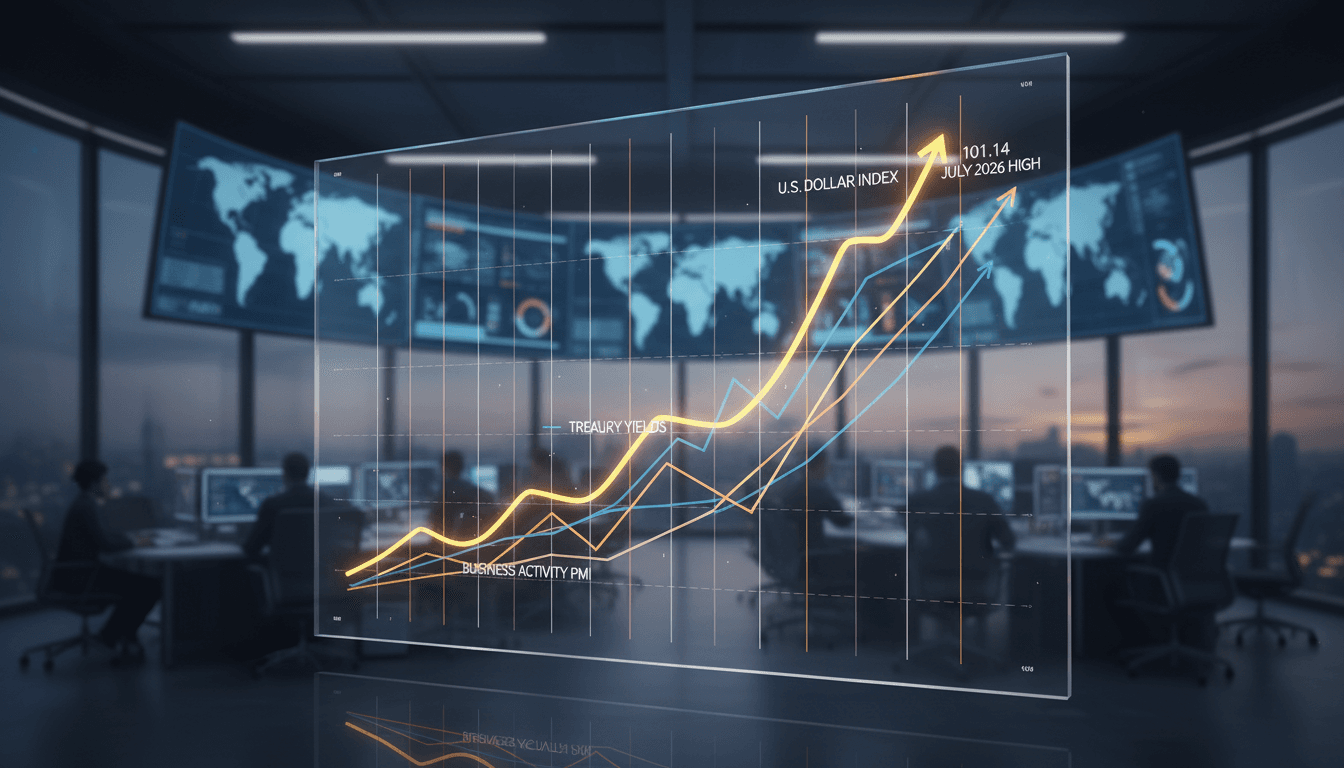
- The U.S. dollar index rose to 101.14, its highest level since July 2026, driven by expectations of further Federal Reserve rate hikes.
- Robust business activity data from the U.S. indicated accelerating growth, leading to increased rate hike probabilities to 69%.
- A selloff in U.S. Treasury bonds contributed to higher yields, further supporting the dollar's ascent against other currencies.
The context you actually need
- The Federal Reserve's recent rate hike marked its first increase in over three years, signaling a shift in monetary policy amid persistent inflation concerns.
- S&P Global's PMI data showed the fastest business activity growth since July 2021, indicating a robust economic environment.
- Treasury yields surged, with the 10-year yield reaching 5.116%, reflecting investor expectations of sustained Fed tightening.
What's really happening
The recent surge in the U.S. dollar index is a direct response to a confluence of economic indicators and Federal Reserve policy signals. The dollar's rise to 101.14 reflects heightened expectations for further interest rate hikes, which are now pegged at approximately 69% for October. This shift is largely driven by strong data from the S&P Global Purchasing Managers' Index (PMI), which reported the fastest growth in business activity since July 2021. Both the services and manufacturing sectors are expanding, with input costs rising at the steepest rate in four years, indicating persistent inflationary pressures.
Fed Governor Michael Barr's comments have reinforced the notion that additional policy adjustments are likely necessary to combat inflation. This hawkish stance from the Fed has led to a significant selloff in U.S. Treasury bonds, pushing yields higher. The 10-year Treasury yield recently hit 5.116%, a level that reflects investor sentiment regarding future interest rate increases. As yields rise, the attractiveness of holding U.S. dollars increases, leading to a stronger dollar against other currencies like the euro, sterling, and yen.
The implications of a stronger dollar are multifaceted. For one, it can lead to increased import costs for countries that rely on U.S. goods, while also affecting the competitiveness of U.S. exports. In the context of Dubai, where the UAE dirham is pegged to the U.S. dollar, residents may see fluctuations in import prices, impacting their cost of living. Additionally, a stronger dollar could influence real estate and tourism flows in Dubai, as international visitors may find it more expensive to travel and spend in the region.
As the dollar continues to strengthen, forex markets are experiencing increased volatility, particularly ahead of significant geopolitical events like the upcoming U.S.-China summit. Investors are closely monitoring these developments, as they could further influence the dollar's trajectory and the broader economic landscape.
Who feels it first (and how)
- Importers in Dubai: Higher dollar value increases costs for imported goods.
- Exporters in the U.S.: A stronger dollar may reduce competitiveness abroad.
- Investors in Treasury bonds: Rising yields could impact bond prices and investment strategies.
- Tourism sectors: Higher dollar value may deter international visitors due to increased costs.
What to watch next
- Federal Reserve announcements: Future comments or decisions regarding interest rates will be crucial in shaping market expectations.
- S&P Global PMI releases: Continued strong data could further bolster rate hike probabilities and dollar strength.
- Geopolitical developments: Outcomes from the U.S.-China summit may influence market sentiment and currency valuations.
The U.S. dollar index has reached a two-month high due to rate hike expectations.
Continued dollar strength if economic indicators remain robust and the Fed maintains a hawkish stance.
The long-term impact on global trade dynamics and inflation rates in the U.S. and abroad.
Frequently Asked Questions
- Why it matters?
- The U.S. dollar's strength influences global trade dynamics, affecting everything from import prices to investment flows.
- What happened (in 30 seconds)?
- The U.S. dollar index rose to 101.14, its highest level since July 2026, driven by expectations of further Federal Reserve rate hikes. Robust business activity data from the U.S. indicated accelerating growth, leading to increased rate hike probabilities to 69%. A selloff in U.S. Treasury bonds contributed to higher yields, further supporting the dollar's ascent against other currencies.
- What's really happening?
- The recent surge in the U.S. dollar index is a direct response to a confluence of economic indicators and Federal Reserve policy signals. The dollar's rise to 101.14 reflects heightened expectations for further interest rate hikes, which are now pegged at approximately 69% for October. This shift is largely driven by strong data from the S&P Global Purchasing Managers' Index (PMI), which reported the fastest growth in business activity since July 2021. Both the services and manufacturing sectors
- Who feels it first (and how)?
- Importers in Dubai: Higher dollar value increases costs for imported goods. Exporters in the U.S.: A stronger dollar may reduce competitiveness abroad. Investors in Treasury bonds: Rising yields could impact bond prices and investment strategies. Tourism sectors: Higher dollar value may deter international visitors due to increased costs.
- What to watch next?
- Federal Reserve announcements: Future comments or decisions regarding interest rates will be crucial in shaping market expectations. S&P Global PMI releases: Continued strong data could further bolster rate hike probabilities and dollar strength. Geopolitical developments: Outcomes from the U.S.-China summit may influence market sentiment and currency valuations.
Currency market headlines, FX rates, central-bank chatter, and macro drivers moving major pairs.
"Investing.com’s forex stream is useful for fast updates across USD, EUR, JPY, GBP and emerging-market FX."
— A47 Editor
Dollar rises to nearly two-month high on firmer Fed rate hike bets, rout in bonds
The U.S. dollar has risen to nearly a two-month high, driven by stronger expectations for interest rate hikes by the Federal Reserve and a significant downturn in bond markets. This surge reflects increased investor confidence amid changing economic ...
Social/economic commentary and analysis relevant to business and markets.
"WSJ blends data-driven economic insight with commentary on policy and society."
— A47 Editor
Dollar Jumps to 8-Week High on Fed Rate-Hike Bets
The U.S. dollar surged to its highest level in eight weeks against a basket of currencies as markets reacted to expectations of further interest rate hikes by the Federal Reserve, driven by strong employment data.
Markets desk coverage, trading insights, and investor updates.
"WSJ’s markets reporting provides in-depth analysis and context for investors."
— A47 Editor
Dollar Jumps to 8-Week High on Fed Rate-Hike Bets
The U.S. dollar surged to its highest level in eight weeks against a basket of currencies as markets reacted to expectations of further interest rate hikes by the Federal Reserve. This rise follows strong employment data, which has fueled speculation...