
U.S. Mortgage Rates Climb to 7.03 Percent Amid Iran War Oil Disruptions
Why it matters
The surge in mortgage rates reflects broader economic instability, affecting housing affordability and market dynamics.
What happened (in 30 seconds)
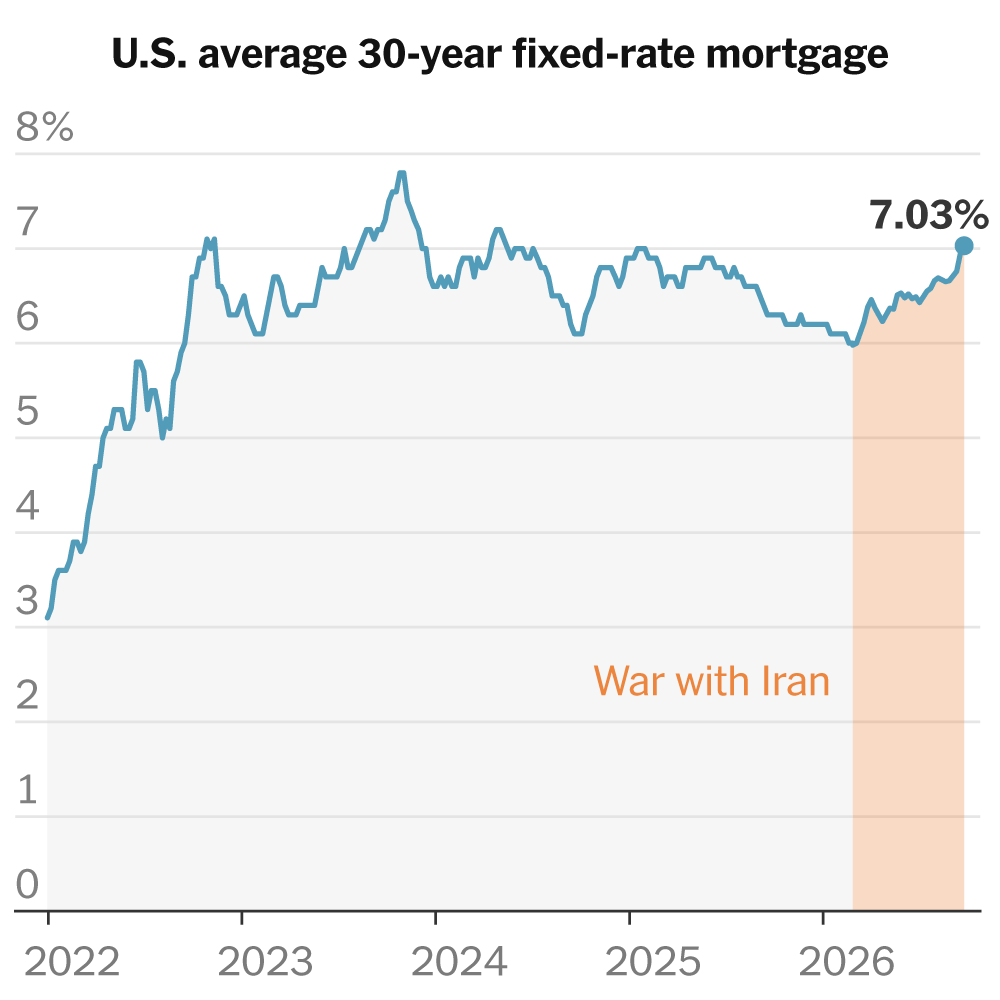
- Mortgage rates hit 7.03 percent on September 24, 2026, marking the highest level since January 2025.
- The increase is linked to the ongoing U.S.-Israel military campaign against Iran, disrupting oil supplies and elevating energy prices.
- Weak housing demand persists, with existing home sales down 2 percent in August, indicating a sluggish market.
The context you actually need
- The conflict with Iran began on February 28, 2026, leading to significant disruptions in oil exports from the Persian Gulf.
- Inflation expectations have risen, with annual inflation at 3.4 percent in August, influencing mortgage rates and buyer sentiment.
- The housing market was already struggling to recover from previous high-rate periods, making the current situation more precarious for potential buyers.
What's really happening
The recent spike in U.S. average 30-year fixed mortgage rates to 7.03 percent is a direct consequence of geopolitical tensions and their economic fallout. The U.S.-Israel military campaign against Iran, initiated on February 28, 2026, has severely disrupted oil exports from the Persian Gulf, leading to a significant increase in global energy prices. This disruption has not only affected fuel costs but has also heightened inflation expectations across various sectors.
As energy prices rise, so do the costs associated with housing, which is heavily influenced by mortgage rates. The Federal Reserve's monetary policy is under pressure as inflation concerns mount, prompting discussions about potential interest rate adjustments. The combination of rising mortgage rates and inflation creates a challenging environment for homebuyers, particularly first-time buyers who are already facing affordability issues.
The housing market was already in a fragile state, recovering slowly from previous high-rate periods. The increase in mortgage rates from below 6 percent earlier in 2026 to over 7 percent has further suppressed buyer demand. Existing home sales have declined, with a reported 2 percent drop in August, marking the lowest level since June 2025. This trend indicates that potential buyers are either unable or unwilling to enter the market amid rising costs and economic uncertainty.
Moreover, the ongoing conflict has created a ripple effect, influencing not just the housing market but also broader economic conditions. With mortgage applications declining and pending sales dropping, the overall sentiment in the housing market remains subdued. Economists predict that unless there is a significant shift in either geopolitical stability or economic policy, the housing market will continue to struggle, impacting both buyers and sellers.
Who feels it first (and how)
- First-time homebuyers: Struggling with affordability as rising rates increase monthly payments.
- Real estate agents: Experiencing reduced buyer activity, leading to fewer transactions.
- Homeowners looking to refinance: Facing higher costs, making refinancing less attractive.
- Investors in real estate: Seeing diminished returns as market activity slows down.
- Low to middle-income families: Most affected by rising costs and limited housing options.
What to watch next
- Federal Reserve announcements: Any changes in interest rates could further influence mortgage rates and housing demand.
- Oil price fluctuations: Continued instability in the Middle East may lead to further increases in energy prices, impacting inflation and mortgage rates.
- Housing market data: Keep an eye on existing home sales and mortgage application trends to gauge market recovery or further decline.
Mortgage rates have reached 7.03 percent, the highest since January 2025.
Continued weakness in the housing market as affordability challenges persist.
The long-term impact of geopolitical tensions on U.S. economic stability and housing demand.
Frequently Asked Questions
- Why it matters?
- The surge in mortgage rates reflects broader economic instability, affecting housing affordability and market dynamics.
- What happened (in 30 seconds)?
- Mortgage rates hit 7.03 percent on September 24, 2026, marking the highest level since January 2025. The increase is linked to the ongoing U.S.-Israel military campaign against Iran, disrupting oil supplies and elevating energy prices. Weak housing demand persists, with existing home sales down 2 percent in August, indicating a sluggish market.
- What's really happening?
- The recent spike in U.S. average 30-year fixed mortgage rates to 7.03 percent is a direct consequence of geopolitical tensions and their economic fallout. The U.S.-Israel military campaign against Iran, initiated on February 28, 2026, has severely disrupted oil exports from the Persian Gulf, leading to a significant increase in global energy prices. This disruption has not only affected fuel costs but has also heightened inflation expectations across various sectors. As energy prices rise, so d
- Who feels it first (and how)?
- First-time homebuyers: Struggling with affordability as rising rates increase monthly payments. Real estate agents: Experiencing reduced buyer activity, leading to fewer transactions. Homeowners looking to refinance: Facing higher costs, making refinancing less attractive. Investors in real estate: Seeing diminished returns as market activity slows down. Low to middle-income families: Most affected by rising costs and limited housing options.
- What to watch next?
- Federal Reserve announcements: Any changes in interest rates could further influence mortgage rates and housing demand. Oil price fluctuations: Continued instability in the Middle East may lead to further increases in energy prices, impacting inflation and mortgage rates. Housing market data: Keep an eye on existing home sales and mortgage application trends to gauge market recovery or further decline.
Markets, economy, and company analysis from NYT’s business desk.
"The New York Times is a globally recognized newspaper offering authoritative reporting with a center-left editorial stance."
— A47 Editor
Mortgage Rates Hit 7% as Iran War Fallout Crushes a Weak Housing Market
The average rate on a 30-year mortgage in the United States has surged to 7.03 percent, exacerbating the challenges faced by a housing market already struggling with affordability issues. This increase is attributed to various economic pressures, inc...
News from the United States including domestic politics, society, and culture.
"The Guardian is known for its progressive editorial stance and in-depth analysis, often advocating for social justice, environmental issues, and liberal values."
— A47 Editor
US mortgage rates top 7% for first time in 20 months
US mortgage rates have surpassed 7% for the first time in 20 months, following a decision by the Federal Reserve to raise interest rates amid ongoing inflation concerns. This increase, reported by Freddie Mac, exacerbates challenges in a housing mark...
Social/economic commentary and analysis relevant to business and markets.
"WSJ blends data-driven economic insight with commentary on policy and society."
— A47 Editor
Average 30-year mortgage rates hit 7.03% this week, the first time they have surpassed 7% since the beginning of last year
Average 30-year mortgage rates have reached 7.03% this week, marking the first time they have exceeded the 7% threshold since early last year. This increase is significant as it reflects a shift in the housing market dynamics, impacting buyers, selle...