
US 30-Year Mortgage Rates Surpass 7% Amid Iran Conflict-Induced Inflation
Why it matters
This surge in mortgage rates reflects broader economic instability, affecting housing affordability and market dynamics nationwide.
What happened (in 30 seconds)
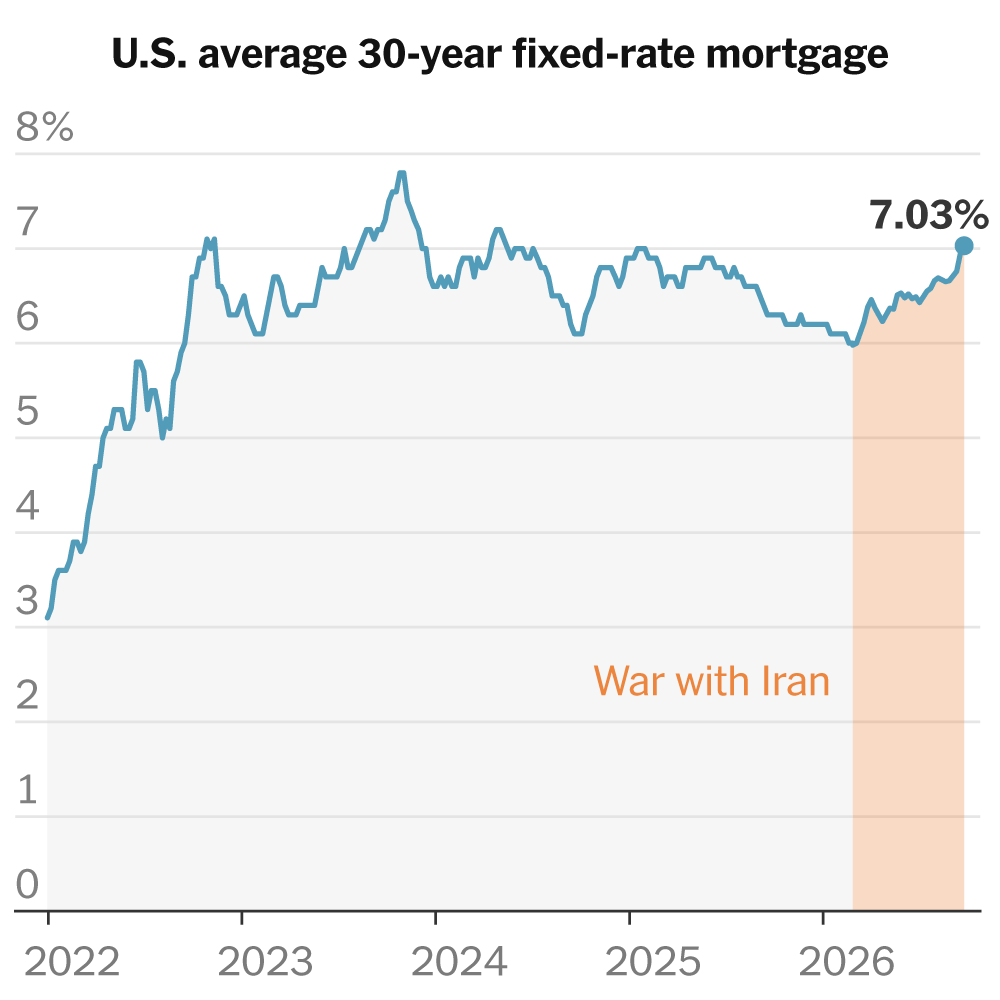
- Mortgage rates reached 7.03% on September 24, 2026, the highest since January 2025.
- Existing home sales fell 2% in August 2026, marking the lowest level since June 2025.
- Inflation and energy prices surged due to the ongoing Iran conflict, prompting the Federal Reserve to raise interest rates.
The context you actually need
- Geopolitical tensions: The Iran conflict, escalating since February 2026, disrupted oil shipments, driving up energy prices and inflation.
- Federal Reserve actions: In response to persistent inflation at 3.4% annually, the Fed raised interest rates, directly influencing mortgage rates.
- Market reaction: The increase in mortgage rates has further locked in sellers and deterred buyers, compounding existing affordability challenges.
What's really happening
The recent spike in US mortgage rates to 7.03% is a direct consequence of geopolitical tensions stemming from the Iran conflict, which began escalating in late February 2026. This conflict has disrupted oil shipments from the Persian Gulf, leading to a surge in energy prices, including gasoline and heating oil. As a result, inflation has remained persistently high, recorded at 3.4% annually in August 2026.
In response to these inflationary pressures, the Federal Reserve has raised interest rates, which has a cascading effect on mortgage rates that typically track 10-year Treasury yields. Earlier in 2026, mortgage rates had been trending lower, but the geopolitical instability and subsequent economic pressures reversed this trend sharply.
The implications for the housing market are significant. Existing home sales have declined by 2% in August, reaching their lowest level since June 2025. This decline is compounded by the fact that home prices have only seen modest annual gains of 1.5% in June, indicating a market that is struggling to maintain momentum. Economists have noted that the move above the 7% threshold for mortgage rates further locks in sellers who are hesitant to sell in a declining market, while simultaneously deterring potential buyers who are facing increased borrowing costs.
The combination of high energy prices, rising inflation, and elevated Treasury yields has created a challenging environment for both buyers and sellers. The National Association of Realtors has reported ongoing weakness in existing home sales, and economists from institutions like Columbia University and Realtor.com have highlighted reduced buyer demand. This situation may lead to price adjustments or delistings by sellers as they respond to the changing market dynamics.
Who feels it first (and how)
- Homebuyers: Facing higher borrowing costs, making home purchases less affordable.
- Sellers: Hesitant to enter the market due to declining home values and increased rates.
- Real estate agents: Experiencing reduced transaction volumes and potential income declines.
- Economists: Monitoring the broader economic implications of rising rates and inflation.
What to watch next
- Inflation rates: Continued monitoring of inflation will be crucial, as persistent high rates could lead to further Fed rate hikes.
- Housing market trends: Watch for changes in home sales and price adjustments as sellers react to the new mortgage landscape.
- Energy prices: Fluctuations in global oil prices will impact inflation and, consequently, mortgage rates.
Mortgage rates have surpassed 7%, impacting housing affordability.
Continued economic uncertainty will keep pressure on the housing market and inflation.
The long-term effects of the Iran conflict on global energy prices and US economic stability.
Frequently Asked Questions
- Why it matters?
- This surge in mortgage rates reflects broader economic instability, affecting housing affordability and market dynamics nationwide.
- What happened (in 30 seconds)?
- Mortgage rates reached 7.03% on September 24, 2026, the highest since January 2025. Existing home sales fell 2% in August 2026, marking the lowest level since June 2025. Inflation and energy prices surged due to the ongoing Iran conflict, prompting the Federal Reserve to raise interest rates.
- What's really happening?
- The recent spike in US mortgage rates to 7.03% is a direct consequence of geopolitical tensions stemming from the Iran conflict, which began escalating in late February 2026. This conflict has disrupted oil shipments from the Persian Gulf, leading to a surge in energy prices, including gasoline and heating oil. As a result, inflation has remained persistently high, recorded at 3.4% annually in August 2026. In response to these inflationary pressures, the Federal Reserve has raised interest rat
- Who feels it first (and how)?
- Homebuyers: Facing higher borrowing costs, making home purchases less affordable. Sellers: Hesitant to enter the market due to declining home values and increased rates. Real estate agents: Experiencing reduced transaction volumes and potential income declines. Economists: Monitoring the broader economic implications of rising rates and inflation.
- What to watch next?
- Inflation rates: Continued monitoring of inflation will be crucial, as persistent high rates could lead to further Fed rate hikes. Housing market trends: Watch for changes in home sales and price adjustments as sellers react to the new mortgage landscape. Energy prices: Fluctuations in global oil prices will impact inflation and, consequently, mortgage rates.
Markets, economy, and company analysis from NYT’s business desk.
"The New York Times is a globally recognized newspaper offering authoritative reporting with a center-left editorial stance."
— A47 Editor
Mortgage Rates Hit 7% as Iran War Fallout Crushes a Weak Housing Market
The average rate on a 30-year mortgage in the United States has surged to 7.03 percent, exacerbating the challenges faced by a housing market already struggling with affordability issues. This increase is attributed to various economic pressures, inc...
News from the United States including domestic politics, society, and culture.
"The Guardian is known for its progressive editorial stance and in-depth analysis, often advocating for social justice, environmental issues, and liberal values."
— A47 Editor
US mortgage rates top 7% for first time in 20 months
US mortgage rates have surpassed 7% for the first time in 20 months, following a decision by the Federal Reserve to raise interest rates amid ongoing inflation concerns. This increase, reported by Freddie Mac, exacerbates challenges in a housing mark...
Social/economic commentary and analysis relevant to business and markets.
"WSJ blends data-driven economic insight with commentary on policy and society."
— A47 Editor
Average 30-year mortgage rates hit 7.03% this week, the first time they have surpassed 7% since the beginning of last year
Average 30-year mortgage rates have reached 7.03% this week, marking the first time they have exceeded the 7% threshold since early last year. This increase is significant as it reflects a shift in the housing market dynamics, impacting buyers, selle...