
U.S. 30-Year Treasury Yield Hits Highest Level Since 2004 Amid Global Bond Selloff
Why it matters
The surge in U.S. Treasury yields signals a shift in global bond markets that could impact investment strategies and economic growth.
What happened (in 30 seconds)
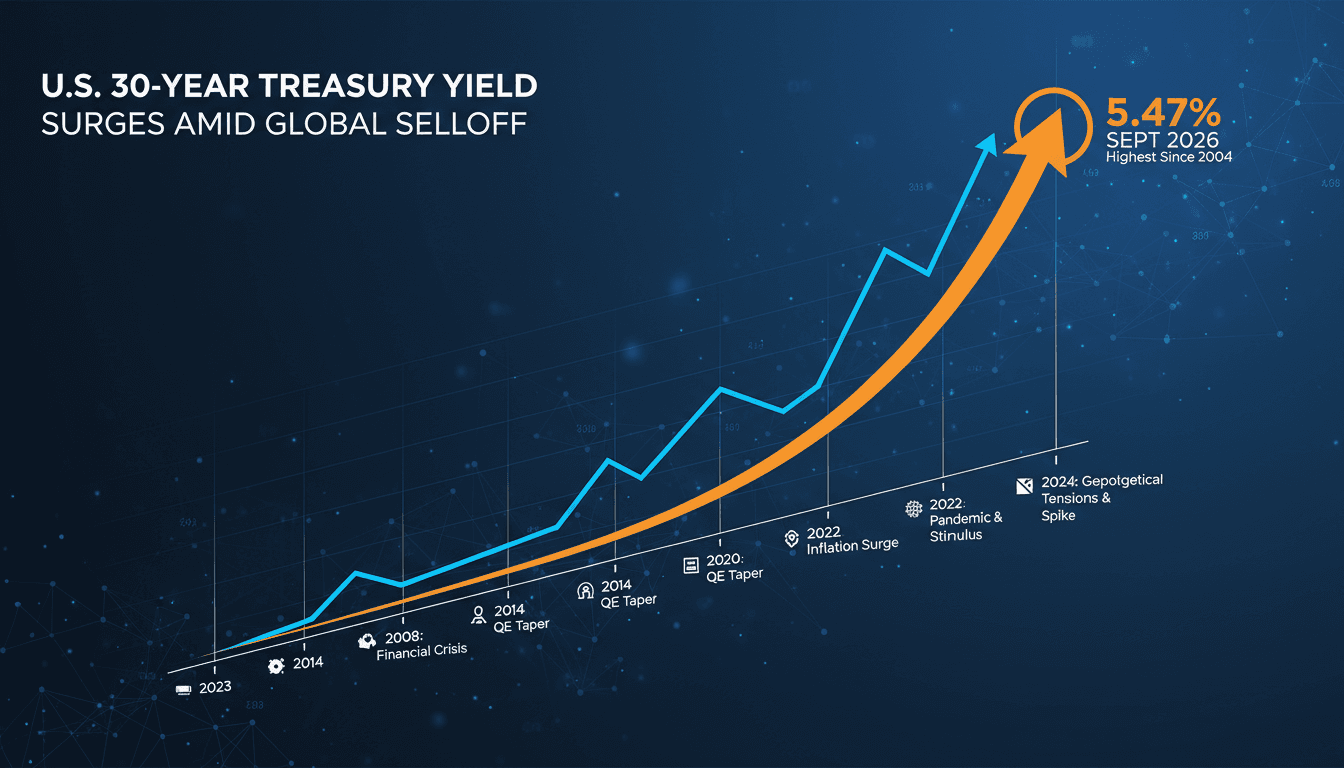
- U.S. 30-year Treasury yield reached approximately 5.44%-5.47% on September 24, 2026, the highest since 2004.
- Global bond selloff intensified due to strong U.S. economic data, elevated energy prices, and persistent inflation concerns.
- Equity markets declined, with major U.S. indices falling over 0.5%-1% amid rising borrowing costs.
The context you actually need
- Persistent inflation has kept yields elevated, with levels above Federal Reserve targets contributing to market volatility.
- Geopolitical tensions, particularly in the Middle East, have driven energy prices higher, adding to inflationary pressures.
- Heavy government borrowing has increased supply in the Treasury market, leading to reduced demand for long-duration bonds.
What's really happening
On September 24, 2026, the U.S. 30-year Treasury yield surged to its highest level in over two decades, reflecting a broader trend of rising yields across global bond markets. This spike was primarily driven by a combination of strong economic indicators and geopolitical tensions. Flash Purchasing Managers' Index (PMI) data revealed that U.S. business activity had accelerated to a five-year high, suggesting robust economic growth. This data, coupled with elevated inflation rates, has led investors to demand higher yields as compensation for the increased risk associated with long-term bonds.
The bond selloff has been exacerbated by a failed five-year Treasury auction the day before, which indicated weak demand from primary dealers. As a result, investors are increasingly wary of holding long-duration bonds, leading to a selloff that has pushed yields higher. The Federal Reserve's hawkish stance, signaling potential rate hikes, has further fueled this trend. With inflation remaining stubbornly above target levels, the Fed's commitment to controlling price growth has created an environment where long-term yields are likely to remain elevated.
Geopolitical factors, particularly tensions involving Iran, have also played a significant role in this dynamic. Statements from Iranian officials have raised concerns about oil supply disruptions, contributing to spikes in energy prices. This cost-push inflation adds another layer of complexity to the economic landscape, as higher energy costs can lead to increased overall inflation, prompting further rate hikes from the Fed.
The implications of rising yields extend beyond the bond market. Equity markets have reacted negatively, with major U.S. indices experiencing declines as higher borrowing costs pressure valuations, particularly in the technology sector. Mortgage rates have approached 7%, impacting housing affordability and potentially cooling the real estate market. As global yields rise, investors are reassessing their portfolios, leading to a potential shift in asset allocation strategies.
In summary, the surge in U.S. Treasury yields reflects a confluence of strong economic data, geopolitical tensions, and persistent inflation concerns. This environment is reshaping investment strategies and could have lasting implications for both the bond and equity markets.
Who feels it first (and how)
- Real estate investors: Higher mortgage rates could reduce affordability and dampen demand.
- Tech sector: Increased borrowing costs may pressure valuations and investment in growth.
- Global bond investors: Rising yields could lead to losses in bond portfolios, prompting a reevaluation of risk.
- Consumers: Higher interest rates may translate to increased costs for loans and mortgages.
What to watch next
- Federal Reserve announcements: Any signals regarding future rate hikes will be crucial for market expectations.
- Economic data releases: Upcoming PMI and inflation reports will provide insights into the sustainability of economic growth.
- Geopolitical developments: Tensions in the Middle East, particularly regarding oil supply, could further influence energy prices and inflation.
U.S. Treasury yields are at multi-decade highs, reflecting reduced demand for long-duration bonds.
Continued volatility in global bond markets as investors react to economic data and geopolitical tensions.
The long-term impact of rising yields on economic growth and consumer spending remains uncertain.
Frequently Asked Questions
- Why it matters?
- The surge in U.S. Treasury yields signals a shift in global bond markets that could impact investment strategies and economic growth.
- What happened (in 30 seconds)?
- U.S. 30-year Treasury yield reached approximately 5.44%-5.47% on September 24, 2026, the highest since 2004. Global bond selloff intensified due to strong U.S. economic data, elevated energy prices, and persistent inflation concerns. Equity markets declined, with major U.S. indices falling over 0.5%-1% amid rising borrowing costs.
- What's really happening?
- On September 24, 2026, the U.S. 30-year Treasury yield surged to its highest level in over two decades, reflecting a broader trend of rising yields across global bond markets. This spike was primarily driven by a combination of strong economic indicators and geopolitical tensions. Flash Purchasing Managers' Index (PMI) data revealed that U.S. business activity had accelerated to a five-year high, suggesting robust economic growth. This data, coupled with elevated inflation rates, has led investo
- Who feels it first (and how)?
- Real estate investors: Higher mortgage rates could reduce affordability and dampen demand. Tech sector: Increased borrowing costs may pressure valuations and investment in growth. Global bond investors: Rising yields could lead to losses in bond portfolios, prompting a reevaluation of risk. Consumers: Higher interest rates may translate to increased costs for loans and mortgages.
- What to watch next?
- Federal Reserve announcements: Any signals regarding future rate hikes will be crucial for market expectations. Economic data releases: Upcoming PMI and inflation reports will provide insights into the sustainability of economic growth. Geopolitical developments: Tensions in the Middle East, particularly regarding oil supply, could further influence energy prices and inflation.
Currency market headlines, FX rates, central-bank chatter, and macro drivers moving major pairs.
"Investing.com’s forex stream is useful for fast updates across USD, EUR, JPY, GBP and emerging-market FX."
— A47 Editor
U.S. 30-yr Treasury yield ends at highest level since 2004 as bond rout deepens
The U.S. 30-year Treasury yield has reached its highest level since 2004, closing at a significant milestone amid a deepening bond market rout. This surge reflects ongoing investor concerns over inflation and rising borrowing needs, as the 10-year Tr...
Editor-curated FT homepage stories spanning markets, business, world, and opinion.
"The Financial Times is a globally respected business publication with a centrist/center-left tone and strong markets focus."
— A47 Editor
US long-term borrowing costs touch highest level since 2004
US long-term borrowing costs have surged to their highest levels since 2004, primarily due to rising yields following a significant sell-off in the US Treasuries market. This trend has strained public finances as the government faces increasing debt ...
Global markets, investing, and macroeconomics from a premier financial newsroom.
"Bloomberg is respected for in-depth financial reporting and data-driven analysis."
— A47 Editor
Bond Selloff Deepens After 30-Year Yield Hits Highest Since 2004
Yields on the US's longest-dated bonds have surged to their highest level since 2004, marking a significant milestone in a global bond selloff driven by inflation fears and increasing government debt burdens. This trend reflects a broader market reac...
Market-moving headlines impacting equities, bonds, and related risk assets.
"Real-time catalysts and volatility drivers across indices and sectors."
— A47 Editor
US stocks fall as 10-year Treasury yield hits highest since 2007
US stocks experienced a decline as the 10-year Treasury yield reached its highest level since 2007, signaling investor concerns about rising borrowing costs and potential economic slowdown. This development has contributed to a negative sentiment in ...