
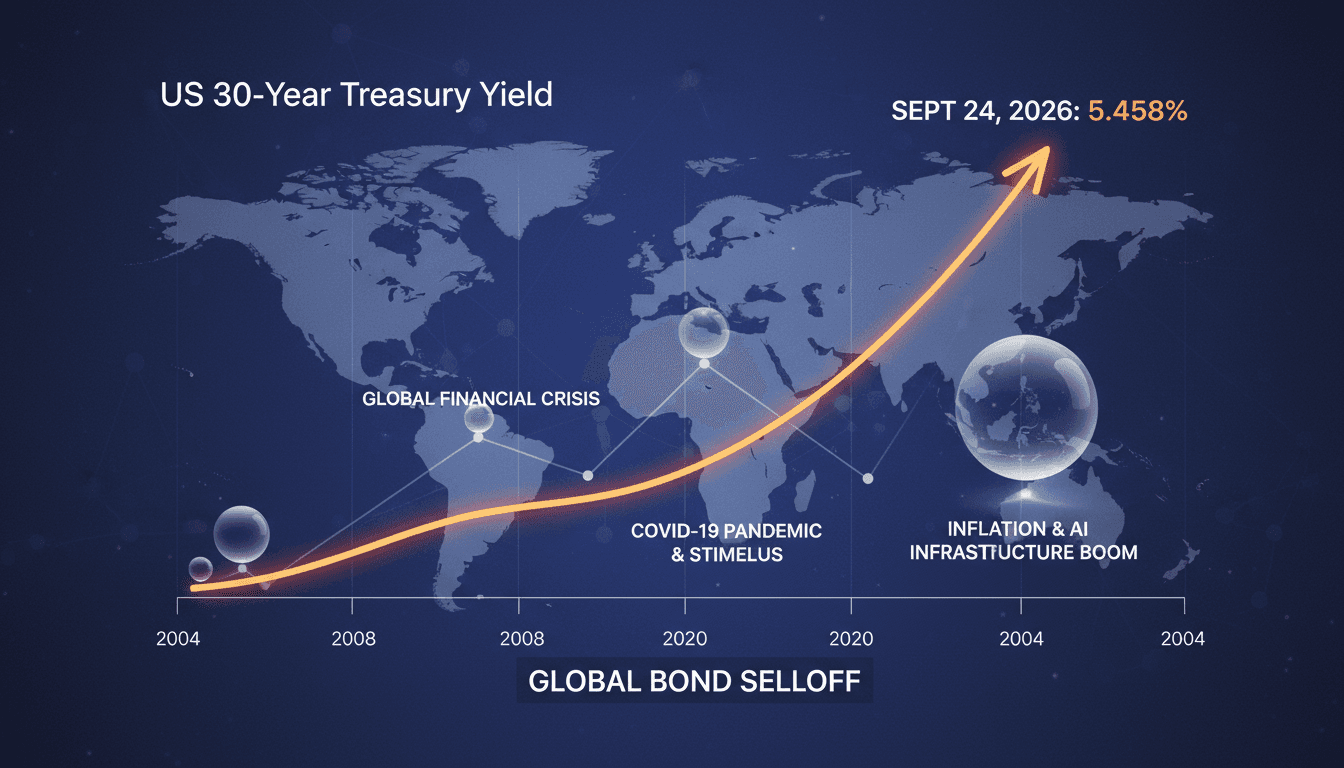
US 30-Year Treasury Yields Surge to Highest Level Since 2004 Amid Global Bond Selloff
Why it matters
The surge in US Treasury yields signals rising borrowing costs globally, impacting everything from mortgages to corporate financing.
What happened (in 30 seconds)
- US 30-year Treasury yields reached 5.458% on September 24, 2026, the highest since 2004.
- Global bond markets are experiencing a selloff due to inflation concerns and geopolitical tensions.
- Mortgage rates in the US have climbed to approximately 7%, reflecting increased borrowing costs for consumers.
The context you actually need
- Persistent inflation and high energy costs are pressuring bond markets, leading to increased yields.
- US national debt has approached $40 trillion, with debt servicing costs now exceeding defense expenditures.
- Corporate borrowing for AI infrastructure is competing for capital, further straining the bond market.
What's really happening
On September 24, 2026, the 30-year US Treasury yield surged to 5.458%, marking a significant milestone not seen since 2004. This spike is part of a broader trend of rising yields across global bond markets, driven by a combination of persistent inflation, elevated government deficits, and geopolitical tensions, particularly linked to the ongoing conflict in Iran. The situation has been exacerbated by resilient economic growth in the US, which has led to increased government spending under the Trump administration.
As the US national debt approaches $40 trillion, the implications of servicing this debt are becoming increasingly severe. The costs associated with servicing this debt have now surpassed defense expenditures, raising concerns about fiscal sustainability. Investors are reacting to these pressures by selling off bonds, which in turn drives yields higher. The 10-year Treasury yield also rose to 5.14%, indicating a similar trend across different maturities.
The bond selloff has not only affected US yields but has also reverberated through global markets. UK gilts are nearing 6%, and other sovereign yields are reaching decade highs. This environment of rising yields is translating into higher mortgage rates in the US, which have now hit approximately 7%. This increase in borrowing costs is likely to constrain consumer spending and investment, raising concerns about potential economic turbulence.
Moreover, the competition for capital is intensifying as corporations ramp up borrowing for artificial intelligence infrastructure. This trend is drawing funds away from traditional investments, further complicating the landscape for investors and borrowers alike. Analysts are warning that if borrowing costs continue to rise, it could lead to a slowdown in consumer spending, which is a critical driver of economic growth.
Who feels it first (and how)
- Homebuyers: Higher mortgage rates will increase monthly payments, making homes less affordable.
- Corporations: Increased borrowing costs will affect capital expenditures and investment in growth.
- Consumers: Rising interest rates will lead to higher costs for loans and credit cards, impacting disposable income.
- Investors: Those holding bonds may see declines in bond prices as yields rise, affecting portfolio values.
- Governments: Higher yields increase the cost of servicing national debt, straining budgets and fiscal policies.
What to watch next
- Federal Reserve Policy: Watch for any shifts in interest rate policy as the Fed monitors inflation and economic growth. This will indicate how aggressively they may respond to rising yields.
- Corporate Earnings Reports: Pay attention to how rising borrowing costs impact corporate profits, particularly in sectors reliant on debt financing.
- Global Economic Indicators: Keep an eye on inflation rates and economic growth metrics globally, as these will influence investor sentiment and bond market dynamics.
US Treasury yields are at their highest levels since 2004, impacting borrowing costs.
Continued pressure on global bond markets will lead to higher yields and borrowing costs.
The long-term impact on consumer spending and economic growth remains uncertain as higher costs take effect.
Frequently Asked Questions
- Why it matters?
- The surge in US Treasury yields signals rising borrowing costs globally, impacting everything from mortgages to corporate financing.
- What happened (in 30 seconds)?
- US 30-year Treasury yields reached 5.458% on September 24, 2026, the highest since 2004. Global bond markets are experiencing a selloff due to inflation concerns and geopolitical tensions. Mortgage rates in the US have climbed to approximately 7%, reflecting increased borrowing costs for consumers.
- What's really happening?
- On September 24, 2026, the 30-year US Treasury yield surged to 5.458%, marking a significant milestone not seen since 2004. This spike is part of a broader trend of rising yields across global bond markets, driven by a combination of persistent inflation, elevated government deficits, and geopolitical tensions, particularly linked to the ongoing conflict in Iran. The situation has been exacerbated by resilient economic growth in the US, which has led to increased government spending under the Tr
- Who feels it first (and how)?
- Homebuyers: Higher mortgage rates will increase monthly payments, making homes less affordable. Corporations: Increased borrowing costs will affect capital expenditures and investment in growth. Consumers: Rising interest rates will lead to higher costs for loans and credit cards, impacting disposable income. Investors: Those holding bonds may see declines in bond prices as yields rise, affecting portfolio values. Governments: Higher yields increase the cost of servicing national debt, s
- What to watch next?
- Federal Reserve Policy: Watch for any shifts in interest rate policy as the Fed monitors inflation and economic growth. This will indicate how aggressively they may respond to rising yields. Corporate Earnings Reports: Pay attention to how rising borrowing costs impact corporate profits, particularly in sectors reliant on debt financing. Global Economic Indicators: Keep an eye on inflation rates and economic growth metrics globally, as these will influence investor sentiment and bond market
Editor-curated FT homepage stories spanning markets, business, world, and opinion.
"The Financial Times is a globally respected business publication with a centrist/center-left tone and strong markets focus."
— A47 Editor
US long-term borrowing costs touch highest level since 2004
US long-term borrowing costs have surged to their highest levels since 2004, primarily due to rising yields following a significant sell-off in the US Treasuries market. This trend has strained public finances as the government faces increasing debt ...
Market-moving headlines impacting equities, bonds, and related risk assets.
"Real-time catalysts and volatility drivers across indices and sectors."
— A47 Editor
US stocks fall as 10-year Treasury yield hits highest since 2007
US stocks experienced a decline as the 10-year Treasury yield reached its highest level since 2007, signaling investor concerns about rising borrowing costs and potential economic slowdown. This development has contributed to a negative sentiment in ...
Global markets, investing, and macroeconomics from a premier financial newsroom.
"Bloomberg is respected for in-depth financial reporting and data-driven analysis."
— A47 Editor
US Bond-Market Slide Deepens, Pushing Yields to Two-Decade Highs
The US Treasuries market experienced intensified losses, with yields reaching their highest levels in nearly two decades, driven by strong economic data and a disappointing debt auction. This trend reflects a significant shift in investor sentiment a...