
Oil prices drop to seven-week low as Iran and Israel agree to cease hostilities
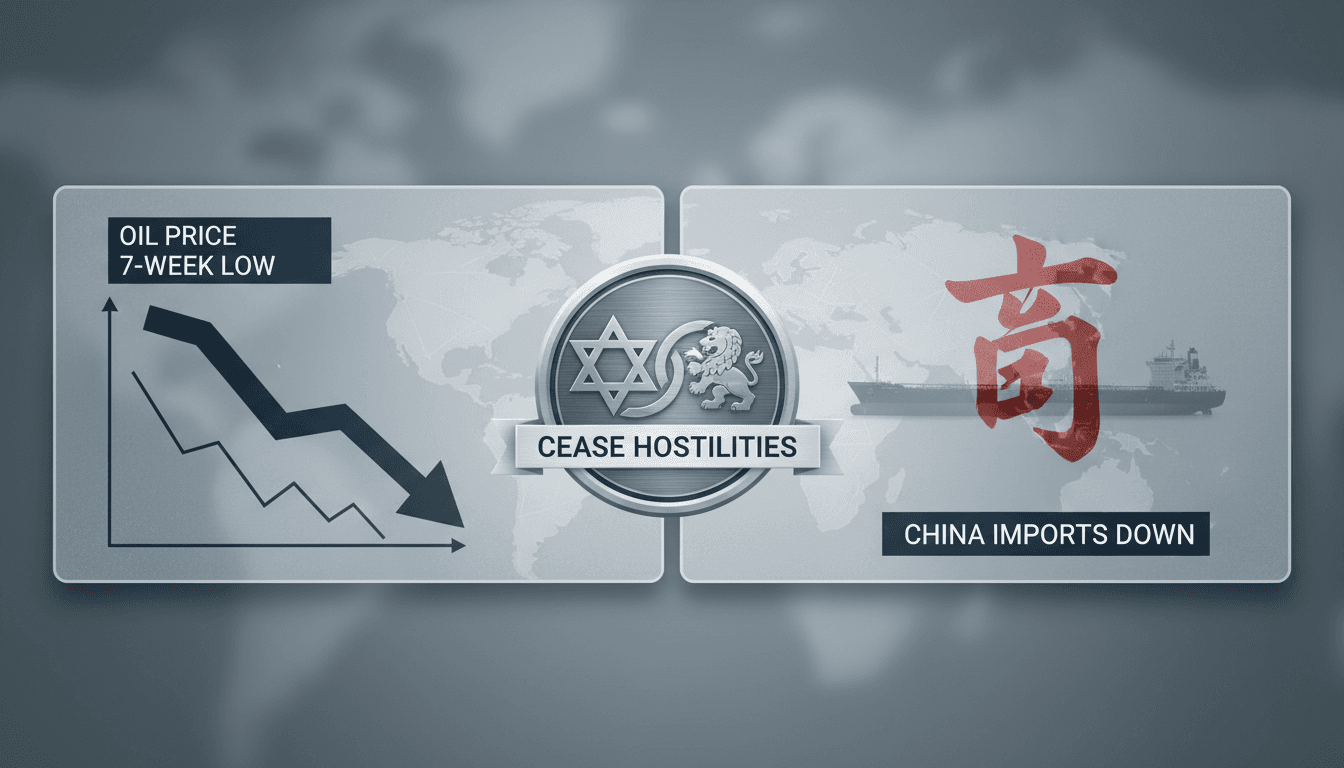
Here's what it means for you.
The recent agreement between Iran and Israel to halt their attacks has led to a significant drop in oil prices, reaching a seven-week low. This development signals a potential easing of geopolitical tensions, which could stabilize the oil market if demand recovers. However, concerns over declining Chinese oil imports continue to loom, impacting global demand dynamics. Market analysts are closely watching the situation, particularly the ongoing US-Iran negotiations, which may further influence oil supply and pricing. The interplay between geopolitical stability and demand fluctuations will be crucial for traders and policymakers alike.
What happened
Iran and Israel have reached an agreement to cease hostilities, resulting in a notable decline in oil prices. As of June 9, 2026, oil prices have fallen to their lowest point in seven weeks, reflecting the market's sensitivity to geopolitical events. This agreement follows a recent flare-up in violence between the two nations, which had raised concerns in the global oil market.
The cessation of attacks has eased immediate geopolitical tensions, allowing for a more stable trading environment. However, the market is also grappling with new data indicating a significant drop in Chinese oil imports, which further complicates the landscape for oil traders.
The Context
The agreement between Iran and Israel is a pivotal moment in a long-standing conflict that has implications for global oil supply. The easing of hostilities is expected to reduce volatility in the oil market, but the situation remains delicate. Stakeholders are particularly concerned about the impact of declining Chinese imports on overall demand, which has been a critical factor in oil pricing.
As US-Iran talks continue, market analysts are monitoring how these negotiations may affect oil supply dynamics. The interplay between geopolitical stability and demand from major consumers like China will be essential in shaping future oil price trends.
Takeaway
Looking ahead, the stabilization of geopolitical tensions may lead to a recovery in oil prices if demand improves, particularly from China. Analysts will be closely observing further developments in US-Iran negotiations, as these could significantly impact oil supply and pricing strategies. Monitoring Chinese import data will also be crucial for understanding future trends in the oil market.
The current situation presents a complex landscape for oil traders, who must navigate both geopolitical developments and demand fluctuations. As the market adjusts, the potential for recovery remains contingent on these critical factors.
Oil, metals, and agriculture: supply/demand headlines, OPEC chatter, inventories, and price action.
"Solid tape for energy and metals traders tracking macro and micro catalysts."
— A47 Editor
Oil prices fall to seven-week low as Iran and Israel halt attacks
Oil prices have fallen to a seven-week low as Iran and Israel announced a halt to their military attacks, a decision that comes after a series of escalating missile exchanges between the two nations. This cessation of hostilities follows a statement ...
Global markets, investing, and macroeconomics from a premier financial newsroom.
"Bloomberg is respected for in-depth financial reporting and data-driven analysis."
— A47 Editor
Oil Falls as Israel-Iran Attacks Halt
Oil prices have declined following an agreement between Israel and Iran to halt military attacks against each other, which had escalated tensions in the region. This cessation of hostilities comes after a series of missile exchanges that raised conce...
Pan-Arab news coverage spanning politics, business, sports, and regional affairs.
"Asharq Al-Awsat reflects a broad Arab editorial perspective with strong attention to regional geopolitics."
— A47 Editor
ارتفاع طفيف للنفط مع استمرار الحذر عقب وقف الضربات بين إيران وإسرائيل
Oil prices experienced a slight increase in early trading on Tuesday as investors await clarity regarding ongoing geopolitical tensions between Iran and Israel. The market remains cautious following the recent halt in military strikes between the two...