
German Consumer Confidence Index Hits Lowest Level Since May 2026 Amid Rising Energy Prices
Why it matters
The decline in consumer confidence in Germany reflects broader economic vulnerabilities that could impact the eurozone and global markets.
What happened (in 30 seconds)
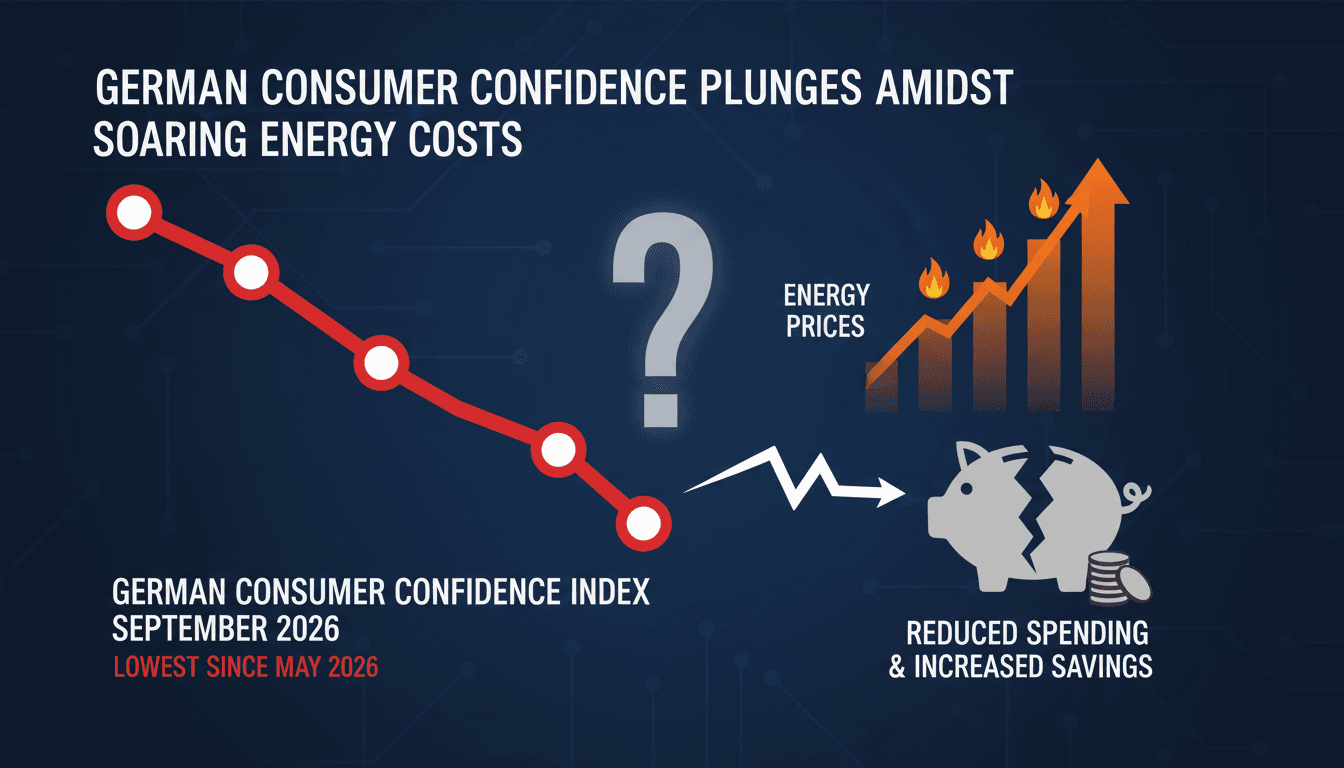
- Consumer confidence index: The German consumer-climate index fell to minus 30.6 for October 2026, the lowest since May 2026.
- Income expectations drop: Households reported a significant decline in income expectations, with the sub-index falling to minus 15.0.
- Increased savings: Willingness to save surged to 21.5, the highest level since the 2008 financial crisis, indicating heightened economic caution.
The context you actually need
- Geopolitical tensions: Renewed U.S. strikes on Iran have led to spikes in global oil prices, exacerbating existing energy price pressures in the eurozone.
- Interest rate hikes: The European Central Bank has already raised key interest rates in response to inflation concerns, further straining consumer budgets.
- Temporary relief ending: Previous fuel tax rebates that benefited German households have expired, leading to diminished purchasing power.
What's really happening
The recent decline in the German consumer confidence index is a direct response to escalating energy prices, primarily driven by geopolitical tensions in the Middle East. The Nuremberg Institute for Market Decisions (NIM) and GfK survey revealed a sharper-than-expected drop, with the index falling to minus 30.6 for October 2026, missing economist forecasts. This decline is significant as it reflects a broader sentiment among German households, who are increasingly concerned about their financial futures.
The income expectations sub-index plummeted by 16.7 points to minus 15.0, marking its lowest level since April 2026. This drop indicates that households are bracing for a prolonged period of high energy costs, which are eroding their purchasing power. As a result, consumers are shifting their behavior, with a notable increase in the willingness to save, which rose to 21.5—the highest since the 2008 financial crisis. This shift suggests that households are prioritizing savings over spending, a trend that could have ripple effects across various sectors of the economy.
The backdrop of this decline includes the European Central Bank's recent interest rate hikes aimed at combating inflation, which have further strained household budgets. The combination of rising energy prices and increased borrowing costs creates a challenging environment for consumers, leading to a cautious approach to spending. The survey, conducted among approximately 2,000 households, highlights a growing sentiment of uncertainty and anxiety regarding future income and economic stability.
Despite these challenges, business sentiment indicators, such as the Ifo index, have shown improvements, creating a contrast between consumer and business outlooks. This divergence raises questions about the sustainability of economic growth in Germany and the eurozone, as consumer spending is a critical driver of economic activity.
Who feels it first (and how)
- Low-income households: More vulnerable to rising energy costs, leading to immediate budget constraints.
- Retail sector: Likely to see reduced consumer spending as households prioritize savings.
- Energy-dependent industries: Sectors reliant on stable energy prices may face increased operational costs and reduced margins.
What to watch next
- Energy price trends: Continued fluctuations in global oil prices will be crucial in determining consumer confidence and spending.
- ECB policy responses: Any changes in interest rates or economic stimulus measures from the European Central Bank could impact consumer behavior.
- Consumer spending reports: Upcoming retail sales data will provide insights into how consumer confidence is translating into actual spending.
The consumer confidence index has declined to minus 30.6, the lowest since May 2026.
Households will continue to prioritize savings over spending in the face of rising energy costs.
The potential long-term effects on the eurozone economy and how quickly consumer confidence can recover.
Frequently Asked Questions
- Why it matters?
- The decline in consumer confidence in Germany reflects broader economic vulnerabilities that could impact the eurozone and global markets.
- What happened (in 30 seconds)?
- Consumer confidence index: The German consumer-climate index fell to minus 30.6 for October 2026, the lowest since May 2026. Income expectations drop: Households reported a significant decline in income expectations, with the sub-index falling to minus 15.0. Increased savings: Willingness to save surged to 21.5, the highest level since the 2008 financial crisis, indicating heightened economic caution.
- What's really happening?
- The recent decline in the German consumer confidence index is a direct response to escalating energy prices, primarily driven by geopolitical tensions in the Middle East. The Nuremberg Institute for Market Decisions (NIM) and GfK survey revealed a sharper-than-expected drop, with the index falling to minus 30.6 for October 2026, missing economist forecasts. This decline is significant as it reflects a broader sentiment among German households, who are increasingly concerned about their financial
- Who feels it first (and how)?
- Low-income households: More vulnerable to rising energy costs, leading to immediate budget constraints. Retail sector: Likely to see reduced consumer spending as households prioritize savings. Energy-dependent industries: Sectors reliant on stable energy prices may face increased operational costs and reduced margins.
- What to watch next?
- Energy price trends: Continued fluctuations in global oil prices will be crucial in determining consumer confidence and spending. ECB policy responses: Any changes in interest rates or economic stimulus measures from the European Central Bank could impact consumer behavior. Consumer spending reports: Upcoming retail sales data will provide insights into how consumer confidence is translating into actual spending.
Global political, business, and cultural coverage from WSJ international desks.
"The Wall Street Journal offers extensive international reporting with a reputation for financial insight and a center-right editorial stance."
— A47 Editor
German Consumer Confidence Falls to Lowest Since May on Energy Costs
Consumer confidence in Germany has sharply declined to its lowest level since May, primarily due to rising energy prices amid escalating tensions in the Middle East. This unexpected drop signals growing economic concerns among consumers.
Social/economic commentary and analysis relevant to business and markets.
"WSJ blends data-driven economic insight with commentary on policy and society."
— A47 Editor
German Consumer Confidence Falls to Lowest Since May on Energy Costs
Consumer confidence in Germany has sharply declined to its lowest level since May, primarily due to rising energy prices exacerbated by escalating tensions in the Middle East. This unexpected drop reflects growing concerns among consumers regarding t...
Key macro releases (CPI, jobs, PMIs), surprise indexes, and market implications.
"Great for data-print awareness and instant read-through to rates and risk assets."
— A47 Editor
German consumer sentiment drops more than expected as energy costs hit incomes
German consumer sentiment has dropped more than expected, primarily due to rising energy costs that are significantly impacting household incomes. This decline reflects a broader trend of economic uncertainty as consumers grapple with inflationary pr...