
Dubai's Population Surges to 4.807 Million Amid Economic Growth
Why it matters
The rapid population growth in Dubai reflects a robust economy that attracts talent and investment, impacting job availability and housing demand.
What happened (in 30 seconds)
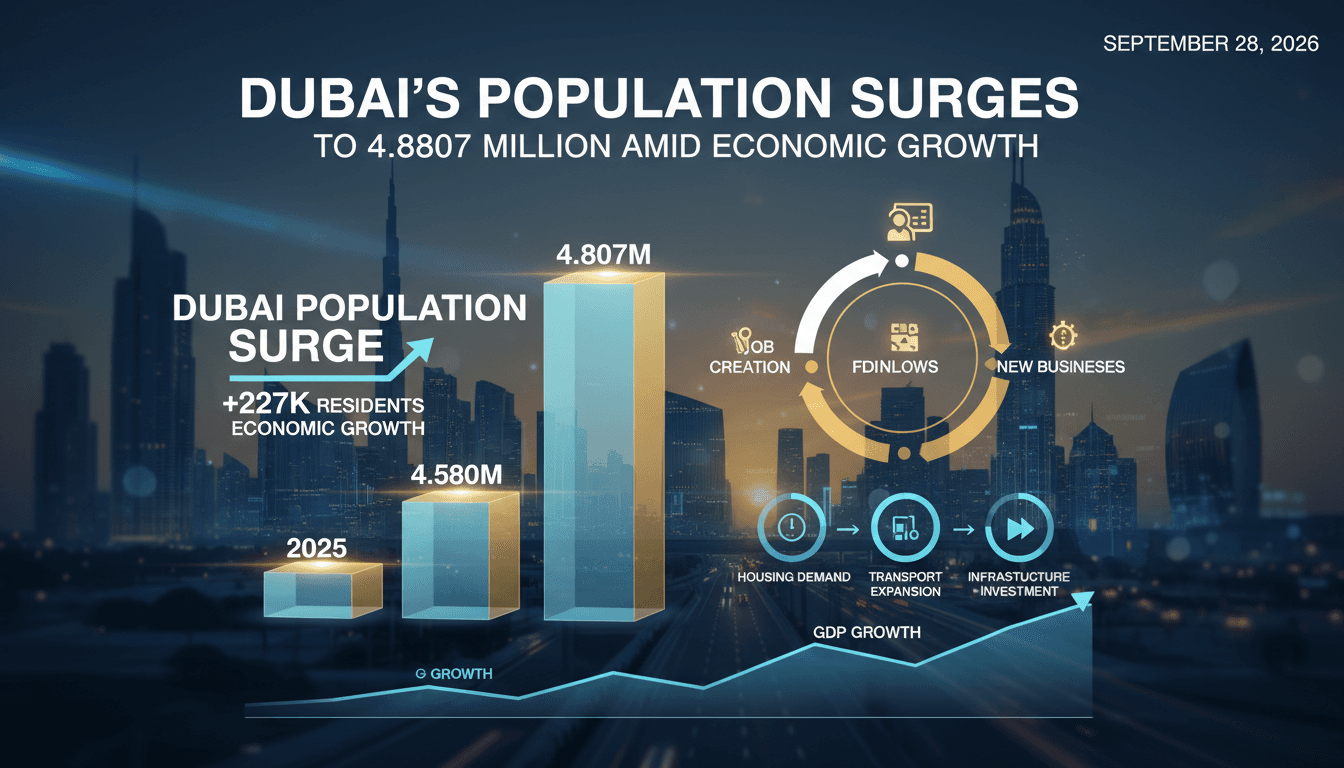
- Dubai's population reached 4,807,185 on September 28, 2026, marking an increase of 226,885 residents since January.
- The 30-34 age group remains the largest demographic, indicating a strong influx of young professionals.
- Daily daytime visitors contribute to a peak population exceeding 6 million, intensifying demand for services and infrastructure.
The context you actually need
- Dubai's growth rate was 7.5% in 2025, driven by foreign investment and job opportunities.
- The majority of residents are male (68.5%), with a significant number of families (858,000) residing in the emirate.
- Real-time data collection methods are used to track population changes, moving away from traditional census approaches.
What's really happening
Dubai's population growth is not just a number; it’s a reflection of the emirate's strategic positioning as a global hub for business, tourism, and finance. The influx of 226,885 new residents since January 2026 underscores the emirate's appeal, particularly to working-age expatriates and families seeking economic opportunities. This demographic shift is largely driven by the emirate's favorable business climate, which includes tax incentives, a diverse job market, and a high standard of living.
The 30-34 age group, which constitutes the largest share of the population, indicates that young professionals are increasingly drawn to Dubai. This demographic is vital for sustaining economic growth, as they contribute to the labor force and consumer market. The presence of 1.81 million daily visitors further complicates the landscape, as it adds pressure on housing, transportation, and public services. The peak population exceeding 6 million during the day highlights the need for robust infrastructure to support both residents and transient populations.
Moreover, the growth trend is supported by a significant increase in family formations, with 858,000 families recorded, up 7.9% from the previous year. This shift not only affects housing demand but also influences the types of services and amenities that are prioritized in urban planning. As families settle in Dubai, there is a growing need for schools, healthcare facilities, and recreational spaces, which can lead to further investments in infrastructure.
Market observers note that this demographic expansion aligns with ongoing trends in the real estate and service sectors. As demand for housing rises, property developers are likely to respond with new projects, potentially leading to a construction boom. Additionally, the service sector may expand to accommodate the needs of a larger population, creating more job opportunities.
The absence of immediate governmental policy announcements following the population report suggests that the market is expected to self-regulate in response to these demographic changes. However, previous growth periods have prompted infrastructure investments, indicating that stakeholders should remain vigilant about potential policy shifts aimed at managing this rapid growth.
Who feels it first (and how)
- Real estate developers: Increased demand for housing leads to new projects and potential profits.
- Service sector employees: More residents and visitors create job opportunities in hospitality, retail, and healthcare.
- Transportation providers: Higher population density increases demand for public transport and logistics services.
- Local businesses: An expanding customer base can boost sales and revenue.
What to watch next
- Housing market trends: Monitor property prices and rental rates as demand continues to rise.
- Infrastructure investments: Look for announcements regarding new transportation and public service projects to accommodate growth.
- Job market fluctuations: Keep an eye on employment rates and sectors experiencing the most growth due to population increases.
Dubai's population reached 4,807,185 as of September 28, 2026.
Continued demand for housing and services will drive economic growth.
The long-term impact of this population surge on infrastructure and quality of life remains to be seen.
Frequently Asked Questions
- Why it matters?
- The rapid population growth in Dubai reflects a robust economy that attracts talent and investment, impacting job availability and housing demand.
- What happened (in 30 seconds)?
- Dubai's population reached 4,807,185 on September 28, 2026, marking an increase of 226,885 residents since January. The 30-34 age group remains the largest demographic, indicating a strong influx of young professionals. Daily daytime visitors contribute to a peak population exceeding 6 million, intensifying demand for services and infrastructure.
- What's really happening?
- Dubai's population growth is not just a number; it’s a reflection of the emirate's strategic positioning as a global hub for business, tourism, and finance. The influx of 226,885 new residents since January 2026 underscores the emirate's appeal, particularly to working-age expatriates and families seeking economic opportunities. This demographic shift is largely driven by the emirate's favorable business climate, which includes tax incentives, a diverse job market, and a high standard of living.
- Who feels it first (and how)?
- Real estate developers: Increased demand for housing leads to new projects and potential profits. Service sector employees: More residents and visitors create job opportunities in hospitality, retail, and healthcare. Transportation providers: Higher population density increases demand for public transport and logistics services. Local businesses: An expanding customer base can boost sales and revenue.
- What to watch next?
- Housing market trends: Monitor property prices and rental rates as demand continues to rise. Infrastructure investments: Look for announcements regarding new transportation and public service projects to accommodate growth. Job market fluctuations: Keep an eye on employment rates and sectors experiencing the most growth due to population increases.
English-language coverage focused on UAE news, government updates, and domestic affairs.
"Emirates 24|7 reflects a mainstream UAE editorial perspective with strong emphasis on official and domestic developments."
— A47 Editor
Dubai population hits 4.8 million in September 2026 - up 226,885 people since January 2026
As of September 2026, Dubai's population has reached 4,807,185, marking an increase of 226,885 residents since January 2026, according to the Dubai Data and Statistics Establishment. This growth reflects the emirate's ongoing appeal as a destination ...
Arabic-language economic and business reporting with strong UAE market relevance.
"Emarat Al Youm business coverage often centers UAE property, banking, consumer issues, and economic policy."
— A47 Editor
عدد سكان دبي يزداد 226.88 ألف نسمة منذ بداية 2026 عدد سكان دبي يزداد 226.88 ألف نسمة منذ بداية 2026
The Dubai Data and Statistics Foundation, part of Dubai Digital, has reported that the total population of Dubai reached 4.807 million as of yesterday, marking an increase of 226,880 residents since the beginning of 2026.
Arabic-language economic and business reporting with strong UAE market relevance.
"Emarat Al Youm business coverage often centers UAE property, banking, consumer issues, and economic policy."
— A47 Editor
عدد سكان دبي يزداد 226.88 ألف نسمة منذ بداية 2026 عدد سكان دبي يزداد 226.88 ألف نسمة منذ بداية 2026
The Dubai Data and Statistics Foundation, part of Dubai Digital, reported that the total population of Dubai has increased by 226,880 since the beginning of 2026, reaching 4.807 million as of Monday afternoon.