
US Consumer Confidence Index Drops to Lowest Level Since April 2014
Why it matters
Consumer confidence is a leading indicator of economic health, influencing spending and investment decisions across sectors.
What happened (in 30 seconds)
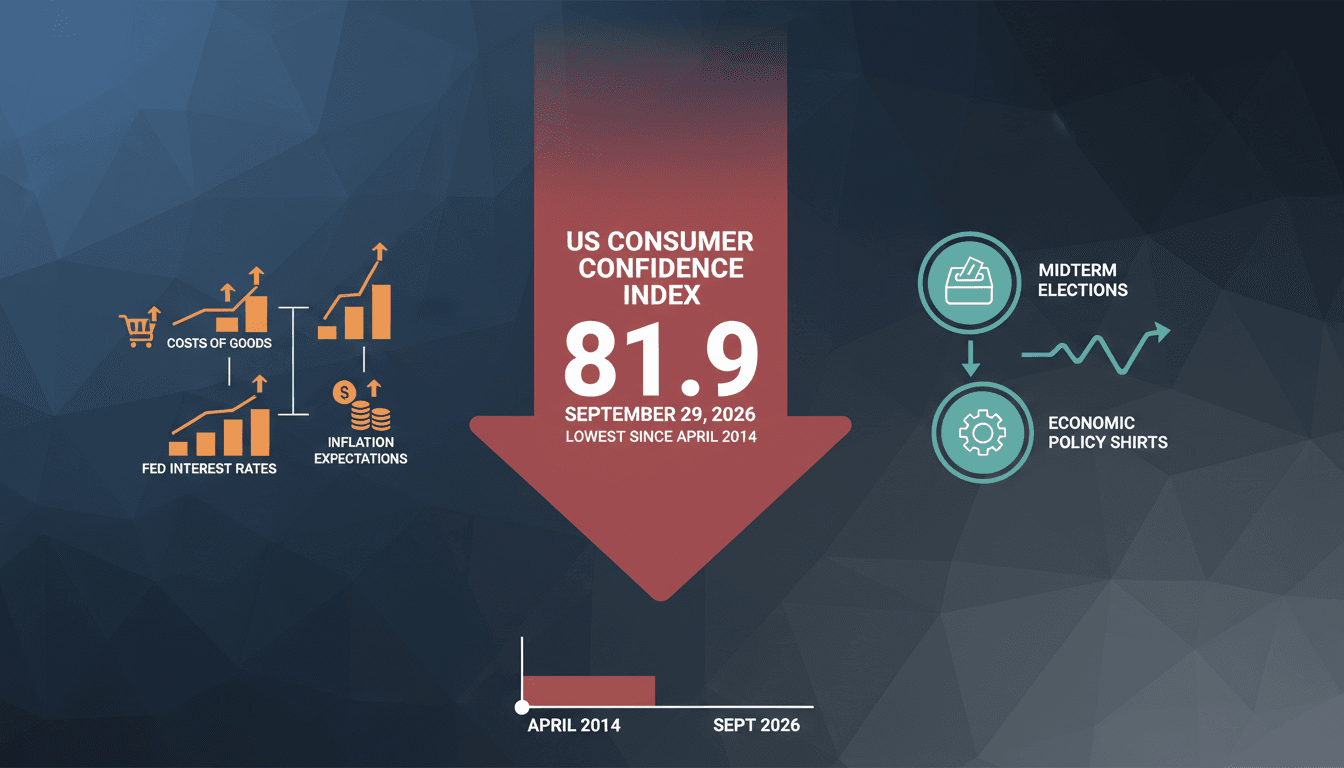
- Consumer Confidence Index fell to 81.9 on September 29, 2026, marking the lowest level since April 2014.
- Inflation concerns and rising costs for goods and fuel were cited as primary drivers of the decline.
- Political implications loom as consumer sentiment weakens ahead of the upcoming midterm elections.
The context you actually need
- Interest rates increased: The Federal Reserve raised interest rates for the first time in three years earlier in September 2026, raising borrowing costs.
- Geopolitical tensions: Ongoing conflicts, particularly in Iran, have led to surging fuel prices, with average gasoline reaching $4.45 per gallon.
- Labor market perceptions: Consumers reported negative views on business conditions and job availability, marking a shift in sentiment since September 2024.
What's really happening
The recent decline in the US Consumer Confidence Index to 81.9 reflects a confluence of economic pressures that have left consumers feeling uncertain about their financial futures. This drop of 6.7 points from August is significant, as it marks the lowest reading since April 2014, just before a pivotal midterm election. The Conference Board's report highlights a growing pessimism among consumers, driven primarily by rising costs of goods and services, particularly fuel, which has surged due to geopolitical tensions, notably the ongoing conflict in Iran.
The Federal Reserve's recent interest rate hike has compounded these concerns. By increasing borrowing costs, the Fed aims to combat inflation, which currently sits at a year-over-year rate of 3.7%. However, this move also makes loans more expensive for consumers and businesses alike, potentially stifling spending and investment. As consumers face higher prices at the pump and in stores, their willingness to spend diminishes, leading to a self-reinforcing cycle of economic caution.
Dana M. Peterson, Chief Economist at The Conference Board, noted that this decline in consumer confidence is particularly alarming as it reflects negative appraisals of business conditions for the first time in nearly two years. The Present Situation Index, which measures consumers' perceptions of current economic conditions, fell sharply, indicating that many are feeling the pinch of rising costs and uncertain job prospects.
As the midterm elections approach, this decline in consumer sentiment could have significant political ramifications. With consumers across political affiliations expressing concern over economic conditions, candidates may face increased pressure to address these issues. The upcoming PCE inflation report and employment data will be critical in shaping perceptions and policy responses in the coming weeks.
Who feels it first (and how)
- Job seekers: Individuals looking for employment may find fewer opportunities as businesses scale back hiring due to economic uncertainty.
- Consumers: Households may delay major purchases, such as homes or cars, impacting retail and housing markets.
- Investors: Those in the stock market may experience volatility as consumer sentiment influences corporate earnings forecasts.
What to watch next
- PCE inflation report: Scheduled for release on September 30, this report will provide insights into consumer price trends and inflation expectations.
- October jobs report: Set for October 2, this data will reveal employment trends and may influence Federal Reserve policy decisions.
- Federal Reserve meeting: The next rate decision on October 27-28 will be crucial in determining the economic outlook and consumer confidence moving forward.
Consumer confidence has dropped to its lowest level since 2014.
Economic caution will persist, affecting consumer spending and investment.
The long-term impact of the Federal Reserve's interest rate hikes on consumer behavior and economic growth.
Frequently Asked Questions
- Why it matters?
- Consumer confidence is a leading indicator of economic health, influencing spending and investment decisions across sectors.
- What happened (in 30 seconds)?
- Consumer Confidence Index fell to 81.9 on September 29, 2026, marking the lowest level since April 2014. Inflation concerns and rising costs for goods and fuel were cited as primary drivers of the decline. Political implications loom as consumer sentiment weakens ahead of the upcoming midterm elections.
- What's really happening?
- The recent decline in the US Consumer Confidence Index to 81.9 reflects a confluence of economic pressures that have left consumers feeling uncertain about their financial futures. This drop of 6.7 points from August is significant, as it marks the lowest reading since April 2014, just before a pivotal midterm election. The Conference Board's report highlights a growing pessimism among consumers, driven primarily by rising costs of goods and services, particularly fuel, which has surged due to g
- Who feels it first (and how)?
- Job seekers: Individuals looking for employment may find fewer opportunities as businesses scale back hiring due to economic uncertainty. Consumers: Households may delay major purchases, such as homes or cars, impacting retail and housing markets. Investors: Those in the stock market may experience volatility as consumer sentiment influences corporate earnings forecasts.
- What to watch next?
- PCE inflation report: Scheduled for release on September 30, this report will provide insights into consumer price trends and inflation expectations. October jobs report: Set for October 2, this data will reveal employment trends and may influence Federal Reserve policy decisions. Federal Reserve meeting: The next rate decision on October 27-28 will be crucial in determining the economic outlook and consumer confidence moving forward.
Global news coverage with extensive reporting on Middle Eastern conflicts and geopolitics.
"Al Jazeera is a Qatar-based broadcaster known for wide regional coverage and alternative perspectives."
— A47 Editor
US consumer confidence hits its lowest level since 2014 ahead of midterms
US consumer confidence has reached its lowest level since 2014, primarily due to rising costs of goods and fuel, as reported by Al Jazeera. This significant decline in consumer sentiment comes just ahead of the midterm elections, indicating potential...
Comprehensive coverage of Middle Eastern and global issues.
"Al Jazeera is a prominent voice from the Global South, especially the Middle East, with an emphasis on underreported stories."
— A47 Editor
US consumer confidence hits its lowest level since 2014 ahead of midterms
US consumer confidence has reached its lowest level since 2014, primarily due to rising costs of goods and fuel, as reported by Al Jazeera. This significant decline in consumer sentiment comes just ahead of the midterm elections, indicating potential...
Key macro releases (CPI, jobs, PMIs), surprise indexes, and market implications.
"Great for data-print awareness and instant read-through to rates and risk assets."
— A47 Editor
US consumer confidence near 12-1/2-year low amid labor market fears
US consumer confidence has dropped to near a 12-1/2-year low, driven by fears surrounding the labor market and rising inflation expectations. This decline reflects a growing unease among consumers regarding their economic stability and purchasing pow...
Social/economic commentary and analysis relevant to business and markets.
"WSJ blends data-driven economic insight with commentary on policy and society."
— A47 Editor
U.S. Consumer Confidence Fell in September Amid Elevated Oil Prices, Inflation Worries, Conference Board Says
U.S. consumer confidence fell by 6.7 points to 81.9 in September, according to the Conference Board, marking a continuation of the downward trend observed in the previous two months. This decline is attributed to rising oil prices and ongoing inflati...