
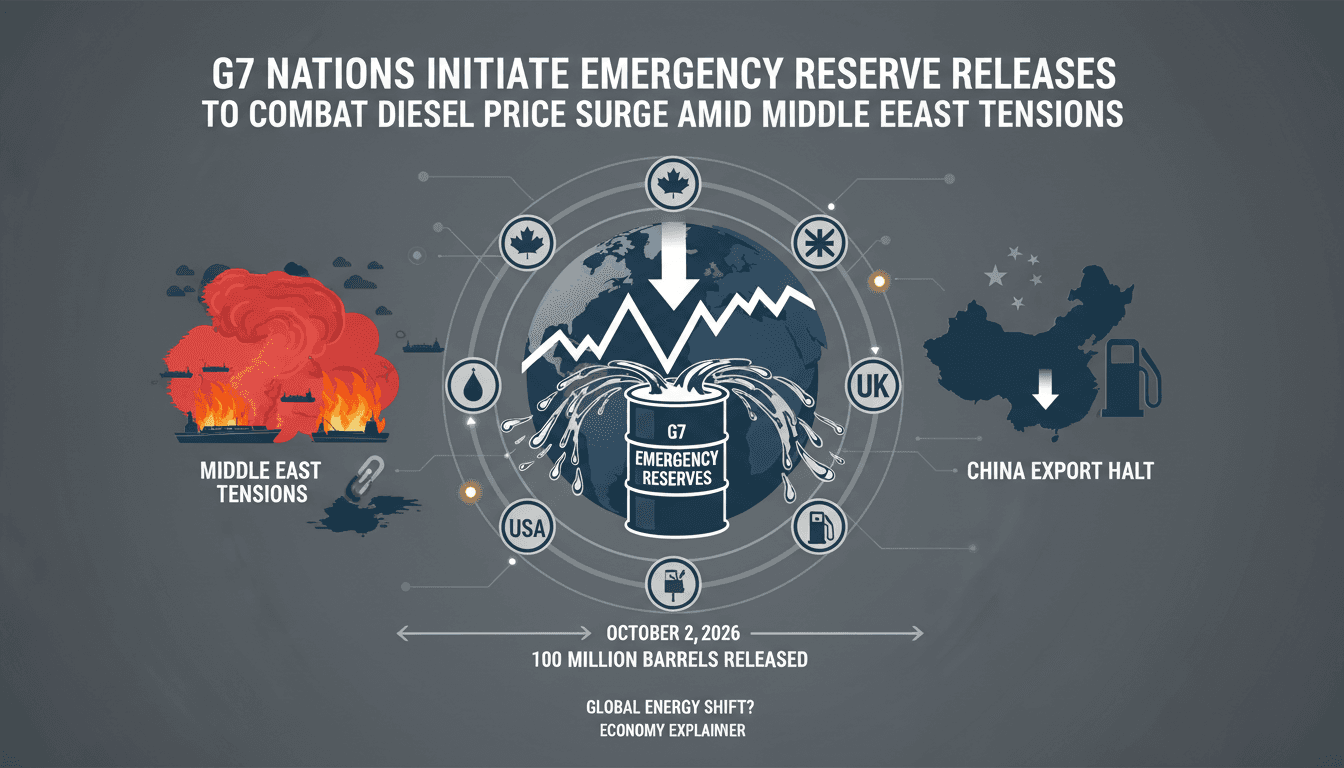
G7 nations initiate emergency reserve releases to combat diesel price surge amid Middle East tensions
If you rely on diesel for transportation or logistics, expect fluctuations in fuel costs as global markets react.
Why it matters
The G7's coordinated reserve release aims to stabilize diesel prices amid geopolitical tensions, impacting global supply chains and consumer costs.
What happened (in 30 seconds)
- G7 nations announced a release of up to 100 million barrels of crude and diesel reserves on October 2, 2026, to combat rising fuel prices.
- European diesel prices fell over 8% following the announcement, while WTI crude settled near $91 per barrel.
- Geopolitical tensions in the Middle East and supply disruptions from China contributed to the urgency of this intervention.
The context you actually need
- Middle East conflicts have disrupted oil flows through the Strait of Hormuz, heightening global diesel shortages.
- China's suspension of refined product exports has further strained supply, exacerbating the situation.
- US-Iran tensions and military deployments have created a volatile environment, influencing market responses.
What's really happening
On October 2, 2026, the G7 nations, led by France and under US pressure, initiated a significant intervention in the global oil market by announcing the release of up to 100 million barrels of crude and diesel reserves. This move was a direct response to escalating diesel shortages caused by a combination of geopolitical tensions and supply chain disruptions. The situation in the Middle East, particularly the conflict involving Iran, has severely impacted oil flows through the crucial Strait of Hormuz, a vital passage for global oil shipments.
The coordinated release aimed to stabilize prices that had surged due to these disruptions. European diesel prices dropped sharply by over 8% following the announcement, while West Texas Intermediate (WTI) crude settled around $91 per barrel. This intervention reflects a broader strategy among G7 nations to mitigate the impact of geopolitical risks on energy markets, particularly as they relate to consumer prices and economic stability.
The backdrop to this intervention includes a series of events earlier in 2026, such as Ukrainian strikes on Russian refineries and reduced refinery output in the Middle East. These factors have compounded the existing supply issues, leading to a critical shortage of diesel. Additionally, China's decision to halt refined product exports has further strained the global supply chain, making the G7's actions even more urgent.
The G7's decision to release reserves is not just a short-term fix; it signals a strategic shift in how major economies respond to energy crises. By releasing reserves, these nations aim to provide immediate relief to markets while also sending a message of solidarity and cooperation in the face of shared challenges. However, the situation remains fluid, with ongoing monitoring of shipments through the Strait of Hormuz and potential escalations in US-Iran tensions that could affect future supply.
Who feels it first (and how)
- Logistics companies: Increased operational costs due to fluctuating diesel prices.
- Transportation sectors: Higher fuel expenses impacting pricing strategies and profit margins.
- Consumers: Potential increases in prices for goods and services reliant on diesel transportation.
What to watch next
- US-Iran relations: Continued military deployments could lead to further market volatility, affecting fuel prices.
- Global refinery outputs: Any changes in production levels, especially in the Middle East, will influence supply and pricing.
- China's export policies: Future decisions regarding refined product exports will significantly impact global diesel availability.
G7 nations are releasing 100 million barrels of reserves to stabilize diesel prices.
Diesel prices will remain volatile as geopolitical tensions evolve.
The long-term effectiveness of the G7's intervention on global supply chains.
Frequently Asked Questions
- Why it matters?
- The G7's coordinated reserve release aims to stabilize diesel prices amid geopolitical tensions, impacting global supply chains and consumer costs.
- What happened (in 30 seconds)?
- G7 nations announced a release of up to 100 million barrels of crude and diesel reserves on October 2, 2026, to combat rising fuel prices. European diesel prices fell over 8% following the announcement, while WTI crude settled near $91 per barrel. Geopolitical tensions in the Middle East and supply disruptions from China contributed to the urgency of this intervention.
- What's really happening?
- On October 2, 2026, the G7 nations, led by France and under US pressure, initiated a significant intervention in the global oil market by announcing the release of up to 100 million barrels of crude and diesel reserves. This move was a direct response to escalating diesel shortages caused by a combination of geopolitical tensions and supply chain disruptions. The situation in the Middle East, particularly the conflict involving Iran, has severely impacted oil flows through the crucial Strait of
- Who feels it first (and how)?
- Logistics companies: Increased operational costs due to fluctuating diesel prices. Transportation sectors: Higher fuel expenses impacting pricing strategies and profit margins. Consumers: Potential increases in prices for goods and services reliant on diesel transportation.
- What to watch next?
- US-Iran relations: Continued military deployments could lead to further market volatility, affecting fuel prices. Global refinery outputs: Any changes in production levels, especially in the Middle East, will influence supply and pricing. China's export policies: Future decisions regarding refined product exports will significantly impact global diesel availability.
Global markets, investing, and macroeconomics from a premier financial newsroom.
"Bloomberg is respected for in-depth financial reporting and data-driven analysis."
— A47 Editor
Latest Oil Market News and Analysis for Oct. 2
Oil prices steadied after a two-day gain as the U.S. considered deploying another aircraft carrier group to the Middle East, a move that could escalate tensions with Iran and disrupt energy flows. This development comes amid ongoing geopolitical unce...
U.S. business news, corporate developments, and economy.
"The Wall Street Journal is respected for deep financial and economic reporting with a center-right editorial perspective."
— A47 Editor
Oil Climbs as U.S. Sends Another Aircraft Carrier to Middle East
Oil prices have risen following reports that the Pentagon has deployed a third aircraft carrier to the Middle East, potentially adding up to 10,000 American troops to the region. This move is seen as a response to escalating tensions and supply risks...
Markets desk coverage, trading insights, and investor updates.
"WSJ’s markets reporting provides in-depth analysis and context for investors."
— A47 Editor
Oil Climbs as U.S. Sends Another Aircraft Carrier to Middle East
Oil prices have risen following reports that the Pentagon has deployed a third aircraft carrier to the Middle East, potentially adding up to 10,000 American troops to the region. This deployment is seen as a response to escalating tensions and supply...