
U.S. September 2026 Employment Report Shows 29,000 Job Increase Below Expectations
Why it matters
This report reflects broader economic trends that could influence global markets and consumer behavior.
What happened (in 30 seconds)
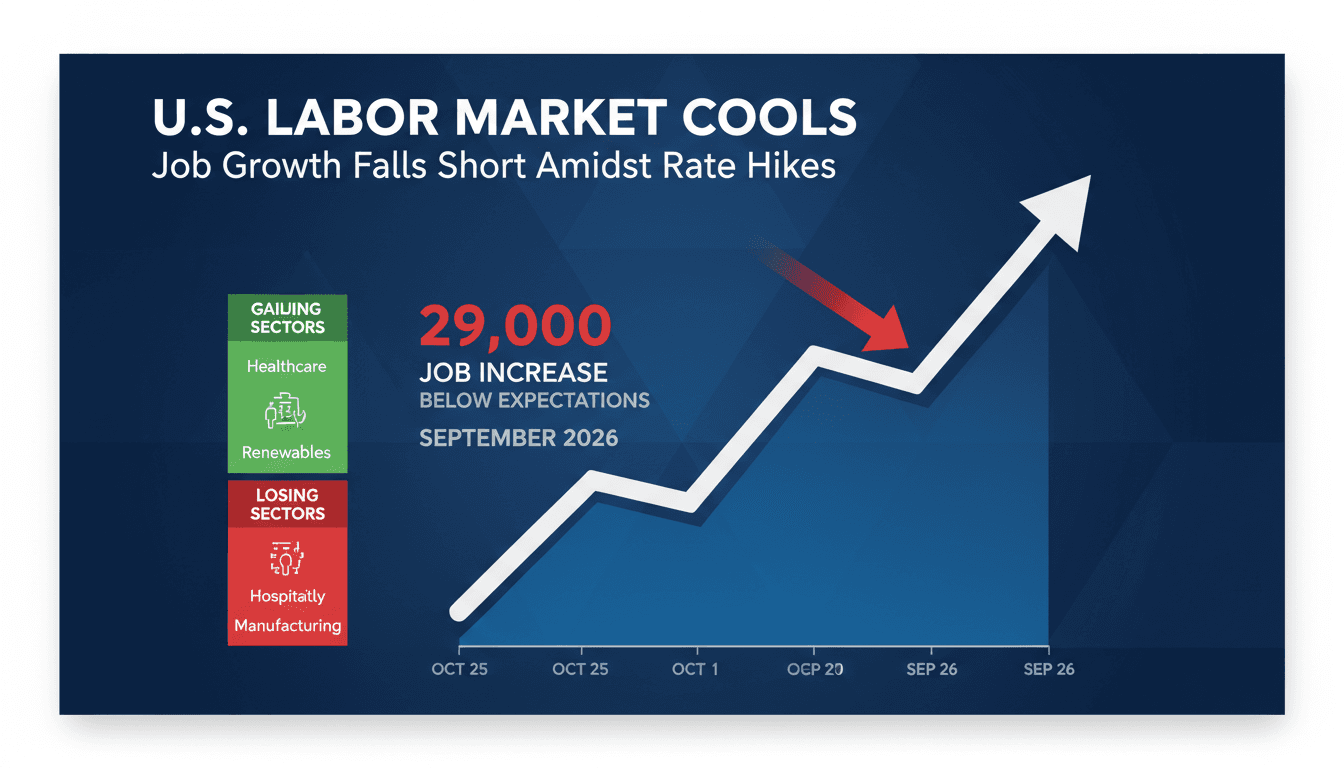
- Job growth fell short: The U.S. added only 29,000 nonfarm payroll jobs in September 2026, significantly below the expected 90,000.
- Unemployment rate increased: The unemployment rate rose to 4.2%, indicating a potential slowdown in labor market momentum.
- Wage growth stagnated: Average hourly earnings grew just 0.1% month-over-month, raising concerns about consumer spending power.
The context you actually need
- Labor market moderation: The U.S. labor market has been moderating throughout 2026, with job growth slowing from pre-pandemic levels due to various economic pressures.
- Sector-specific dynamics: Health care, construction, and manufacturing sectors contributed to job gains, while government and financial activities saw declines.
- Inflation and interest rates: Elevated interest rates and inflation pressures have outpaced wage growth, affecting overall consumer confidence and spending.
What's really happening
The September 2026 Employment Report from the U.S. Bureau of Labor Statistics (BLS) reveals a labor market that is cooling, reflecting broader economic challenges. The addition of only 29,000 jobs is a stark contrast to the anticipated 90,000, and this discrepancy highlights a significant shift in the employment landscape. The downward revisions of previous months—July's figures were adjusted to a loss of 10,000 jobs, while August's were revised to a gain of 133,000—result in a combined downward adjustment of 60,000 jobs. This paints a picture of a labor market that is not only slowing but also struggling to maintain the momentum seen in previous years.
The increase in the unemployment rate to 4.2% suggests that more individuals are entering the labor force, but not enough jobs are being created to absorb them. This could indicate a growing pool of job seekers who may face challenges in finding employment, further complicating the economic recovery narrative. The modest growth in average hourly earnings—0.1% month-over-month and 3.0% year-over-year—raises concerns about real wage growth, especially as inflation continues to erode purchasing power.
Sector-wise, health care added the most jobs (17,000), followed by construction (11,000) and manufacturing (9,000). However, declines in government and financial activities signal potential weaknesses in these areas, which could have ripple effects across the economy. The overall moderation in job growth is attributed to several factors, including elevated interest rates that have dampened business investment and consumer spending, as well as inflation pressures that have outpaced wage gains.
As the Federal Reserve continues to monitor these trends, the likelihood of near-term rate hikes appears diminished, which could influence borrowing costs and investment decisions. Analysts have noted that while the labor market remains stable, the slowdown poses risks to consumer spending, a critical driver of economic growth. The interplay of these factors suggests that the U.S. economy is at a crossroads, where the balance between growth and moderation will be crucial for future stability.
Who feels it first (and how)
- Job seekers: Individuals looking for employment may find it increasingly difficult as job growth slows.
- Investors: Those with stakes in sectors like construction and health care may see varying impacts based on job creation trends.
- Consumers: Households may experience tighter budgets due to stagnant wage growth amid rising living costs.
What to watch next
- Federal Reserve policy: Watch for any announcements regarding interest rates, as the employment data may influence their decisions.
- Consumer spending trends: Monitor how wage growth and employment levels affect consumer confidence and spending habits.
- Sector performance: Keep an eye on job growth in key sectors, particularly health care and construction, to gauge economic health.
The U.S. added 29,000 jobs in September 2026, below expectations.
The Federal Reserve may hold off on rate hikes in response to the cooling labor market.
The long-term implications of this job growth slowdown on consumer spending and economic recovery.
Frequently Asked Questions
- Why it matters?
- This report reflects broader economic trends that could influence global markets and consumer behavior.
- What happened (in 30 seconds)?
- Job growth fell short: The U.S. added only 29,000 nonfarm payroll jobs in September 2026, significantly below the expected 90,000. Unemployment rate increased: The unemployment rate rose to 4.2%, indicating a potential slowdown in labor market momentum. Wage growth stagnated: Average hourly earnings grew just 0.1% month-over-month, raising concerns about consumer spending power.
- What's really happening?
- The September 2026 Employment Report from the U.S. Bureau of Labor Statistics (BLS) reveals a labor market that is cooling, reflecting broader economic challenges. The addition of only 29,000 jobs is a stark contrast to the anticipated 90,000, and this discrepancy highlights a significant shift in the employment landscape. The downward revisions of previous months—July's figures were adjusted to a loss of 10,000 jobs, while August's were revised to a gain of 133,000—result in a combined downward
- Who feels it first (and how)?
- Job seekers: Individuals looking for employment may find it increasingly difficult as job growth slows. Investors: Those with stakes in sectors like construction and health care may see varying impacts based on job creation trends. Consumers: Households may experience tighter budgets due to stagnant wage growth amid rising living costs.
- What to watch next?
- Federal Reserve policy: Watch for any announcements regarding interest rates, as the employment data may influence their decisions. Consumer spending trends: Monitor how wage growth and employment levels affect consumer confidence and spending habits. Sector performance: Keep an eye on job growth in key sectors, particularly health care and construction, to gauge economic health.
Capitol Hill news, legislation, and policy insight.
"The Hill specializes in U.S. politics and policy, with a focus on Capitol Hill developments and a reputation for insider reporting."
— A47 Editor
September jobs report misses expectations
The U.S. economy added only 29,000 jobs in September, significantly missing economists' expectations and indicating a slowdown in job growth. The unemployment rate also rose slightly to 4.2 percent, reflecting potential challenges in the labor market...
Social/economic commentary and analysis relevant to business and markets.
"WSJ blends data-driven economic insight with commentary on policy and society."
— A47 Editor
The U.S. added 29,000 jobs in September, far short of expectations, in a sign that the labor market remains steady but may not be able to deliver consistent and sizable employment gains
The U.S. labor market added only 29,000 jobs in September, significantly below expectations, indicating a potential slowdown in job growth despite the unemployment rate remaining near historic lows.
UK and international business news, economics, and corporate coverage.
"The Guardian’s business section covers finance and markets with a progressive editorial tone."
— A47 Editor
US added just 29,000 jobs in September in sharp drop from last month’s gains
In September, the US economy added only 29,000 jobs, a significant decline from the previous month's gains, while the unemployment rate rose slightly to 4.2%. This report serves as the final jobs update before the midterm elections, indicating a cool...
News from the United States including domestic politics, society, and culture.
"The Guardian is known for its progressive editorial stance and in-depth analysis, often advocating for social justice, environmental issues, and liberal values."
— A47 Editor
US added just 29,000 jobs in September in sharp drop from last month’s gains
In September, the US economy added only 29,000 jobs, a significant decline from the previous month's gains, while the unemployment rate rose slightly to 4.2%. This report serves as the final jobs update before the midterm elections, indicating a cool...
Right-of-center views on political news.
"The Washington Times is a conservative-leaning newspaper known for its political coverage and advocacy of right-of-center viewpoints."
— A47 Editor
U.S. adds only 29,000 jobs in lackluster September report
The U.S. economy added only 29,000 jobs in September, reflecting a significant slowdown in hiring as reported by the government. This marks a concerning trend just a month before the midterm elections, raising alarms about the state of the labor mark...