
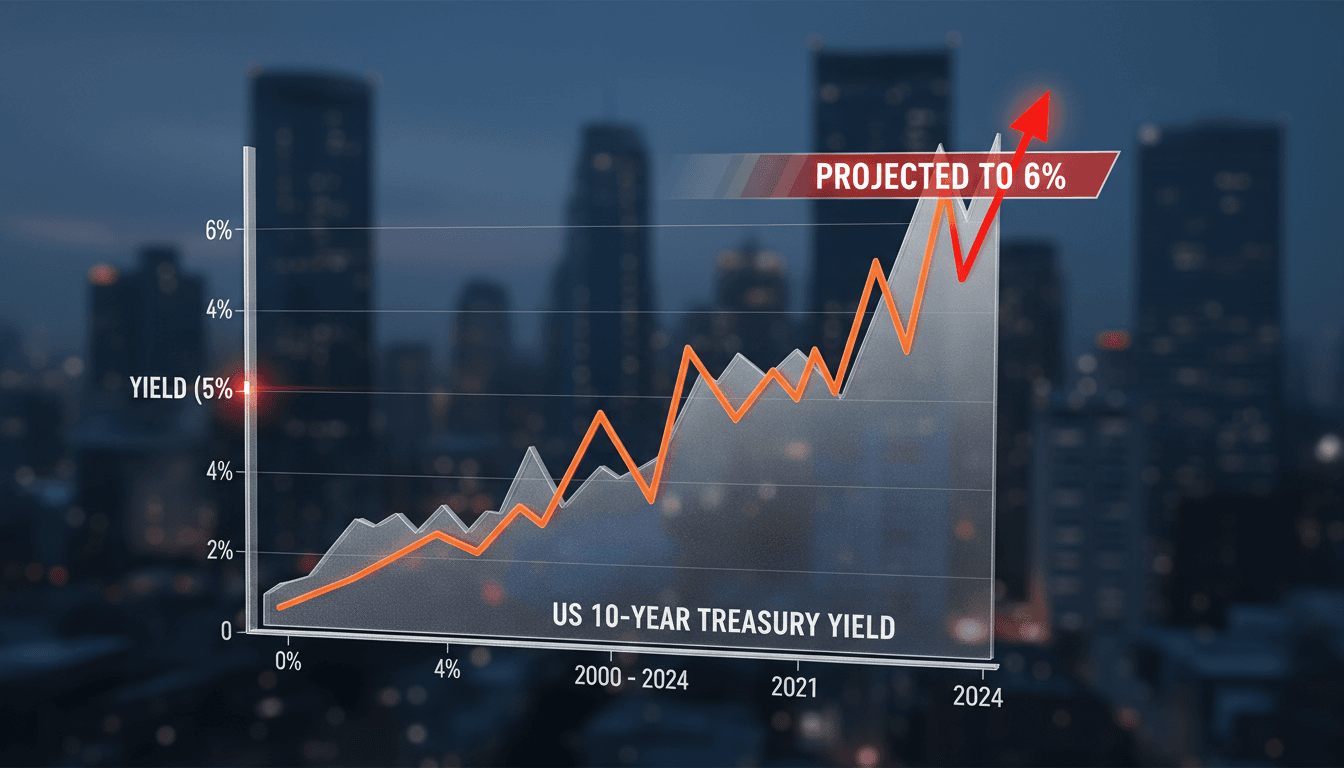
Pimco Projects US 10-Year Treasury Yields May Hit 6% Due to Inflation and Debt Concerns
Why it matters
Higher Treasury yields signal increased borrowing costs across the economy, affecting everything from mortgages to corporate financing.
What happened (in 30 seconds)
- Pimco's warning: On October 9, 2026, Pimco's Dan Ivascyn indicated that US 10-year Treasury yields could rise to 6% due to various economic pressures.
- Current yield levels: As of the same date, yields reached approximately 5.29%, marking a significant increase of nearly 120 basis points in 2026.
- Market implications: Elevated yields could weaken equity markets and corporate credit, prompting investors to closely monitor inflation data and Federal Reserve policies.
The context you actually need
- Inflation concerns: Rising oil prices and persistent inflation are driving expectations for higher interest rates and increased government borrowing.
- Economic growth: Strong economic performance, particularly in AI-related sectors, is contributing to the demand for capital and influencing Treasury yields.
- Global bond market dynamics: The US Treasury market is experiencing selling pressure, which is affecting yields and investor sentiment worldwide.
What's really happening
The recent surge in US Treasury yields is primarily driven by a confluence of economic factors that are reshaping the financial landscape. As of October 2026, the 10-year Treasury yield has climbed to approximately 5.29%, a level not seen since 2002. This increase of nearly 120 basis points year-to-date reflects heightened concerns over inflation, particularly due to rising oil prices, which have intensified market anxieties about sustained inflationary pressures.
Pimco's Chief Investment Officer, Dan Ivascyn, has highlighted that yields could feasibly reach 6% as technical factors come into play, particularly the activities of leveraged hedge funds. These investors often engage in stop-out activities, which can exacerbate yield movements. If yields surpass 5.5%, it could trigger a broader sell-off in equities and corporate credit, as higher borrowing costs typically dampen corporate profitability and consumer spending.
The backdrop of substantial US government borrowing needs further complicates the situation. With the national debt at historically high levels, the Treasury's need to issue bonds to finance its obligations is increasing. This issuance, coupled with strong economic growth driven by AI-related capital investments, is creating a complex environment where demand for Treasuries may not keep pace with supply, leading to upward pressure on yields.
Market participants are closely monitoring several key indicators, including inflation data, oil prices, and Federal Reserve policy decisions. The Federal Reserve's stance on interest rates will be crucial in determining the trajectory of Treasury yields. If the Fed signals a commitment to maintaining higher rates to combat inflation, yields could continue to rise, further impacting borrowing costs across the economy.
In summary, the current dynamics in the Treasury market reflect a broader economic narrative characterized by inflationary pressures, government borrowing needs, and investor behavior. As yields rise, the implications for various sectors and individual borrowers will become increasingly pronounced.
Who feels it first (and how)
- Homebuyers: Higher mortgage rates could make home financing more expensive.
- Corporations: Increased borrowing costs may lead to reduced capital expenditures and slower growth.
- Investors: Those holding US fixed-income assets may see diminished returns as yields rise.
- International borrowers: Higher global Treasury yields could increase financing costs for entities reliant on US debt markets.
What to watch next
- Inflation data: Upcoming reports will provide insights into whether inflation is stabilizing or continuing to rise, impacting Fed policy.
- Federal Reserve meetings: Decisions regarding interest rates will be critical in shaping market expectations and Treasury yields.
- Treasury auctions: Demand for upcoming bond auctions will indicate investor sentiment and appetite for US debt.
Current 10-year Treasury yield is approximately 5.29%.
Continued monitoring of inflation and Fed policy will influence future yield movements.
The exact timing and extent of any potential rise to 6% remain uncertain.
Frequently Asked Questions
- Why it matters?
- Higher Treasury yields signal increased borrowing costs across the economy, affecting everything from mortgages to corporate financing.
- What happened (in 30 seconds)?
- Pimco's warning: On October 9, 2026, Pimco's Dan Ivascyn indicated that US 10-year Treasury yields could rise to 6% due to various economic pressures. Current yield levels: As of the same date, yields reached approximately 5.29%, marking a significant increase of nearly 120 basis points in 2026. Market implications: Elevated yields could weaken equity markets and corporate credit, prompting investors to closely monitor inflation data and Federal Reserve policies.
- What's really happening?
- The recent surge in US Treasury yields is primarily driven by a confluence of economic factors that are reshaping the financial landscape. As of October 2026, the 10-year Treasury yield has climbed to approximately 5.29%, a level not seen since 2002. This increase of nearly 120 basis points year-to-date reflects heightened concerns over inflation, particularly due to rising oil prices, which have intensified market anxieties about sustained inflationary pressures. Pimco's Chief Investment Offic
- Who feels it first (and how)?
- Homebuyers: Higher mortgage rates could make home financing more expensive. Corporations: Increased borrowing costs may lead to reduced capital expenditures and slower growth. Investors: Those holding US fixed-income assets may see diminished returns as yields rise. International borrowers: Higher global Treasury yields could increase financing costs for entities reliant on US debt markets.
- What to watch next?
- Inflation data: Upcoming reports will provide insights into whether inflation is stabilizing or continuing to rise, impacting Fed policy. Federal Reserve meetings: Decisions regarding interest rates will be critical in shaping market expectations and Treasury yields. Treasury auctions: Demand for upcoming bond auctions will indicate investor sentiment and appetite for US debt.
Corporate finance news, M&A, deals, and executive interviews.
"Finance Monthly serves a professional readership with corporate finance coverage."
— A47 Editor
US Treasury Yields Could Hit 6%: What It Means for Investors and Borrowers
US Treasury yields are projected to reach 6%, the highest level since 2000, as rising inflation, government debt, and market pressures contribute to this trend, according to Pimco. This surge in yields reflects a growing lack of investor confidence a...
Macro commentary, policy analysis, growth/inflation themes, and global outlooks.
"Contextual macro coverage that complements day-to-day market headlines."
— A47 Editor
U.S. 10-year Treasury yields at risk of hitting 6%, Pimco tells FT
U.S. 10-year Treasury yields are at risk of reaching 6%, a level not seen since 2000, as indicated by Pimco in a recent report. This potential increase is driven by rising inflation, government debt, and market pressures, reflecting a significant shi...
Editor-curated FT homepage stories spanning markets, business, world, and opinion.
"The Financial Times is a globally respected business publication with a centrist/center-left tone and strong markets focus."
— A47 Editor
US 10-year Treasury yields risk hitting 6% for first time since 2000, Pimco says
US 10-year Treasury yields are at risk of reaching 6% for the first time since 2000, according to Pimco's investment chief, who warns that a sharp rise in borrowing costs is feasible as market participants unwind losing bets. This development follows...