
Oil Prices Rise 4% Amid Middle East Tensions and U.S. Weather Disruptions
Why it matters
The surge in oil prices reflects heightened geopolitical risks that can disrupt global supply chains and economic stability.
What happened (in 30 seconds)
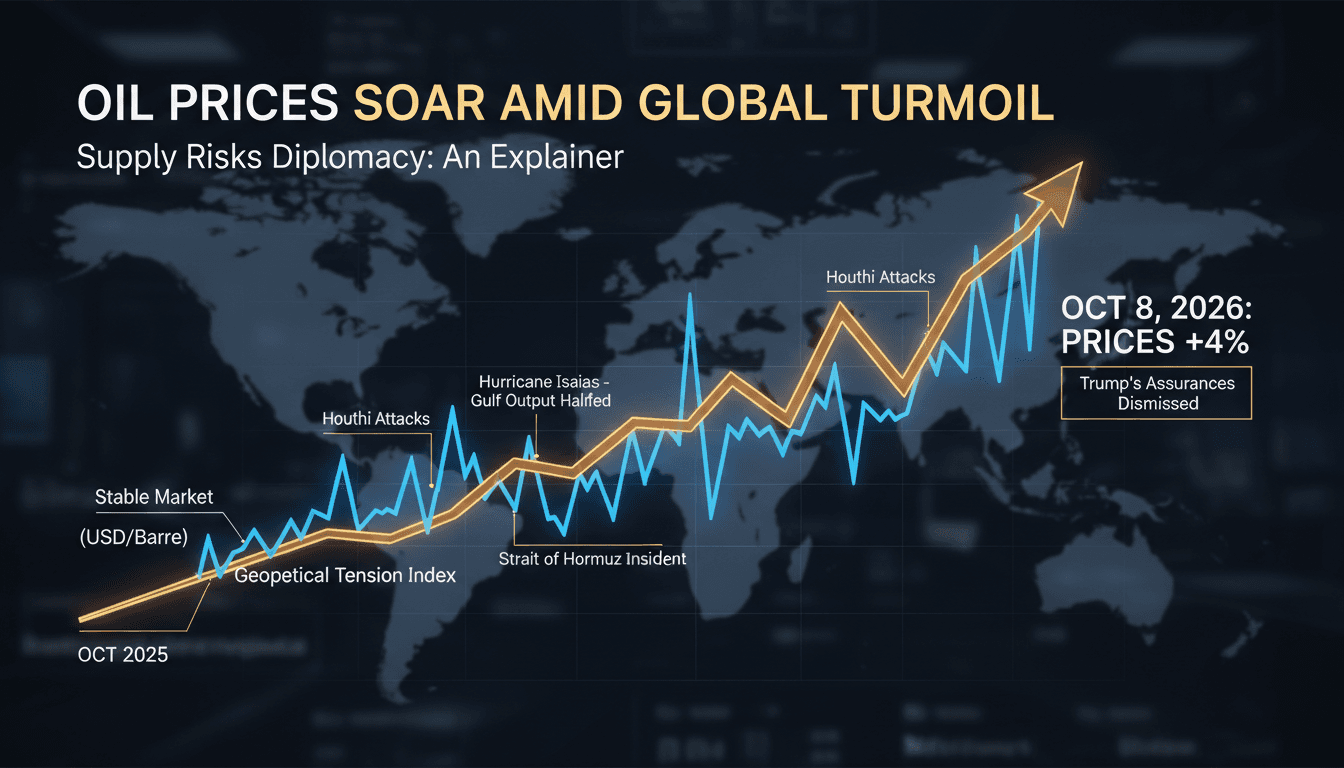
- Oil futures closed up approximately 4% on October 8, 2026, despite U.S. President Trump's assurances against military action in Iran.
- Brent crude surpassed $103 per barrel while WTI approached $90–$92 per barrel, driven by escalating Middle East tensions and weather-related production disruptions.
- Traders prioritized physical supply risks over diplomatic messaging, leading to significant price increases amid ongoing conflicts and natural disasters.
The context you actually need
- Ongoing U.S.-Iran conflict: The situation has escalated since February 2026, involving military strikes and proxy actions that threaten oil supply routes.
- Houthi militant activity: Recent attacks on Saudi Arabian infrastructure have raised fears of further disruptions in oil supply, particularly through critical chokepoints like the Strait of Hormuz.
- Weather disruptions: Hurricane Isaias has prompted evacuations and production shut-ins in the U.S. Gulf of Mexico, compounding supply concerns.
What's really happening
On October 8, 2026, oil markets reacted sharply to a combination of geopolitical tensions and natural disasters. Initially, reports suggested potential U.S. military options against Iran, which drove oil prices higher. However, President Trump’s subsequent Truth Social post, assuring no military action before the midterm elections, did little to quell market fears. Instead, traders focused on the tangible risks posed by ongoing conflicts and weather events.
The Houthi attacks on Saudi airports and Iranian incidents in the Strait of Hormuz have heightened concerns about the stability of oil supply routes. The Strait of Hormuz is particularly critical, as it facilitates approximately 20% of global oil trade. Any disruption here can have immediate and far-reaching effects on oil prices worldwide.
Additionally, Hurricane Isaias has led to significant production shut-ins in the Gulf of Mexico, further tightening supply. As a result, Brent and WTI crude benchmarks surged over 3% by settlement, reflecting a market that is increasingly sensitive to physical supply risks rather than political assurances.
This shift in focus indicates a broader trend in oil markets where traders are prioritizing real-world supply data over political rhetoric. The volatility seen in recent months suggests that any escalation in Middle Eastern tensions or further natural disasters could lead to even higher prices. As oil prices rise, the implications extend beyond just energy costs; they can affect inflation rates, transportation costs, and overall economic growth.
Who feels it first (and how)
- Consumers: Higher gasoline prices, averaging around $4.36 per gallon in the U.S., will directly impact household budgets.
- Businesses: Companies reliant on transportation and logistics will face increased operational costs, potentially leading to higher prices for goods.
- Energy producers: U.S. Gulf Coast energy producers may experience production disruptions, affecting their revenue and operational stability.
- Investors: Those in the commodities market will see increased volatility, impacting investment strategies and portfolio performance.
- Dubai residents: Elevated fuel and energy costs could ripple through the UAE economy, affecting transportation and consumer prices.
What to watch next
- Geopolitical developments: Monitor any escalations in U.S.-Iran relations or Houthi activities, as these could lead to further price increases.
- Weather forecasts: Keep an eye on hurricane season developments, particularly in the Gulf of Mexico, which could impact production levels.
- Market reactions: Watch for shifts in oil trader sentiment, especially regarding physical supply data versus political statements, as this will influence future price movements.
Oil prices are sensitive to geopolitical tensions and weather disruptions.
Continued volatility in oil prices as traders react to real-world supply risks.
The long-term impact of these price increases on global economic growth and inflation rates.
Frequently Asked Questions
- Why it matters?
- The surge in oil prices reflects heightened geopolitical risks that can disrupt global supply chains and economic stability.
- What happened (in 30 seconds)?
- Oil futures closed up approximately 4% on October 8, 2026, despite U.S. President Trump's assurances against military action in Iran. Brent crude surpassed $103 per barrel while WTI approached $90–$92 per barrel, driven by escalating Middle East tensions and weather-related production disruptions. Traders prioritized physical supply risks over diplomatic messaging, leading to significant price increases amid ongoing conflicts and natural disasters.
- What's really happening?
- On October 8, 2026, oil markets reacted sharply to a combination of geopolitical tensions and natural disasters. Initially, reports suggested potential U.S. military options against Iran, which drove oil prices higher. However, President Trump’s subsequent Truth Social post, assuring no military action before the midterm elections, did little to quell market fears. Instead, traders focused on the tangible risks posed by ongoing conflicts and weather events. The Houthi attacks on Saudi airports
- Who feels it first (and how)?
- Consumers: Higher gasoline prices, averaging around $4.36 per gallon in the U.S., will directly impact household budgets. Businesses: Companies reliant on transportation and logistics will face increased operational costs, potentially leading to higher prices for goods. Energy producers: U.S. Gulf Coast energy producers may experience production disruptions, affecting their revenue and operational stability. Investors: Those in the commodities market will see increased volatility, impactin
- What to watch next?
- Geopolitical developments: Monitor any escalations in U.S.-Iran relations or Houthi activities, as these could lead to further price increases. Weather forecasts: Keep an eye on hurricane season developments, particularly in the Gulf of Mexico, which could impact production levels. Market reactions: Watch for shifts in oil trader sentiment, especially regarding physical supply data versus political statements, as this will influence future price movements.
Markets desk coverage, trading insights, and investor updates.
"WSJ’s markets reporting provides in-depth analysis and context for investors."
— A47 Editor
Oil Finishes Higher Despite Trump Truth Social Post
Crude oil futures closed higher as Hurricane Isaias approaches the U.S. Gulf coast, leading to production shutdowns and heightened market activity. This development reflects traders' reactions to both the hurricane's potential impact on supply and on...
Oil, metals, and agriculture: supply/demand headlines, OPEC chatter, inventories, and price action.
"Solid tape for energy and metals traders tracking macro and micro catalysts."
— A47 Editor
Oil up in choppy trade amid supply concerns, IEA pledge to speed up stocks release
Oil prices have experienced fluctuations amid ongoing supply concerns, with the International Energy Agency (IEA) pledging to expedite the release of oil stocks. This comes as geopolitical tensions, particularly in the Middle East, continue to impact...
Oil, metals, and agriculture: supply/demand headlines, OPEC chatter, inventories, and price action.
"Solid tape for energy and metals traders tracking macro and micro catalysts."
— A47 Editor
Oil prices stable as market weighs supply risks, rising Middle East exports
Oil prices have remained stable as the market assesses supply risks amid rising exports from the Middle East. The current geopolitical tensions in the region, particularly concerning the Strait of Hormuz, continue to influence market dynamics, creati...