
Oil Prices Rise Sharply Due to Increased Attacks on Tankers and Regional Tensions
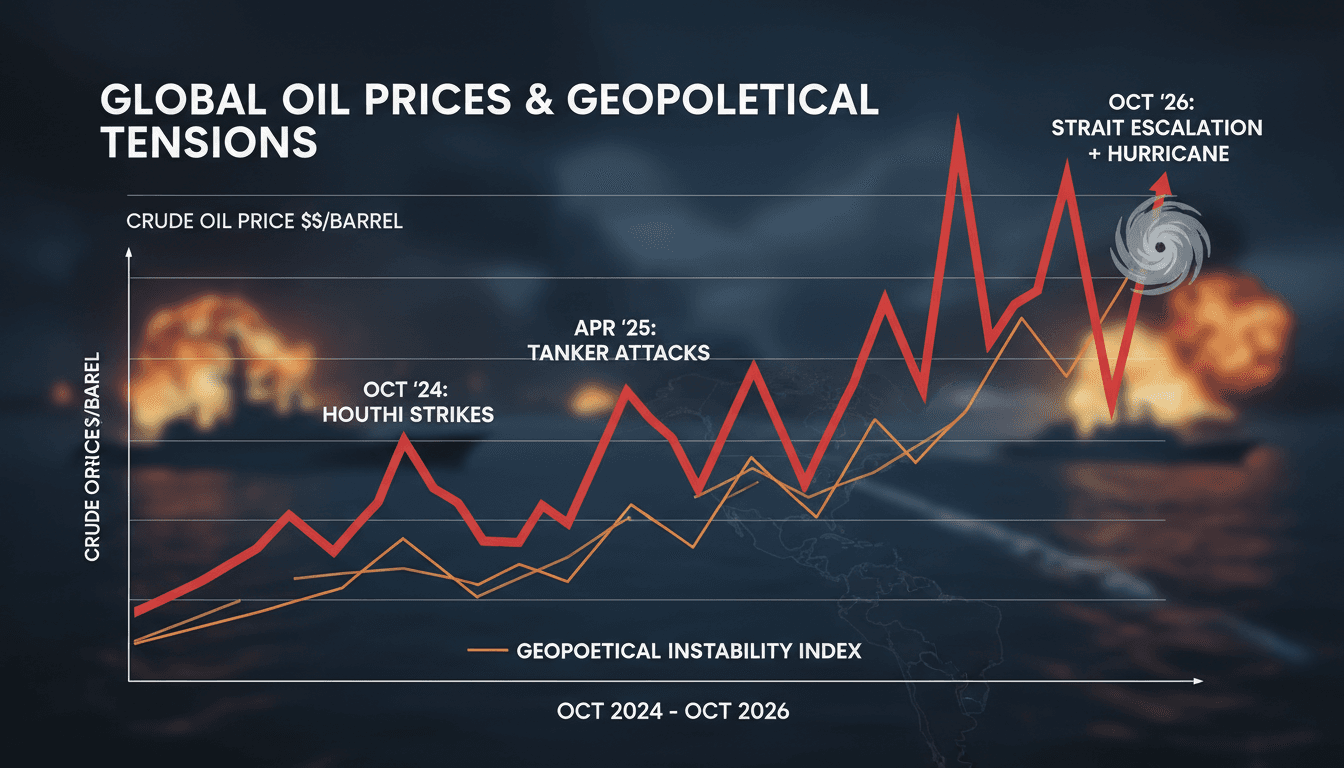
Why it matters
The surge in oil prices reflects escalating geopolitical tensions that threaten global energy supply chains.
What happened (in 30 seconds)
- Oil prices jumped sharply on October 8, 2026, with Brent crude rising over 4% to approximately $104 per barrel.
- Iran intensified attacks on commercial tankers in the Strait of Hormuz, disrupting a critical chokepoint for global oil flows.
- Houthi militants targeted Saudi Arabian infrastructure, compounding supply concerns amid a hurricane threatening U.S. Gulf production.
The context you actually need
- The Strait of Hormuz is a vital passage for oil, with about 20% of the world's oil supply passing through it.
- The Iran conflict, ongoing since February 2026, has seen repeated attacks on shipping, raising fears of broader regional instability.
- U.S. Gulf production faced potential shutdowns of up to 500,000 barrels per day due to Hurricane Isaias, further straining supply.
What's really happening
The recent spike in oil prices is primarily driven by a combination of geopolitical tensions and natural disasters. On October 8, 2026, Brent crude futures surged 4.1% to settle at $104.28 per barrel, while West Texas Intermediate (WTI) gained 3.6% to $91.49. This price increase was fueled by reports of nine to ten tanker attacks in the Strait of Hormuz over the preceding week, marking the highest frequency of such incidents since the conflict began.
The Strait of Hormuz is a critical chokepoint for global oil transportation, and any disruption here can have immediate and far-reaching effects on oil prices worldwide. The attacks, attributed to Iran and its proxies, have raised alarms about the security of maritime routes, leading to increased insurance costs for shipping companies and potential rerouting of vessels. This situation is exacerbated by the ongoing conflict in Yemen, where Houthi militants have been increasingly aggressive, launching ballistic missiles at Saudi airports and other targets.
In addition to geopolitical factors, natural events are also playing a significant role. Hurricane Isaias has threatened U.S. Gulf production, with estimates suggesting potential shutdowns of up to 500,000 barrels per day. This dual threat of geopolitical instability and natural disasters has created a perfect storm for oil prices, leading to heightened market volatility.
The implications of these developments extend beyond immediate price increases. Higher oil prices can lead to inflationary pressures across various sectors, as transportation and production costs rise. Consumers may face increased prices for goods and services, while businesses, particularly those reliant on oil, may see squeezed profit margins. Furthermore, the uncertainty surrounding the situation in the Middle East could lead to long-term shifts in energy policy and investment strategies globally.
Who feels it first (and how)
- Consumers: Higher fuel prices will increase transportation costs, impacting daily expenses.
- Businesses: Companies reliant on oil for logistics and production will face rising operational costs.
- Investors: Stock and bond markets may experience volatility as energy prices fluctuate.
- Governments: Increased oil prices can lead to inflation, affecting economic stability and policy decisions.
What to watch next
- Geopolitical developments: Monitor any new attacks or diplomatic efforts involving Iran and its neighbors, as these will directly impact oil supply and prices.
- Hurricane impacts: Keep an eye on the aftermath of Hurricane Isaias and its effects on U.S. Gulf oil production, which could further influence market dynamics.
- Market reactions: Watch for shifts in stock and bond markets as investors respond to rising oil prices and potential inflationary pressures.
Oil prices have surged due to geopolitical tensions and natural disasters.
Continued volatility in oil markets as geopolitical risks persist and weather events impact production.
The long-term effects on global energy policy and consumer behavior in response to sustained high prices.
Frequently Asked Questions
- Why it matters?
- The surge in oil prices reflects escalating geopolitical tensions that threaten global energy supply chains.
- What happened (in 30 seconds)?
- Oil prices jumped sharply on October 8, 2026, with Brent crude rising over 4% to approximately $104 per barrel. Iran intensified attacks on commercial tankers in the Strait of Hormuz, disrupting a critical chokepoint for global oil flows. Houthi militants targeted Saudi Arabian infrastructure, compounding supply concerns amid a hurricane threatening U.S. Gulf production.
- What's really happening?
- The recent spike in oil prices is primarily driven by a combination of geopolitical tensions and natural disasters. On October 8, 2026, Brent crude futures surged 4.1% to settle at $104.28 per barrel, while West Texas Intermediate (WTI) gained 3.6% to $91.49. This price increase was fueled by reports of nine to ten tanker attacks in the Strait of Hormuz over the preceding week, marking the highest frequency of such incidents since the conflict began. The Strait of Hormuz is a critical chokepoin
- Who feels it first (and how)?
- Consumers: Higher fuel prices will increase transportation costs, impacting daily expenses. Businesses: Companies reliant on oil for logistics and production will face rising operational costs. Investors: Stock and bond markets may experience volatility as energy prices fluctuate. Governments: Increased oil prices can lead to inflation, affecting economic stability and policy decisions.
- What to watch next?
- Geopolitical developments: Monitor any new attacks or diplomatic efforts involving Iran and its neighbors, as these will directly impact oil supply and prices. Hurricane impacts: Keep an eye on the aftermath of Hurricane Isaias and its effects on U.S. Gulf oil production, which could further influence market dynamics. Market reactions: Watch for shifts in stock and bond markets as investors respond to rising oil prices and potential inflationary pressures.
Markets, economy, and company analysis from NYT’s business desk.
"The New York Times is a globally recognized newspaper offering authoritative reporting with a center-left editorial stance."
— A47 Editor
Oil Prices Jump on Outburst of Violence in the Middle East
Oil prices have surged due to escalating violence in the Middle East, particularly following attacks on ships in the Strait of Hormuz and a series of drone strikes on Saudi Arabia's energy infrastructure. These incidents have intensified fears of sup...
U.S. business news, corporate developments, and economy.
"The Wall Street Journal is respected for deep financial and economic reporting with a center-right editorial perspective."
— A47 Editor
Oil Prices Fall Back As Supply Optimism Outweighs Conflict, Storm Risks
Oil futures have settled lower as traders shifted their focus from recent Houthi attacks in Saudi Arabia and production shut-ins off the U.S. Gulf coast to the ongoing oil flows from the Middle East. This change in sentiment reflects a balancing act ...
Global markets, investing, and macroeconomics from a premier financial newsroom.
"Bloomberg is respected for in-depth financial reporting and data-driven analysis."
— A47 Editor
Latest Oil Market News and Analysis for Oct. 7
Oil prices have seen an uptick as traders assess the implications of increased oil flows through the Strait of Hormuz, juxtaposed with a rise in Iranian attacks on vessels in the region. This dynamic reflects ongoing tensions and the complex geopolit...