
Hall and Woodford Win 2026 Nobel Prize in Economic Sciences for Macroeconomic Stabilization Models
Why it matters
This recognition highlights the importance of microeconomic foundations in crafting effective macroeconomic policies, influencing global economic stability.
What happened (in 30 seconds)
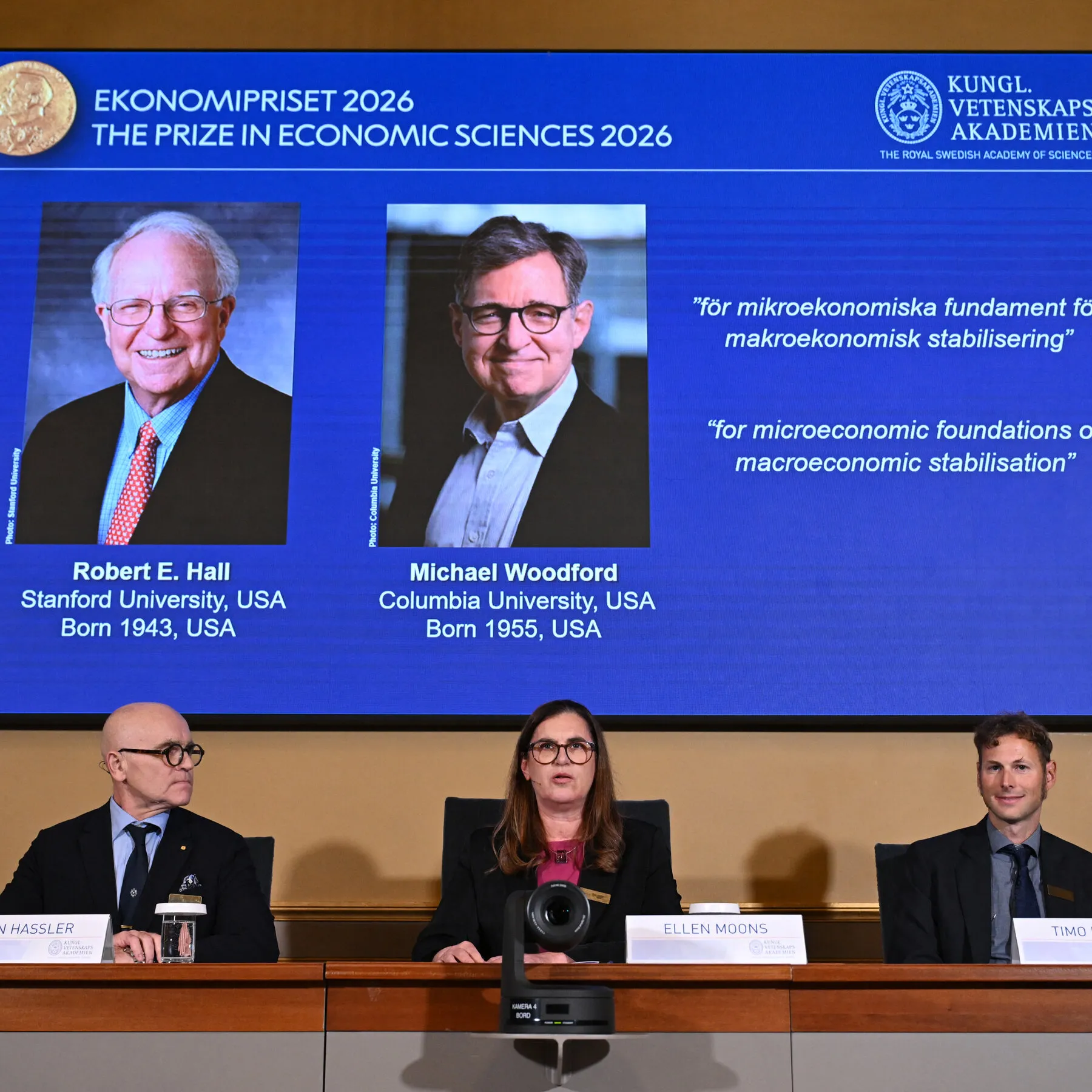
- Robert E. Hall and Michael Woodford were awarded the 2026 Nobel Memorial Prize in Economic Sciences on October 12, 2026.
- Their research focuses on microeconomic behaviors that inform macroeconomic stabilization policies, enhancing the effectiveness of fiscal and monetary measures.
- The prize amount of 12 million Swedish kronor will be shared equally between the two laureates.
The context you actually need
- Decades of research: Hall and Woodford's work builds on economic challenges since the 1970s, particularly the oil crises that exposed limitations in traditional Keynesian models.
- New Keynesian frameworks: They advanced these frameworks by integrating microeconomic behaviors, shifting the focus from aggregate correlations to decision-making models.
- Global impact: Their models have been instrumental for policymakers worldwide, aiding in the management of economic volatility and shocks.
What's really happening
The awarding of the Nobel Prize to Robert E. Hall and Michael Woodford underscores a pivotal shift in economic thought that prioritizes the microeconomic behaviors of households and firms as foundational to macroeconomic stability. Their research emerged from the economic turbulence of the 1970s, particularly the oil crises that revealed the inadequacies of traditional Keynesian models, which often relied on aggregate statistical correlations without considering the underlying decision-making processes of individual economic agents.
Hall's seminal work on consumption smoothing, particularly his 1978 paper, laid the groundwork for understanding consumer demand and spending behavior. This insight is crucial for policymakers aiming to stabilize economies during downturns. Woodford expanded on these ideas, integrating supply-side dynamics and firm price-setting into comprehensive New Keynesian models, notably in his 2003 publication. These models allow for a more nuanced understanding of how economic agents respond to policy changes, enabling central banks and governments to implement more effective fiscal and monetary measures.
The implications of their work are profound. By grounding macroeconomic analysis in microeconomic realities, Hall and Woodford have provided tools that help policymakers mitigate the impacts of economic shocks, such as energy crises or shifts in household consumption. This is particularly relevant in today's context, where economies are increasingly vulnerable to external shocks and fluctuations. Their models have been referenced by central banks and economic institutions globally, especially in managing crises like the recent pandemic and energy shocks.
The recognition of Hall and Woodford's contributions also signals a broader acceptance of New Keynesian economics as a framework for understanding and addressing economic instability. As policymakers grapple with the complexities of modern economies, their work will likely inform future strategies aimed at enhancing economic resilience. This shift towards a more micro-founded approach to macroeconomic policy could lead to more targeted interventions that better address the specific needs of different sectors and demographics.
Who feels it first (and how)
- Policymakers: They will need to adapt their strategies based on the insights from Hall and Woodford's models.
- Central banks: Their monetary policies may become more effective as they incorporate microeconomic behaviors into their frameworks.
- Consumers: Households could experience more stable economic conditions as policymakers implement better-informed fiscal measures.
- Businesses: Firms may benefit from improved economic forecasts and stability, allowing for better planning and investment decisions.
What to watch next
- Policy adaptations: Monitor how central banks and governments adjust their fiscal and monetary policies in light of Hall and Woodford's research. This matters because effective adaptations could lead to enhanced economic stability.
- Economic indicators: Keep an eye on consumer spending and investment trends, as these will reflect the effectiveness of new stabilization policies. Changes here could signal shifts in economic health.
- Global economic responses: Observe how different countries implement stabilization measures based on these models, as this could influence international economic relations and stability.
Hall and Woodford's models will influence future economic policies globally.
Central banks will increasingly incorporate microeconomic insights into their decision-making processes.
The specific impacts on regional economies, including Dubai, remain to be fully understood.
Frequently Asked Questions
- Why it matters?
- This recognition highlights the importance of microeconomic foundations in crafting effective macroeconomic policies, influencing global economic stability.
- What happened (in 30 seconds)?
- Robert E. Hall and Michael Woodford were awarded the 2026 Nobel Memorial Prize in Economic Sciences on October 12, 2026. Their research focuses on microeconomic behaviors that inform macroeconomic stabilization policies, enhancing the effectiveness of fiscal and monetary measures. The prize amount of 12 million Swedish kronor will be shared equally between the two laureates.
- What's really happening?
- The awarding of the Nobel Prize to Robert E. Hall and Michael Woodford underscores a pivotal shift in economic thought that prioritizes the microeconomic behaviors of households and firms as foundational to macroeconomic stability. Their research emerged from the economic turbulence of the 1970s, particularly the oil crises that revealed the inadequacies of traditional Keynesian models, which often relied on aggregate statistical correlations without considering the underlying decision-making pr
- Who feels it first (and how)?
- Policymakers: They will need to adapt their strategies based on the insights from Hall and Woodford's models. Central banks: Their monetary policies may become more effective as they incorporate microeconomic behaviors into their frameworks. Consumers: Households could experience more stable economic conditions as policymakers implement better-informed fiscal measures. Businesses: Firms may benefit from improved economic forecasts and stability, allowing for better planning and investment
- What to watch next?
- Policy adaptations: Monitor how central banks and governments adjust their fiscal and monetary policies in light of Hall and Woodford's research. This matters because effective adaptations could lead to enhanced economic stability. Economic indicators: Keep an eye on consumer spending and investment trends, as these will reflect the effectiveness of new stabilization policies. Changes here could signal shifts in economic health. Global economic responses: Observe how different countries impl
Sports reporting with a focus on Saudi and regional competitions.
"Okaz sports coverage is broad and audience-friendly, with strong attention to Saudi teams and leagues."
— A47 Editor
كيف غيّر اقتصاديان أمريكيان سياسات البنوك المركزية حول العالم؟
The Royal Swedish Academy of Sciences awarded the 2026 Nobel Prize in Economic Sciences to American economists Robert Hall and Michael Woodford for their research that has significantly influenced central bank policies worldwide. Their work focuses o...
Markets, economy, and company analysis from NYT’s business desk.
"The New York Times is a globally recognized newspaper offering authoritative reporting with a center-left editorial stance."
— A47 Editor
Robert E. Hall and Michael Woodford Awarded Nobel for Economics
Robert E. Hall and Michael Woodford have been awarded the 2026 Nobel Memorial Prize in Economic Sciences by the Royal Swedish Academy of Sciences for their contributions that enhance policymakers' ability to respond to economic shocks. This recogniti...
UK and international business news, economics, and corporate coverage.
"The Guardian’s business section covers finance and markets with a progressive editorial tone."
— A47 Editor
Nobel Prize for economics awarded to Hall and Woodford for work on ‘smoothing’ crises
The 2026 Nobel Prize in Economics has been awarded to American economists Robert Hall and Michael Woodford for their groundbreaking work in developing models that assist central bankers and finance ministers in stabilizing economies, thus preventing ...
Top international stories selected by The Guardian editors.
"The Guardian is known for its progressive editorial stance and in-depth analysis."
— A47 Editor
Nobel Prize for economics awarded to Hall and Woodford for work on ‘smoothing’ crises
The 2026 Nobel Prize in Economics has been awarded to American economists Robert Hall and Michael Woodford for their groundbreaking work in developing models that assist central bankers and finance ministers in stabilizing economies, thus preventing ...
International coverage of politics, security, and social issues.
"Global News is a mainstream Canadian outlet with a centrist editorial stance, focusing on factual reporting."
— A47 Editor
Nobel prize awarded to 2 economists for their work on how to manage shocks
American economists Robert E. Hall and Michael Woodford have been awarded the 2026 Nobel Memorial Prize in Economics for their significant contributions to understanding how to manage economic shocks, as announced by the Royal Swedish Academy of Scie...
English-language reporting on Saudi politics, policy, and society.
"Saudi Gazette reflects mainstream Saudi institutional perspectives."
— A47 Editor
American academics win 2026 Nobel Prize in economics
American economists Robert Hall and Michael Woodford have been awarded the 2026 Nobel Prize in Economics for their extensive research in developing economic models that assist governments and central banks in stabilizing economies against external sh...
European current affairs, EU politics, and regional developments.
"France 24 is viewed as a globally focused outlet with balanced coverage and a European perspective."
— A47 Editor
Americans Robert E. Hall and Michael Woodford win Nobel Prize in Economics
The 2026 Nobel Prize in Economics has been awarded to American economists Robert E. Hall and Michael Woodford, as announced by the Royal Swedish Academy of Sciences on Monday. This recognition highlights their significant contributions to the field o...