
MSCI Proposes Indonesia Reclassification to Standalone Market Status Amidst Major Stock Decline
Why it matters
The reclassification could lead to substantial capital outflows from Indonesia, affecting global emerging market dynamics.
What happened (in 30 seconds)
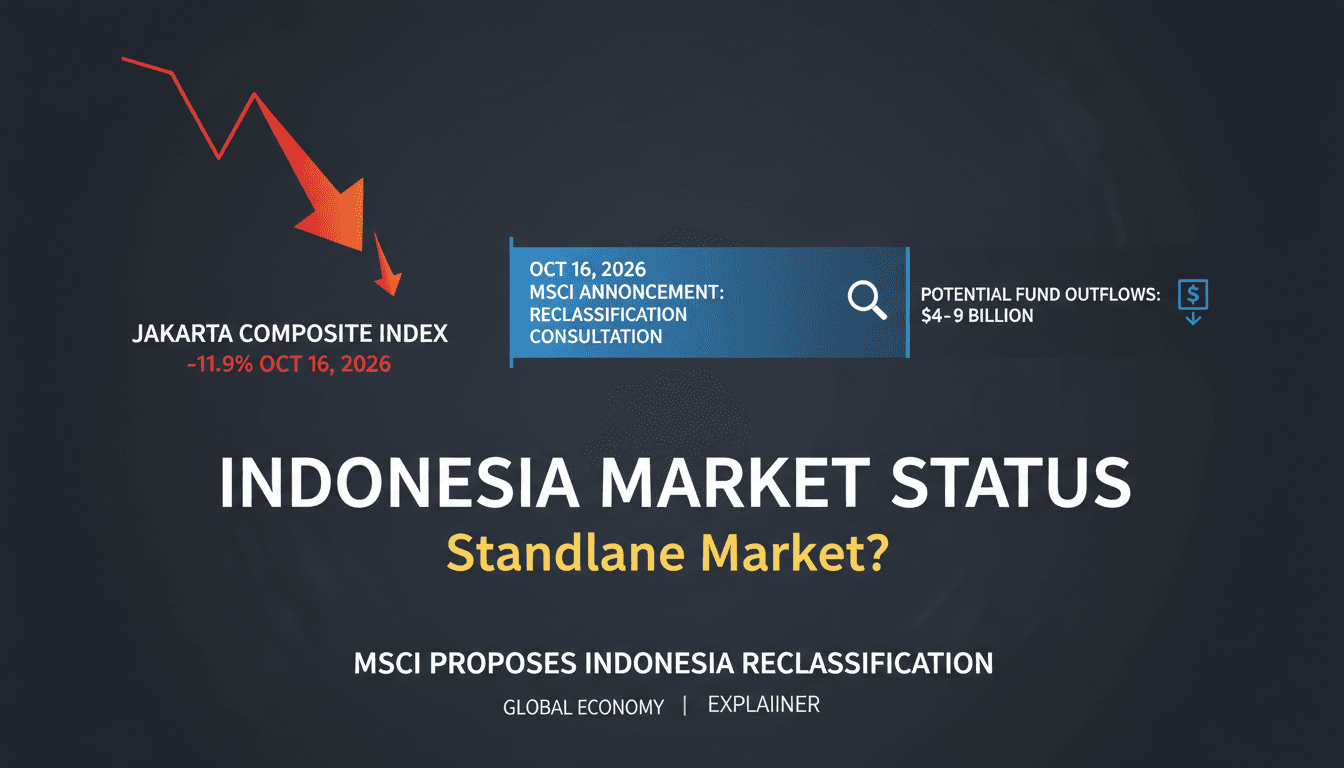
- MSCI announced a consultation to reclassify Indonesia from emerging-market to standalone status on October 15, 2026.
- The Jakarta Composite Index (JCI) plummeted nearly 12% the following day, marking its largest single-day decline since 1998.
- Concerns over market transparency and governance issues have prompted fears of significant passive fund outflows, estimated between $4 billion and $9 billion.
The context you actually need
- MSCI raised concerns about Indonesia's market accessibility in January 2026, citing issues like shareholding opacity and suspected coordinated trading.
- Despite reforms announced by Indonesian authorities, MSCI determined that significant concerns remained, leading to the current consultation on reclassification.
- The Jakarta stock market has already seen net foreign sales of approximately $4.7 billion year-to-date, indicating a trend of capital flight.
What's really happening
On October 15, 2026, MSCI Inc. initiated a public consultation regarding Indonesia's market classification, proposing to downgrade it from an emerging market to a standalone market. This decision stems from ongoing concerns about the country's market transparency and governance, which MSCI believes have not been adequately addressed despite previous reforms. The following day, the Jakarta Composite Index (JCI) opened significantly lower, triggering a trading halt before closing down nearly 12%. This marked the largest single-day drop for the index since 1998, reflecting deep investor anxiety.
The implications of this reclassification are profound. If Indonesia is reclassified as a standalone market, it would be excluded from major emerging-market indexes, which could lead to substantial passive fund outflows. Estimates suggest that these outflows could range from $4 billion to $9 billion, exacerbating the already significant capital flight from the country. The JCI has already experienced year-to-date losses exceeding 40%, and the Indonesian rupiah has weakened toward multi-month lows, indicating a lack of investor confidence.
In response to the MSCI announcement, the Indonesia Stock Exchange (IDX) sought clarification on the assessment criteria and emphasized the reforms that have been implemented. However, the market's reaction suggests that investors remain skeptical about the effectiveness of these reforms. The consultation period is open until April 30, 2027, with a final decision expected by June 30, 2027, allowing time for Indonesia to demonstrate improvements in market governance.
This situation highlights the delicate balance between market perception and actual governance. Investors are increasingly wary of markets that lack transparency, and MSCI's actions reflect a broader trend of prioritizing investability and governance standards. The potential reclassification could serve as a wake-up call for Indonesian authorities to address these systemic issues more aggressively.
Who feels it first (and how)
- Foreign institutional investors: Likely to experience immediate impacts through portfolio rebalancing and potential losses.
- Local businesses: May face reduced access to capital as foreign investment declines.
- Indonesian regulators: Under pressure to implement reforms and restore investor confidence.
- Retail investors: Could see significant losses in their equity holdings as market sentiment deteriorates.
What to watch next
- MSCI's final decision: The outcome of the consultation will be crucial for Indonesia's market status and investor sentiment.
- Market reforms: Watch for any new initiatives from Indonesian authorities aimed at improving market transparency and governance.
- Foreign investment trends: Monitor net foreign investment flows into Indonesia to gauge the ongoing impact of the reclassification proposal.
The JCI experienced its largest single-day decline since 1998.
Significant passive fund outflows could occur if Indonesia is reclassified.
The effectiveness of any reforms implemented before the final MSCI decision.
Frequently Asked Questions
- Why it matters?
- The reclassification could lead to substantial capital outflows from Indonesia, affecting global emerging market dynamics.
- What happened (in 30 seconds)?
- MSCI announced a consultation to reclassify Indonesia from emerging-market to standalone status on October 15, 2026. The Jakarta Composite Index (JCI) plummeted nearly 12% the following day, marking its largest single-day decline since 1998. Concerns over market transparency and governance issues have prompted fears of significant passive fund outflows, estimated between $4 billion and $9 billion.
- What's really happening?
- On October 15, 2026, MSCI Inc. initiated a public consultation regarding Indonesia's market classification, proposing to downgrade it from an emerging market to a standalone market. This decision stems from ongoing concerns about the country's market transparency and governance, which MSCI believes have not been adequately addressed despite previous reforms. The following day, the Jakarta Composite Index (JCI) opened significantly lower, triggering a trading halt before closing down nearly 12%.
- Who feels it first (and how)?
- Foreign institutional investors: Likely to experience immediate impacts through portfolio rebalancing and potential losses. Local businesses: May face reduced access to capital as foreign investment declines. Indonesian regulators: Under pressure to implement reforms and restore investor confidence. Retail investors: Could see significant losses in their equity holdings as market sentiment deteriorates.
- What to watch next?
- MSCI's final decision: The outcome of the consultation will be crucial for Indonesia's market status and investor sentiment. Market reforms: Watch for any new initiatives from Indonesian authorities aimed at improving market transparency and governance. Foreign investment trends: Monitor net foreign investment flows into Indonesia to gauge the ongoing impact of the reclassification proposal.
Global political, business, and cultural coverage from WSJ international desks.
"The Wall Street Journal offers extensive international reporting with a reputation for financial insight and a center-right editorial stance."
— A47 Editor
Indonesian Stocks Dive as MSCI Weighs Downgrade to Standalone Market
Indonesian stocks are facing a significant decline, poised for their largest drop since the Asian financial crisis in 1998, following a warning from index provider MSCI about the potential removal of Indonesia from its indexes. This development has r...
Global markets, investing, and macroeconomics from a premier financial newsroom.
"Bloomberg is respected for in-depth financial reporting and data-driven analysis."
— A47 Editor
Why Indonesia Risks Being Removed From MSCI’s Global Indexes
Indonesia, Southeast Asia's largest economy, faces the risk of being removed from MSCI's global indexes due to a potential downgrade of its emerging-market status, which could jeopardize billions in foreign investment.
Editor-curated FT homepage stories spanning markets, business, world, and opinion.
"The Financial Times is a globally respected business publication with a centrist/center-left tone and strong markets focus."
— A47 Editor
World’s worst-performing stock market hit by fresh MSCI warning
Indonesia's stock market, identified as the world's worst-performing, has received a fresh warning from MSCI, raising concerns about its investability and future status in global indexes. This warning follows MSCI's proposal to downgrade Indonesia to...
U.S. company headlines: M&A, product launches, legal/regulatory actions, and leadership moves.
"U.S.-centric corporate tape; good for tracking single-name catalysts."
— A47 Editor
MSCI proposes downgrading Indonesia to standalone market status
MSCI has proposed downgrading Indonesia to standalone market status, indicating that the country may no longer qualify for emerging-market classification. This potential change raises concerns about Indonesia's future inclusion in global stock indexe...
Global markets, investing, and macroeconomics from a premier financial newsroom.
"Bloomberg is respected for in-depth financial reporting and data-driven analysis."
— A47 Editor
Indonesia Stocks Sink Most in 28 Years on MSCI Downgrade Warning
Indonesian stocks experienced their most significant decline in 28 years following a warning from MSCI Inc. regarding the potential downgrade of Indonesia's emerging-market status, raising concerns about its removal from global indexes and the risk o...