
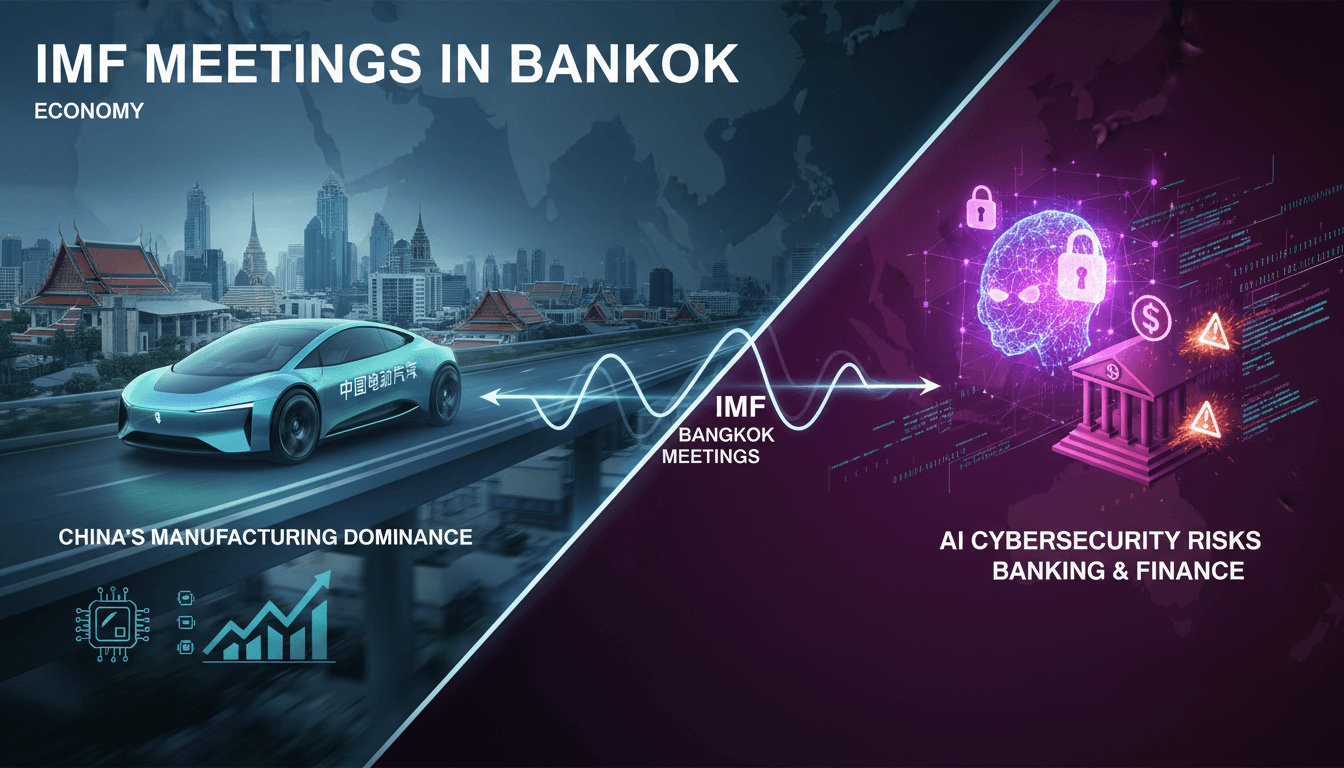
IMF Meetings in Bangkok Address China's Manufacturing Dominance and AI Cybersecurity Risks
Why it matters
The ongoing discussions at the IMF highlight critical shifts in manufacturing and technology that could reshape global trade and economic stability.
What happened (in 30 seconds)
- China's EV dominance: Nearly one-third of car sales in Thailand are now Chinese electric vehicles (EVs), marking a significant shift in the automotive market.
- AI's dual role: While AI investments are boosting economic growth, they also raise serious cybersecurity concerns for banking systems.
- Bond market scrutiny: The focus is on the bond markets of the US, France, and the UK, with rising interest rates impacting economic strategies.
The context you actually need
- Recurring crises: The global economy is grappling with energy shocks, trade conflicts, and geopolitical tensions, reminiscent of the first China Shock in the 2000s.
- Rising debt costs: Advanced economies are facing sharply increasing interest rates, which could hinder growth and investment.
- Resilience in smaller economies: Smaller nations are finding new trade routes and opportunities, demonstrating adaptability in a challenging environment.
What's really happening
At the IMF Annual Meetings in Bangkok, finance leaders are navigating a complex landscape characterized by both growth inhibitors and boosters. The term "China Shock Two" has emerged, reflecting China's rapid rise in electric vehicle manufacturing, which is reshaping markets in Southeast Asia and beyond. In Thailand, for instance, nearly one-third of car sales are now attributed to Chinese EVs, prompting European Union trade reassessments that could have ripple effects on the UK market.
This shift is not merely about market share; it signifies a broader geopolitical strategy where China is leveraging its manufacturing capabilities to expand influence. The implications for global trade are profound, as countries reassess their dependencies and alliances in light of these developments.
Simultaneously, AI is being hailed as an economic trampoline, propelling growth and innovation across sectors. However, this comes with a caveat: central banks are increasingly concerned about the cybersecurity risks associated with AI technologies. As financial systems become more intertwined with AI, the potential for vulnerabilities increases, raising alarms about the stability of banking systems.
The bond markets are under scrutiny, particularly in the US, France, and the UK, as rising interest rates create a challenging environment for debt management. Despite these pressures, the UK has shown unexpected growth, potentially linked to its investments in AI and technology. This has garnered praise from the IMF, which sees the UK’s budget plans as a positive step amidst global uncertainty.
The tug-of-war between these opposing forces—growth inhibitors like geopolitical crises and debt costs versus boosters like AI spending and trade resilience—creates a precarious balance. As countries navigate these challenges, the outcomes will significantly impact global economic stability and individual financial well-being.
Who feels it first (and how)
- Automotive industry: Manufacturers and consumers in Thailand and the EU will feel the impact of shifting EV sales dynamics.
- Tech sector: Companies investing in AI will face both opportunities for growth and heightened cybersecurity risks.
- Investors: Bond market fluctuations will directly affect those holding government debt in the US, France, and the UK.
What to watch next
- AI regulations: Watch for emerging regulations on AI technologies, as governments seek to mitigate cybersecurity risks.
- Trade agreements: Keep an eye on potential new trade agreements or tariffs, particularly between the UK and EU, as they could reshape market dynamics.
- Interest rate trends: Monitor interest rate movements in major economies, as they will influence investment strategies and economic growth.
China's dominance in EV manufacturing is reshaping global automotive markets.
Increased scrutiny on AI technologies will lead to regulatory changes aimed at enhancing cybersecurity.
The long-term effects of rising interest rates on global economic stability remain uncertain.
Frequently Asked Questions
- Why it matters?
- The ongoing discussions at the IMF highlight critical shifts in manufacturing and technology that could reshape global trade and economic stability.
- What happened (in 30 seconds)?
- China's EV dominance: Nearly one-third of car sales in Thailand are now Chinese electric vehicles (EVs), marking a significant shift in the automotive market. AI's dual role: While AI investments are boosting economic growth, they also raise serious cybersecurity concerns for banking systems. Bond market scrutiny: The focus is on the bond markets of the US, France, and the UK, with rising interest rates impacting economic strategies.
- What's really happening?
- At the IMF Annual Meetings in Bangkok, finance leaders are navigating a complex landscape characterized by both growth inhibitors and boosters. The term "China Shock Two" has emerged, reflecting China's rapid rise in electric vehicle manufacturing, which is reshaping markets in Southeast Asia and beyond. In Thailand, for instance, nearly one-third of car sales are now attributed to Chinese EVs, prompting European Union trade reassessments that could have ripple effects on the UK market. This sh
- Who feels it first (and how)?
- Automotive industry: Manufacturers and consumers in Thailand and the EU will feel the impact of shifting EV sales dynamics. Tech sector: Companies investing in AI will face both opportunities for growth and heightened cybersecurity risks. Investors: Bond market fluctuations will directly affect those holding government debt in the US, France, and the UK.
- What to watch next?
- AI regulations: Watch for emerging regulations on AI technologies, as governments seek to mitigate cybersecurity risks. Trade agreements: Keep an eye on potential new trade agreements or tariffs, particularly between the UK and EU, as they could reshape market dynamics. Interest rate trends: Monitor interest rate movements in major economies, as they will influence investment strategies and economic growth.
Corporate news, economic trends, and markets with UK and global scope.
"BBC News is widely regarded as reputable and impartial, with a public service mandate."
— A47 Editor
Faisal Islam: Why China and AI are worrying global finance bosses
At the recent IMF meeting in Bangkok, finance and business leaders expressed concerns over the implications of China's economic strategies and the rapid advancement of artificial intelligence (AI) on global finance. The discussions highlighted the un...
United Kingdom-focused news including local politics, business, and social issues.
"BBC News is widely regarded as a reputable international news organization, known for its impartial tone and public service mandate."
— A47 Editor
Faisal Islam: Why China and AI are worrying global finance bosses
At the recent IMF meeting in Bangkok, finance and business leaders expressed concerns over the implications of China's economic strategies and the rapid advancements in artificial intelligence (AI), which are seen as significant threats to global fin...
Tech business coverage, major deals, product launches, and Silicon Valley trends.
"WSJ’s tech section offers authoritative reporting on the intersection of technology and business, including exclusive industry analysis."
— A47 Editor
AI Boom-or-Bust Scenarios Loom Large at World Financial Summit
The World Financial Summit in Bangkok this week focused heavily on the economic implications and risks associated with artificial intelligence (AI), highlighting a range of opinions from industry leaders and policymakers. Discussions centered on the ...
Global political, business, and cultural coverage from WSJ international desks.
"The Wall Street Journal offers extensive international reporting with a reputation for financial insight and a center-right editorial stance."
— A47 Editor
AI Boom-or-Bust Scenarios Loom Large at World Financial Summit
The World Financial Summit in Bangkok this week focused on the economic implications of artificial intelligence (AI), highlighting both its potential benefits and risks. Discussions centered around how AI could reshape productivity and economic growt...
Social/economic commentary and analysis relevant to business and markets.
"WSJ blends data-driven economic insight with commentary on policy and society."
— A47 Editor
Financial leaders gathering in Asia this week had an urgent message for the world: The global economy is betting the house on artificial intelligence.
Financial leaders gathered in Bangkok this week at the IMF meeting, emphasizing the critical role of artificial intelligence (AI) in shaping the global economy. Discussions highlighted both the economic opportunities and potential risks associated wi...