
French 10-Year Bond Yields Surge to 24-Year Highs Amid Nationwide Riots
Why it matters
The surge in French bond yields reflects broader concerns about political stability and fiscal health in the eurozone, impacting investor confidence across Europe.
What happened (in 30 seconds)
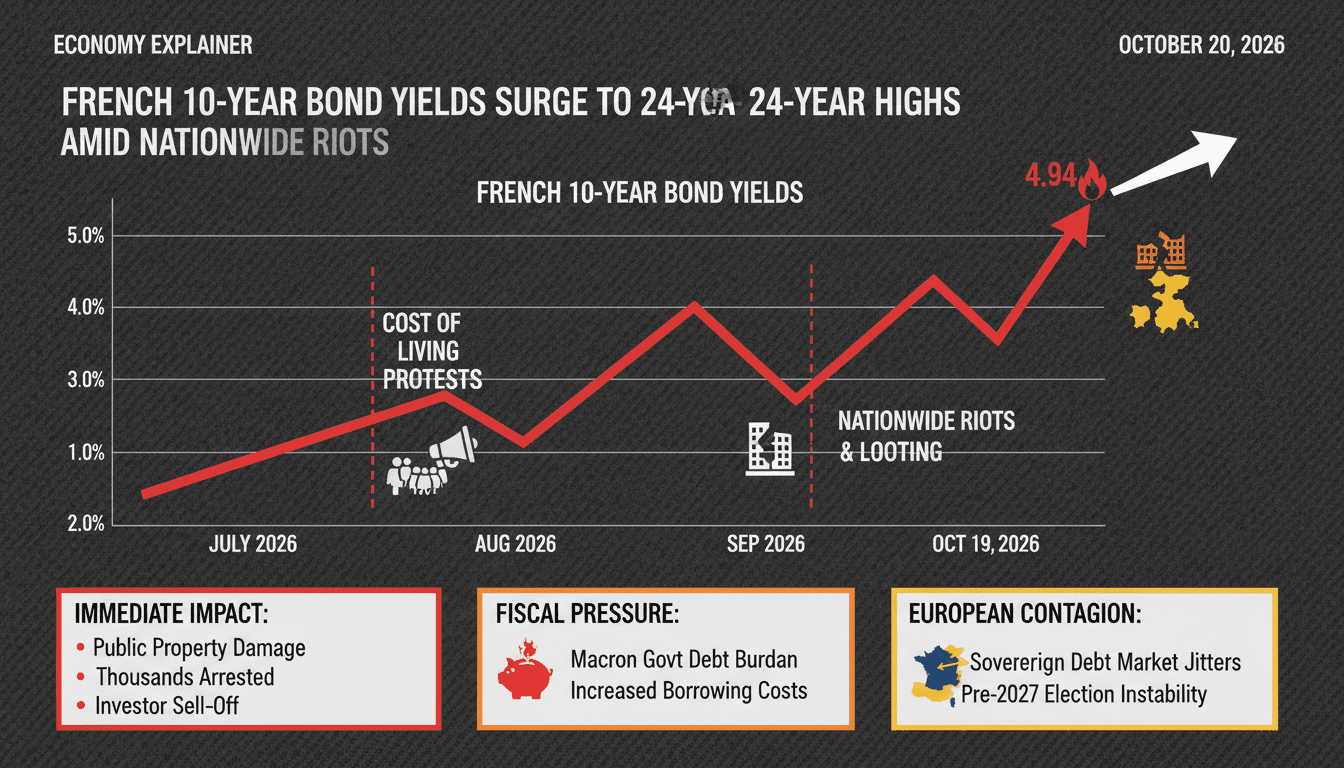
- French bond yields spiked on October 19, 2026, reaching 4.94%, the highest in nearly 24 years.
- Riots erupted nationwide over cost of living and public service conditions, leading to over 2,300 arrests and significant property damage.
- Market reactions included a decline in French stocks and a weakening euro, with spreads against German bonds widening to 146 basis points.
The context you actually need
- France was already facing economic challenges, including high public debt and low growth, prior to the riots.
- Protests had been escalating for weeks, driven by rising living costs and dissatisfaction with government services.
- The unrest has heightened fears of a broader eurozone debt crisis, as investors reassess risk in the region.
What's really happening
The recent spike in French 10-year bond yields is a direct response to the violent civil unrest that erupted over the weekend of October 17-18, 2026. This unrest, initially sparked by protests against rising living costs and deteriorating public services, quickly escalated into widespread riots, resulting in significant property damage and thousands of arrests. The immediate consequence was a sell-off in French government bonds, as investors fled to safer assets amid fears of political instability and economic decline.
The bond market's reaction is indicative of a deeper concern regarding France's fiscal health. With public debt already elevated and growth sluggish, the Macron government faces mounting pressure to stabilize the situation. The 10-year OAT yield's rise to 4.94% not only reflects investor anxiety but also signals potential increases in borrowing costs for the French government. This could lead to higher interest rates across the eurozone, as investors demand greater compensation for perceived risks.
The widening spread between French bonds and German Bunds—now at 146 basis points—highlights a growing divergence in perceived risk within the eurozone. As France grapples with its internal challenges, neighboring countries may also feel the ripple effects, particularly if investors begin to reassess their confidence in the broader European economic framework.
In response to the unrest, the French government has imposed curfews in affected areas and condemned the violence, but these measures may not be enough to quell investor fears. Analysts from firms like Goldman Sachs and Capital Economics are already warning of potential contagion effects, where rising yields in France could lead to increased borrowing costs for other eurozone countries, particularly those with similar fiscal vulnerabilities.
As the situation unfolds, the implications for the eurozone's economic stability are significant. Investors will be closely monitoring the French government's response to the unrest and any potential policy shifts that could impact fiscal health. The outcome of the upcoming 2027 presidential election will also be crucial, as it could determine the direction of economic policy in France and its relationship with the European Union.
Who feels it first (and how)
- Institutional investors: Facing increased risk and potential losses in French bonds.
- European businesses: Higher borrowing costs could impact investment and growth plans.
- French citizens: Ongoing unrest may lead to further economic instability and reduced public services.
- Eurozone economies: Countries with similar fiscal challenges may see increased scrutiny and rising yields.
What to watch next
- Government response: Monitor how the Macron administration addresses the unrest and its impact on fiscal policy.
- Bond market trends: Watch for further movements in French bond yields and spreads against German Bunds, indicating investor sentiment.
- Upcoming elections: The 2027 presidential election will be pivotal in shaping France's economic policies and stability.
French bond yields have risen sharply due to civil unrest.
Increased borrowing costs across the eurozone as investors reassess risk.
The long-term impact of the unrest on France's political landscape and economic policy.
Frequently Asked Questions
- Why it matters?
- The surge in French bond yields reflects broader concerns about political stability and fiscal health in the eurozone, impacting investor confidence across Europe.
- What happened (in 30 seconds)?
- French bond yields spiked on October 19, 2026, reaching 4.94%, the highest in nearly 24 years. Riots erupted nationwide over cost of living and public service conditions, leading to over 2,300 arrests and significant property damage. Market reactions included a decline in French stocks and a weakening euro, with spreads against German bonds widening to 146 basis points.
- What's really happening?
- The recent spike in French 10-year bond yields is a direct response to the violent civil unrest that erupted over the weekend of October 17-18, 2026. This unrest, initially sparked by protests against rising living costs and deteriorating public services, quickly escalated into widespread riots, resulting in significant property damage and thousands of arrests. The immediate consequence was a sell-off in French government bonds, as investors fled to safer assets amid fears of political instabili
- Who feels it first (and how)?
- Institutional investors: Facing increased risk and potential losses in French bonds. European businesses: Higher borrowing costs could impact investment and growth plans. French citizens: Ongoing unrest may lead to further economic instability and reduced public services. Eurozone economies: Countries with similar fiscal challenges may see increased scrutiny and rising yields.
- What to watch next?
- Government response: Monitor how the Macron administration addresses the unrest and its impact on fiscal policy. Bond market trends: Watch for further movements in French bond yields and spreads against German Bunds, indicating investor sentiment. Upcoming elections: The 2027 presidential election will be pivotal in shaping France's economic policies and stability.
Editor-curated FT homepage stories spanning markets, business, world, and opinion.
"The Financial Times is a globally respected business publication with a centrist/center-left tone and strong markets focus."
— A47 Editor
French bond sell-off intensifies after riots and looting
A significant sell-off in French bonds has intensified following widespread riots and looting across the country, prompting authorities to impose curfews and acknowledge failures in police oversight during protests. These disturbances stem from publi...
UK and international business news, economics, and corporate coverage.
"The Guardian’s business section covers finance and markets with a progressive editorial tone."
— A47 Editor
France hit by debt sell-off as violent protests unnerve investors
France is experiencing a significant sell-off in its bond and stock markets following violent protests that erupted over the weekend, resulting in thousands of arrests, burned public buildings, and looted shops across the country. This unrest has rai...
Macro commentary, policy analysis, growth/inflation themes, and global outlooks.
"Contextual macro coverage that complements day-to-day market headlines."
— A47 Editor
French markets tumble as riots add to political crisis
French markets have experienced a significant decline as ongoing riots contribute to an escalating political crisis in the country. This turmoil has raised concerns among investors and analysts about the stability of the French economy and its politi...
Global business, markets, and technology policy/industry coverage.
"France 24 provides balanced international coverage with a European perspective."
— A47 Editor
French retailers reel after weekend of riots, looting
French retailers are facing significant challenges following a weekend marked by widespread riots and looting during protests, prompting representatives from the business community to convene a crisis meeting with the government.
Editor-curated FT homepage stories spanning markets, business, world, and opinion.
"The Financial Times is a globally respected business publication with a centrist/center-left tone and strong markets focus."
— A47 Editor
France reels after ‘unprecedented’ violence from protesters
France is experiencing unprecedented violence from protesters, with widespread unrest leading to attacks on stores and official buildings. The government's struggle to contain these protests has intensified following mass demonstrations against high ...