
Middle East oil exports exceed prewar levels amid elevated prices
Why it matters
The resurgence of oil exports from the Persian Gulf impacts global energy prices and economic stability.
What happened (in 30 seconds)
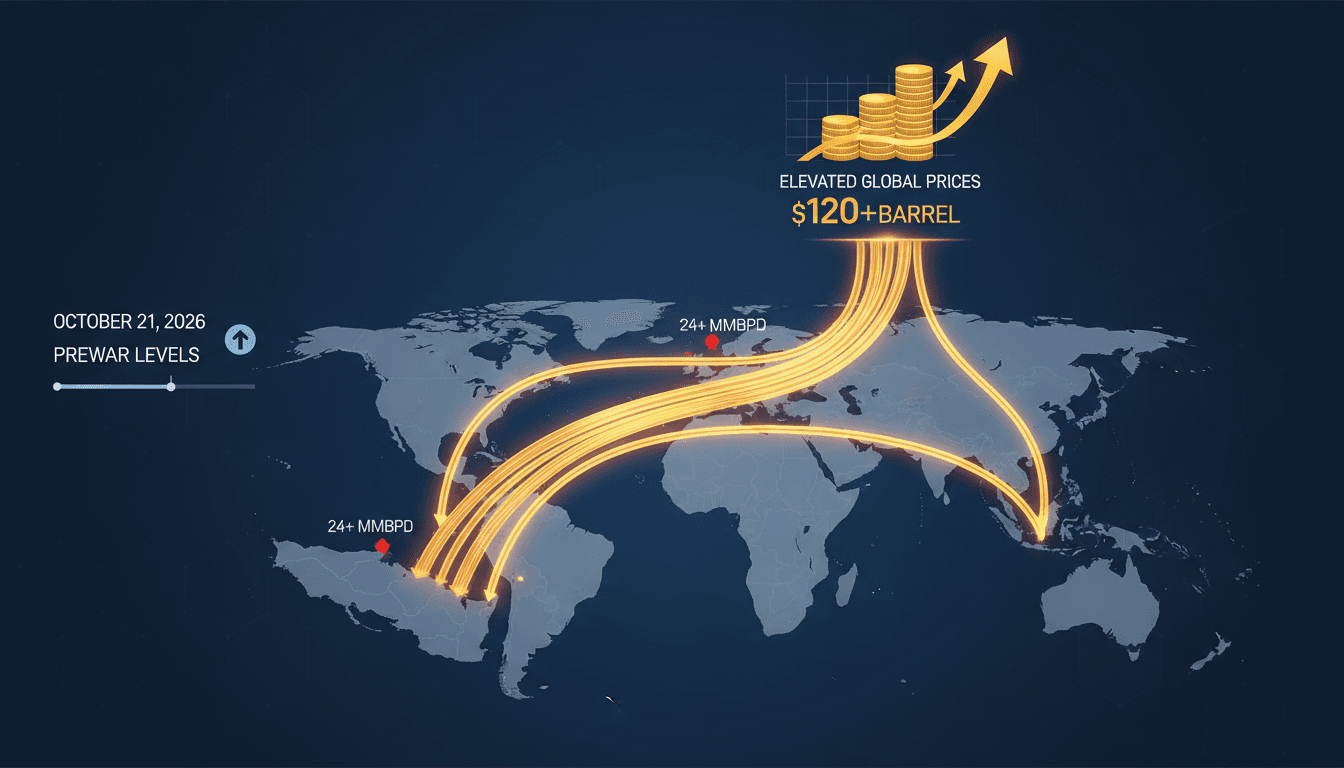
- Oil flows through the Persian Gulf have surpassed prewar levels, averaging over 24 million barrels per day as of October 18, 2026.
- Brent crude prices remain elevated at approximately $108.86 per barrel due to geopolitical risks and increased logistics costs.
- Gulf producers have adapted by utilizing alternative routes and enhanced shipping protections, allowing for a recovery in exports despite ongoing regional tensions.
The context you actually need
- The Iran war, which began in February 2026, initially disrupted oil exports and caused significant price spikes.
- Non-Iranian crude exports have rebounded, with 40% now bypassing the Strait of Hormuz, compared to just 17% before the conflict.
- Shipping adaptations, including U.S. naval protection and alternative transport methods, have enabled Gulf states to maintain export levels despite risks.
What's really happening
The recent surge in oil exports from the Persian Gulf is a complex interplay of geopolitical tensions, market adaptations, and logistical innovations. Following the onset of the Iran war in February 2026, oil flows through the Strait of Hormuz were severely disrupted as Iranian forces attempted to block shipping routes. This led to a significant drop in Gulf oil exports, causing global inventories to dwindle and prices to soar.
However, by September 2026, Gulf producers, particularly Saudi Arabia and the UAE, began to adapt to the new realities. They expanded the use of pipelines that bypass the Strait of Hormuz, increasing the percentage of oil transported through alternative routes from 17% to 40%. This strategic shift has allowed them to restore export volumes, with total Middle East oil flows averaging over 24 million barrels per day by mid-October, surpassing the prewar average of 23.3 million barrels.
Despite this recovery, the cost of delivering oil has risen significantly. Elevated benchmark prices, with Brent crude hovering around $108.86 per barrel, reflect not only the supply-demand dynamics but also the added costs of shipping and insurance due to heightened geopolitical risks. Tankers are now employing shuttle operations with offshore transfers near Oman, supported by U.S. air cover, to mitigate risks while maintaining export levels.
The adaptations made by Gulf producers have restored oil flows, but they come at a price. The logistics of transporting oil have become more complex and costly, leading to sustained high prices for consumers and businesses reliant on oil. Additionally, the ongoing threat of Iranian attacks raises concerns about the long-term sustainability of these operations. Market participants are wary of potential disruptions, especially as global inventories remain low, limiting buffers against future shocks.
Who feels it first (and how)
- Oil and gas companies: Increased operational costs and potential profit margins.
- Consumers: Higher fuel prices impacting transportation and goods.
- Logistics firms: Elevated shipping costs affecting supply chain dynamics.
- Governments: Economic pressures from rising energy costs influencing policy decisions.
What to watch next
- Global inventory levels: Monitoring changes in oil inventories will indicate market resilience or vulnerability.
- Geopolitical developments: Any escalation in the Iran conflict could disrupt oil flows and impact prices.
- Shipping costs: Fluctuations in logistics expenses will affect overall market pricing and consumer costs.
Oil flows from the Persian Gulf have surpassed prewar levels.
Elevated oil prices will persist due to ongoing geopolitical risks and logistical challenges.
The long-term sustainability of current export levels amid potential future disruptions.
Frequently Asked Questions
- Why it matters?
- The resurgence of oil exports from the Persian Gulf impacts global energy prices and economic stability.
- What happened (in 30 seconds)?
- Oil flows through the Persian Gulf have surpassed prewar levels, averaging over 24 million barrels per day as of October 18, 2026. Brent crude prices remain elevated at approximately $108.86 per barrel due to geopolitical risks and increased logistics costs. Gulf producers have adapted by utilizing alternative routes and enhanced shipping protections, allowing for a recovery in exports despite ongoing regional tensions.
- What's really happening?
- The recent surge in oil exports from the Persian Gulf is a complex interplay of geopolitical tensions, market adaptations, and logistical innovations. Following the onset of the Iran war in February 2026, oil flows through the Strait of Hormuz were severely disrupted as Iranian forces attempted to block shipping routes. This led to a significant drop in Gulf oil exports, causing global inventories to dwindle and prices to soar. However, by September 2026, Gulf producers, particularly Saudi Arab
- Who feels it first (and how)?
- Oil and gas companies: Increased operational costs and potential profit margins. Consumers: Higher fuel prices impacting transportation and goods. Logistics firms: Elevated shipping costs affecting supply chain dynamics. Governments: Economic pressures from rising energy costs influencing policy decisions.
- What to watch next?
- Global inventory levels: Monitoring changes in oil inventories will indicate market resilience or vulnerability. Geopolitical developments: Any escalation in the Iran conflict could disrupt oil flows and impact prices. Shipping costs: Fluctuations in logistics expenses will affect overall market pricing and consumer costs.
Global business headlines with AI angles.
"General business outlet that frequently covers AI."
— A47 Editor
More Oil is Flowing Through the Persian Gulf Than Before the War. Prices are Still High.
Oil flows through the Persian Gulf and alternative routes have increased to over 24 million barrels per day as of October 18, surpassing pre-war levels. This surge is attributed to ongoing geopolitical tensions and the strategic importance of the Str...
UAE-based English-language newspaper covering regional politics, economics, and global affairs.
"The National reflects Emirati policy perspectives while maintaining international editorial standards."
— A47 Editor
Non-Iran Middle East oil exports recover to prewar levels with Hormuz alternatives
Non-Iran Middle East oil exports have recovered to prewar levels, aided by alternative routes to the Strait of Hormuz, a critical passage for global oil shipments. This recovery follows a period of significant geopolitical tensions affecting oil flow...
Global political, business, and cultural coverage from WSJ international desks.
"The Wall Street Journal offers extensive international reporting with a reputation for financial insight and a center-right editorial stance."
— A47 Editor
More Oil Is Now Coming Out of the Persian Gulf Than Before the Iran War
Recent data indicates that oil exports from the Persian Gulf have surpassed pre-war levels, attributed to a more resilient tanker fleet and lucrative opportunities for oil traders. This increase comes despite ongoing threats and attacks on tankers in...