
U.S. Stocks Drop as Oil Prices Hit Five-Month High Amid Middle East Tensions
Why it matters
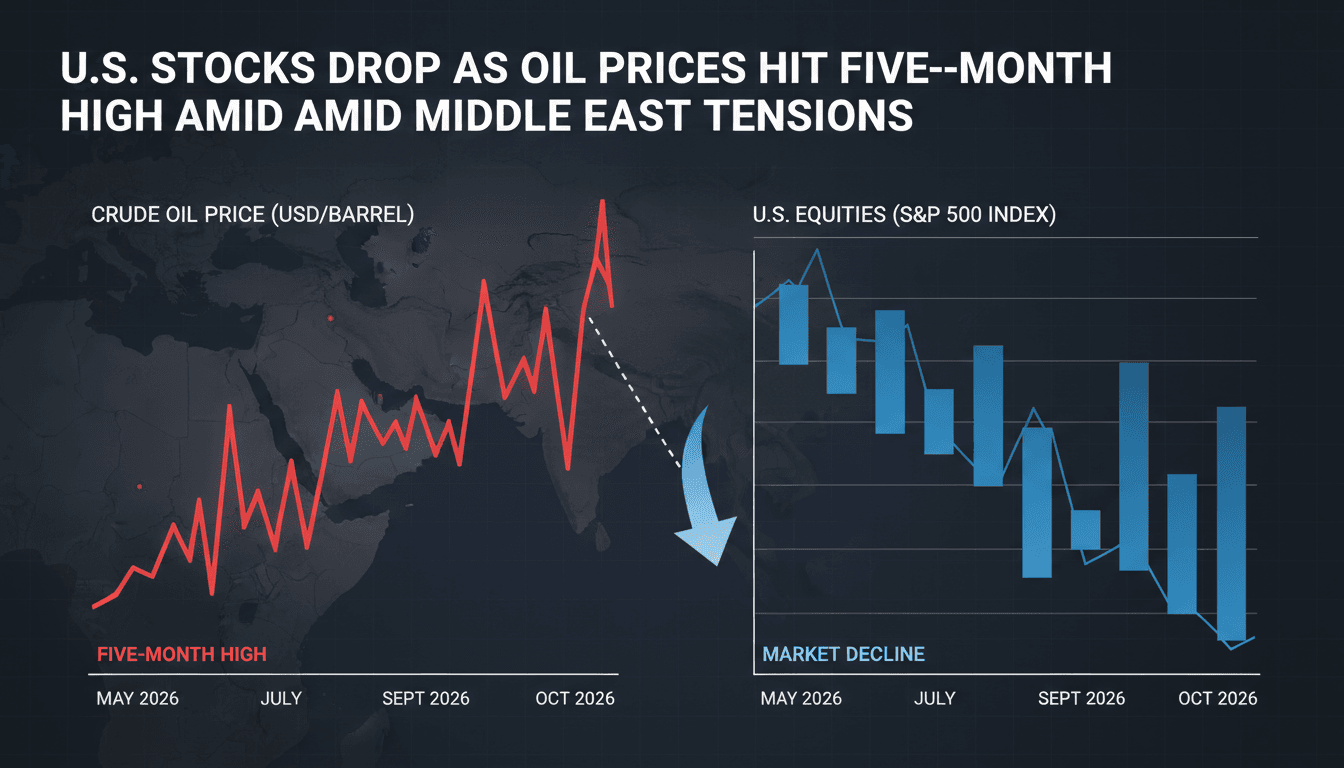
The decline in U.S. equities amid rising oil prices signals heightened geopolitical risks that can affect global economic stability.
What happened (in 30 seconds)
- U.S. stocks fell on October 23, 2026, with the Dow Jones dropping 652.82 points (1.23%).
- Oil prices surged to five-month highs, with Brent crude reaching approximately $116.72 per barrel.
- Investor sentiment shifted towards safer assets due to escalating tensions in the Middle East.
The context you actually need
- Geopolitical tensions in the Middle East, particularly between the U.S. and Iran, have raised concerns about oil supply disruptions.
- Energy equities have outperformed while technology stocks faced selling pressure, reflecting a broader market rotation.
- Inflationary pressures are likely to influence Federal Reserve policy, as rising energy costs could sustain inflation.
What's really happening
On October 23, 2026, the U.S. equity markets experienced a notable decline as investors reacted to surging oil prices, which reached their highest levels in five months. The Dow Jones Industrial Average fell by 652.82 points, reflecting a broader trend of risk aversion among investors. This shift was primarily driven by escalating geopolitical tensions in the Middle East, particularly the ongoing conflict involving Iran and its proxies, which has raised significant concerns about oil supply stability.
The rise in oil prices can be attributed to several factors, including the U.S.-Iran conflict's intensification, attacks by Iran-backed Houthi forces on Saudi infrastructure, and threats to critical shipping routes like the Strait of Hormuz. These developments have created a "geopolitical premium" in oil markets, pushing Brent crude prices to approximately $116.72 per barrel and West Texas Intermediate (WTI) to around $103 per barrel. This price surge has prompted a rotation in investor sentiment, with many moving away from riskier assets, particularly in the technology sector, which has been under pressure due to rising costs and inflationary fears.
As energy prices climb, energy companies have seen a boost in their stock performance, while broader indexes, especially those heavy in technology and AI-related stocks, have faced significant selling pressure. Analysts are increasingly concerned that sustained high oil prices could lead to prolonged inflationary pressures, influencing the Federal Reserve's monetary policy decisions. The market's reaction reflects a cautious approach as investors weigh the potential for further geopolitical escalations and their implications for global economic stability.
In the aftermath of this market shift, analysts are closely monitoring the situation for signs of further volatility. The potential for additional strikes and infrastructure evacuations in Saudi Arabia adds to the uncertainty, making it crucial for investors to stay informed about developments in the region and their potential impact on oil supply and prices.
Who feels it first (and how)
- Wall Street investors: Adjusting portfolios to mitigate risk exposure.
- Energy sector participants: Experiencing gains from rising oil prices.
- Technology companies: Facing pressure as investors pull back from growth stocks.
- Consumers: Likely to see increased costs for fuel and goods due to higher energy prices.
- Federal Reserve policymakers: Monitoring inflation trends to adjust monetary policy.
What to watch next
- Oil price fluctuations: Continued volatility in oil prices will impact inflation and consumer spending.
- Geopolitical developments: Any escalation in Middle East tensions could further disrupt oil supply and affect global markets.
- Federal Reserve policy signals: Watch for indications of how rising energy costs may influence interest rate decisions.
U.S. equities are currently under pressure due to rising oil prices.
Continued volatility in oil markets will affect inflation and consumer behavior.
The long-term impact of geopolitical tensions on global economic stability remains uncertain.
Frequently Asked Questions
- Why it matters?
- The decline in U.S. equities amid rising oil prices signals heightened geopolitical risks that can affect global economic stability.
- What happened (in 30 seconds)?
- U.S. stocks fell on October 23, 2026, with the Dow Jones dropping 652.82 points (1.23%). Oil prices surged to five-month highs, with Brent crude reaching approximately $116.72 per barrel. Investor sentiment shifted towards safer assets due to escalating tensions in the Middle East.
- What's really happening?
- On October 23, 2026, the U.S. equity markets experienced a notable decline as investors reacted to surging oil prices, which reached their highest levels in five months. The Dow Jones Industrial Average fell by 652.82 points, reflecting a broader trend of risk aversion among investors. This shift was primarily driven by escalating geopolitical tensions in the Middle East, particularly the ongoing conflict involving Iran and its proxies, which has raised significant concerns about oil supply stab
- Who feels it first (and how)?
- Wall Street investors: Adjusting portfolios to mitigate risk exposure. Energy sector participants: Experiencing gains from rising oil prices. Technology companies: Facing pressure as investors pull back from growth stocks. Consumers: Likely to see increased costs for fuel and goods due to higher energy prices. Federal Reserve policymakers: Monitoring inflation trends to adjust monetary policy.
- What to watch next?
- Oil price fluctuations: Continued volatility in oil prices will impact inflation and consumer spending. Geopolitical developments: Any escalation in Middle East tensions could further disrupt oil supply and affect global markets. Federal Reserve policy signals: Watch for indications of how rising energy costs may influence interest rate decisions.
Markets desk coverage, trading insights, and investor updates.
"WSJ’s markets reporting provides in-depth analysis and context for investors."
— A47 Editor
U.S. Stocks Fall as Oil Prices Hit Five-Month High
U.S. stocks fell as Wall Street shifted towards safer investments amid rising oil prices, which reached their highest level in five months. This decline reflects growing investor anxiety over economic stability and inflation concerns.
Conservative-leaning political and national coverage.
"The Washington Times is a conservative-leaning newspaper known for its political coverage and advocacy of right-of-center viewpoints."
— A47 Editor
Wall Street loses ground under pressure from rising oil prices
Wall Street experienced a significant decline on Friday, closing broadly lower as oil prices surged to their highest levels in over four years, intensifying market pressures. This rise in oil prices has raised concerns about inflation and economic st...
News from the United States including domestic politics, society, and culture.
"Global News is a mainstream Canadian media outlet generally considered to have a centrist editorial stance, covering news with a focus on factual reporting and national interest."
— A47 Editor
Rising oil prices cause Wall Street to lose ground
Wall Street opened lower on Friday as rising oil prices exerted pressure on the market, particularly impacting Big Tech companies associated with artificial intelligence, which saw a decline in their stock values.
Canadian-focused personal finance and money coverage with some global context.
"Global News is a mainstream Canadian outlet with a centrist editorial stance and emphasis on factual reporting."
— A47 Editor
Rising oil prices cause Wall Street to lose ground
Wall Street opened lower on Friday as rising oil prices exerted pressure on the market, particularly impacting Big Tech companies associated with artificial intelligence, which saw a decline in their stock values.
News from the United States including domestic politics, society, and culture.
"The Guardian is known for its progressive editorial stance and in-depth analysis, often advocating for social justice, environmental issues, and liberal values."
— A47 Editor
Sharp drops for AI stocks overwhelm markets worldwide as oil prices jump
Global markets experienced significant declines on Thursday, primarily driven by sharp drops in the AI sector, which were exacerbated by rising oil prices that reached their highest levels since May amid escalating tensions in the Middle East. The S&...
International coverage from The Guardian's global desks.
"The Guardian is known for its progressive editorial stance and in-depth analysis."
— A47 Editor
Sharp drops for AI stocks overwhelm markets worldwide as oil prices jump
Global markets experienced significant declines on Thursday, primarily driven by sharp drops in the AI sector, which were exacerbated by rising oil prices that reached their highest levels since May amid escalating tensions in the Middle East. The S&...
News and features on AI from The Guardian.
"Progressive-leaning international outlet with critical AI coverage."
— A47 Editor
Sharp drops for AI stocks overwhelm markets worldwide as oil prices jump
Global markets experienced significant declines on Thursday, primarily driven by sharp drops in the AI sector, which were exacerbated by rising oil prices that reached their highest levels since May amid escalating tensions in the Middle East. The S&...
Tech culture, product news, and critical takes on the tech industry's social impact.
"The Guardian's tech coverage blends mainstream news, critical analysis, and cultural commentary on emerging technologies and digital trends."
— A47 Editor
Sharp drops for AI stocks overwhelm markets worldwide as oil prices jump
Global markets experienced significant declines on Thursday, primarily driven by sharp drops in the AI sector, which were exacerbated by rising oil prices that reached their highest levels since May amid escalating tensions in the Middle East. The S&...