
US Equity Markets Decline Amid AI Spending Concerns and Middle East Tensions
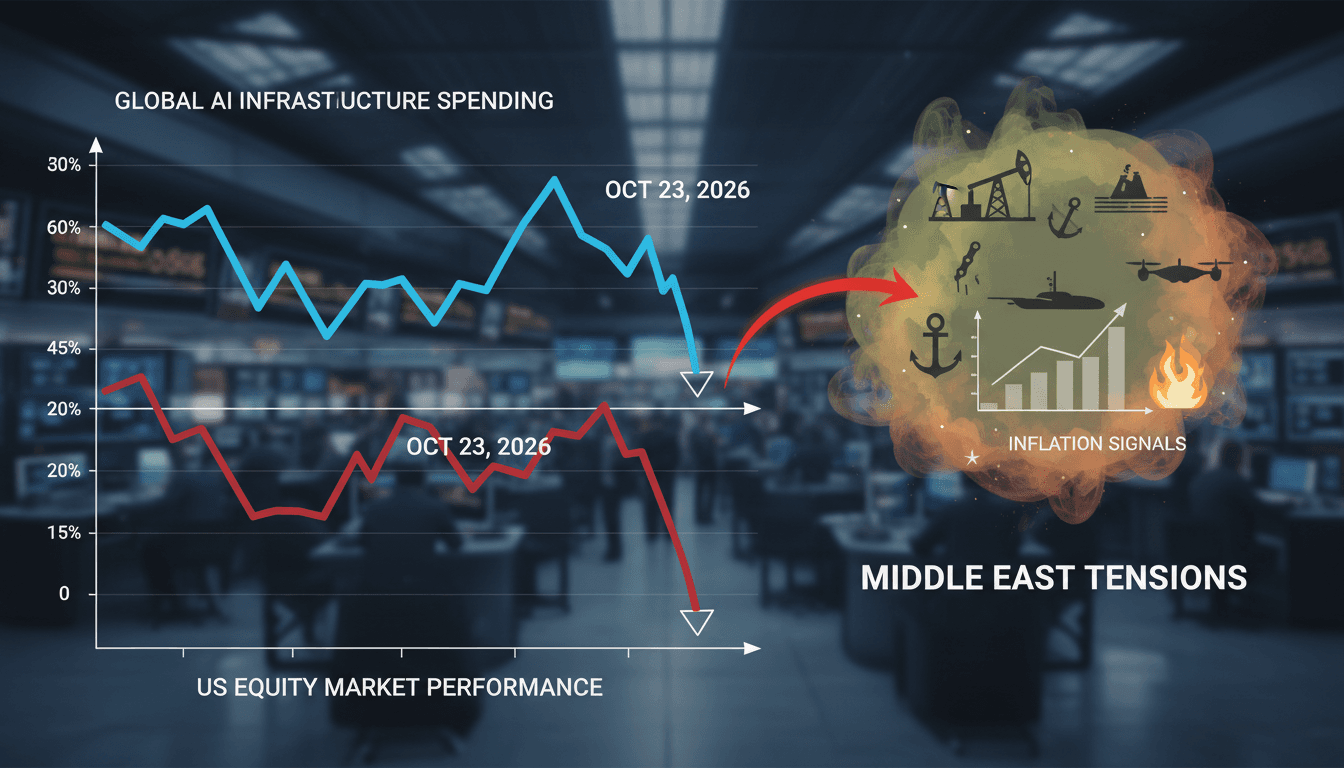
Why it matters
This decline signals a critical reassessment of risk in equity markets, particularly in technology and energy sectors, which could impact investment strategies globally.
What happened (in 30 seconds)
- US stock markets fell on October 23, 2026, with the Nasdaq down 0.21%, S&P 500 down 0.52%, and Dow Jones down 1.24%.
- Investor sentiment shifted to a risk-off posture amid concerns over AI infrastructure spending and escalating geopolitical tensions in the Middle East.
- Oil prices surged, with West Texas Intermediate futures reaching approximately $102.39 per barrel, reflecting fears of supply disruptions.
The context you actually need
- AI infrastructure spending by major firms like Meta raised questions about sustainability and revenue timelines, leading to investor skepticism.
- Geopolitical tensions in the Middle East intensified, particularly with Iranian threats to undersea communication cables, driving oil prices higher.
- Economic indicators showed rising inflation expectations and low consumer sentiment, further complicating the market outlook.
What's really happening
On October 22, 2026, the tech-heavy Nasdaq Composite experienced a sharp decline of 2.6%, marking its steepest drop since June. This downturn was primarily driven by concerns over unsustainable AI spending, particularly following disappointing earnings guidance from Meta. As major technology firms ramped up capital expenditures, investors began to question the viability of these investments against a backdrop of persistent inflation and rising interest rates.
The sell-off extended beyond technology stocks, impacting broader indices like the Dow Jones Industrial Average, which fell 1.24% on October 23. This shift in market sentiment was compounded by escalating geopolitical tensions in the Middle East, particularly threats from Iranian officials regarding potential attacks on undersea communication infrastructure in the Strait of Hormuz. Such threats not only raised concerns about regional stability but also about the security of global energy supplies, leading to a surge in oil prices.
As investors sought safer assets, the yield on the 10-year Treasury fell below 5%, indicating a flight to quality. This behavior reflects a broader trend where capital flows into government bonds during periods of uncertainty, as seen in the current market dynamics. The combination of high inflation signals and geopolitical risks has created a precarious environment for investors, prompting a reassessment of risk across various sectors.
The Federal Reserve's upcoming policy meeting adds another layer of complexity, with markets pricing in a high probability of rate stability. However, the potential for a December rate hike remains on the table, depending on how inflation and economic data evolve in the coming weeks. Defensive positioning has become prevalent, particularly in energy and defense sectors, which have shown relative resilience amid the broader equity weakness.
Who feels it first (and how)
- Institutional investors: Likely to adjust portfolios to mitigate risk exposure in tech and energy sectors.
- Retail investors: May experience increased volatility in their investment portfolios, particularly those heavily weighted in technology.
- Energy sector participants: Could benefit from rising oil prices, but face risks from geopolitical tensions affecting supply chains.
- Technology firms: Companies like Meta, Nvidia, and Tesla may see stock price pressure due to investor skepticism about AI spending sustainability.
- Consumers: Rising oil prices could lead to increased costs for goods and services, impacting disposable income.
What to watch next
- Federal Reserve policy meeting: The outcomes will provide insights into future interest rate trajectories, impacting market sentiment.
- Geopolitical developments in the Middle East: Any escalation in tensions could further disrupt energy markets and investor confidence.
- AI spending announcements from major firms: Future commitments or adjustments in spending could influence market perceptions of sustainability in the tech sector.
US equity markets are experiencing volatility due to AI spending concerns and geopolitical tensions.
Continued investor caution and defensive positioning in response to economic indicators and geopolitical risks.
The long-term impact of rising oil prices on consumer behavior and inflation.
Frequently Asked Questions
- Why it matters?
- This decline signals a critical reassessment of risk in equity markets, particularly in technology and energy sectors, which could impact investment strategies globally.
- What happened (in 30 seconds)?
- US stock markets fell on October 23, 2026, with the Nasdaq down 0.21%, S&P 500 down 0.52%, and Dow Jones down 1.24%. Investor sentiment shifted to a risk-off posture amid concerns over AI infrastructure spending and escalating geopolitical tensions in the Middle East. Oil prices surged, with West Texas Intermediate futures reaching approximately $102.39 per barrel, reflecting fears of supply disruptions.
- What's really happening?
- On October 22, 2026, the tech-heavy Nasdaq Composite experienced a sharp decline of 2.6%, marking its steepest drop since June. This downturn was primarily driven by concerns over unsustainable AI spending, particularly following disappointing earnings guidance from Meta. As major technology firms ramped up capital expenditures, investors began to question the viability of these investments against a backdrop of persistent inflation and rising interest rates. The sell-off extended beyond techno
- Who feels it first (and how)?
- Institutional investors: Likely to adjust portfolios to mitigate risk exposure in tech and energy sectors. Retail investors: May experience increased volatility in their investment portfolios, particularly those heavily weighted in technology. Energy sector participants: Could benefit from rising oil prices, but face risks from geopolitical tensions affecting supply chains. Technology firms: Companies like Meta, Nvidia, and Tesla may see stock price pressure due to investor skepticism abou
- What to watch next?
- Federal Reserve policy meeting: The outcomes will provide insights into future interest rate trajectories, impacting market sentiment. Geopolitical developments in the Middle East: Any escalation in tensions could further disrupt energy markets and investor confidence. AI spending announcements from major firms: Future commitments or adjustments in spending could influence market perceptions of sustainability in the tech sector.
Global business headlines with AI angles.
"General business outlet that frequently covers AI."
— A47 Editor
Investors Keep Risk-Off Mood Amid AI Spending Concerns And Soaring Middle East Tensions. Stocks Fell Again.
Investors are adopting a risk-off approach as concerns over artificial intelligence (AI) spending and escalating tensions in the Middle East weigh heavily on market sentiment, leading to a decline in stock prices. The benchmark 10-year Treasury yield...
Global business headlines with AI angles.
"General business outlet that frequently covers AI."
— A47 Editor
AI Debt Fears Leads Investors To Seek Safer Havens. The 10-Year Treasury Yield Slipped Below 5%.
Recent fears surrounding AI-related debt have prompted investors to seek safer investment options, leading to a decline in the 10-year Treasury yield, which has now slipped below 5%. This shift reflects a growing skepticism about the returns on subst...
Currency market headlines, FX rates, central-bank chatter, and macro drivers moving major pairs.
"Investing.com’s forex stream is useful for fast updates across USD, EUR, JPY, GBP and emerging-market FX."
— A47 Editor
Treasury yields set for third weekly drop as AI worries fuel haven bid
U.S. Treasury yields are on track for a third consecutive weekly drop, driven by increasing concerns over artificial intelligence (AI) investments, which have prompted traders to seek safe-haven bonds. This trend reflects a growing unease in the mark...