
Japanese yen reaches 40-year low against US dollar amid rising Treasury yields
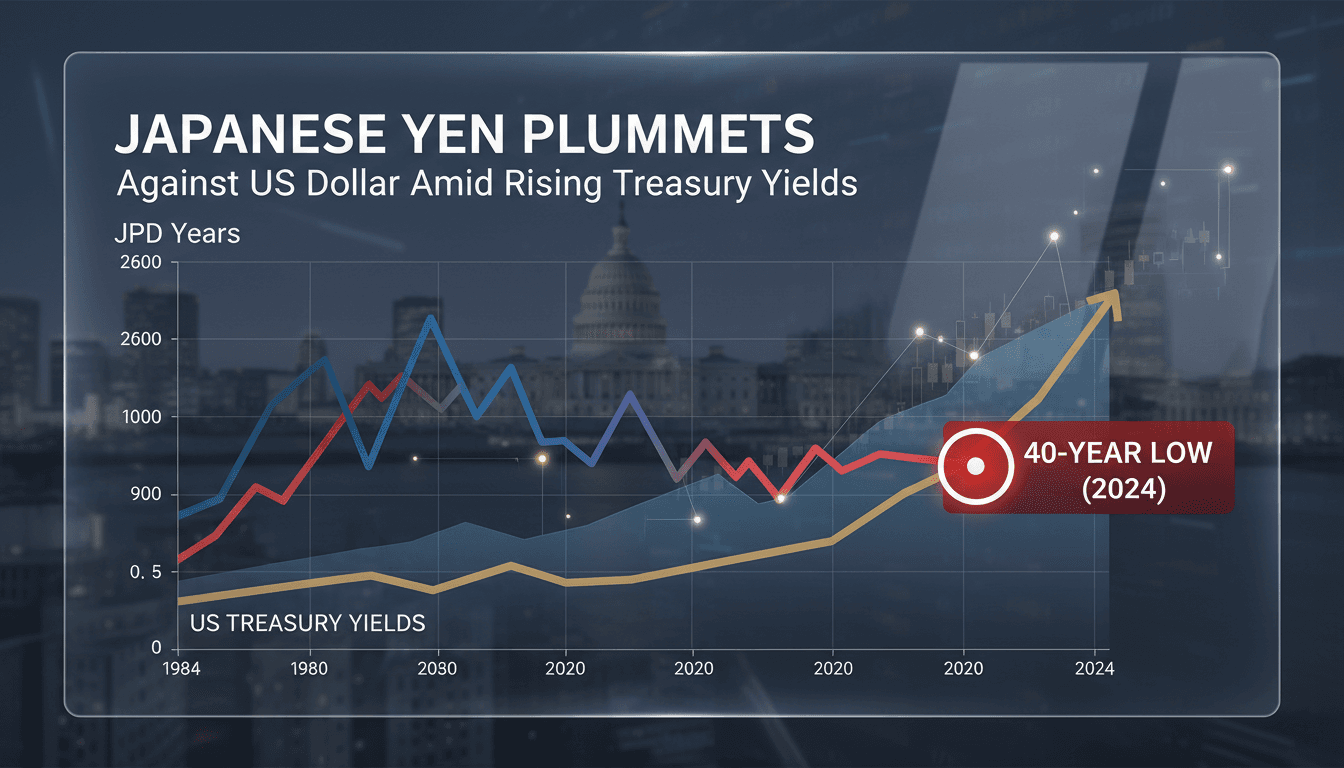
Here's what it means for you.
The recent decline of the Japanese yen to a 40-year low against the US dollar signals significant shifts in global currency markets. This depreciation raises concerns about potential intervention by the Japanese government, which may need to act to stabilize its currency. Market participants are closely watching the situation, particularly in light of the upcoming US jobs report that could further influence the dollar's strength. As the dollar gains momentum, the implications for trade and economic policy become increasingly critical. Stakeholders in both Japan and the US will need to navigate these changes carefully to mitigate risks associated with currency fluctuations.
What happened
The Japanese yen has fallen to a fresh 40-year low against the US dollar, primarily driven by rising US Treasury yields. This significant drop marks the lowest level for the yen since 1986, reflecting broader economic trends influenced by US monetary policy. The strengthening dollar has prompted traders to remain vigilant for any signs of intervention from the Japanese government.
As the dollar continues to gain strength, the dynamics of the currency market are shifting, creating a challenging environment for the yen. The upcoming US jobs report is anticipated to further sway market sentiment, adding another layer of complexity to the situation.
The Context
The yen's decline is a critical development in the context of global currency markets, as it highlights the impact of US economic policies on international trade. The increasing US Treasury yields have bolstered the dollar's strength, putting pressure on the Japanese government to consider intervention strategies. This situation is particularly significant given the historical context, with the yen's drop being the lowest since 1986.
Traders and investors are on high alert, aware that the Japanese government may need to act to stabilize the currency. The timing of the upcoming US jobs report adds urgency to the situation, as it could further influence the dollar's trajectory and the yen's response.
Takeaway
Looking ahead, market participants will closely monitor the potential for Japanese government intervention in currency markets. The implications of the yen's decline extend beyond immediate currency values, affecting trade balances and economic stability. The upcoming US jobs report is a key event that could further impact market dynamics, making it essential for stakeholders to stay informed.
As the situation evolves, the interplay between US economic indicators and Japanese monetary policy will be crucial in determining the future of the yen and its standing against the dollar.
Macro commentary, policy analysis, growth/inflation themes, and global outlooks.
"Contextual macro coverage that complements day-to-day market headlines."
— A47 Editor
Dollar gains before US jobs report, Fed’s Warsh sees improving inflation
The U.S. dollar has gained strength ahead of the upcoming jobs report, with Federal Reserve Governor Kevin Warsh indicating an improvement in inflation, which has bolstered expectations for interest rate hikes.
Markets desk coverage, trading insights, and investor updates.
"WSJ’s markets reporting provides in-depth analysis and context for investors."
— A47 Editor
Yen Hits Fresh 40-Year Low Versus Dollar
The Japanese yen has reached a new 40-year low against the US dollar, trading at over ¥162, which has raised concerns among traders about potential government intervention in the currency market. This significant decline reflects ongoing economic pre...
Pan-Arab news coverage spanning politics, business, sports, and regional affairs.
"Asharq Al-Awsat reflects a broad Arab editorial perspective with strong attention to regional geopolitics."
— A47 Editor
الدولار يقفز والين يهبط إلى أدنى مستوى في 40 عاماً
The Japanese yen has fallen to its lowest level since 1986, as of Wednesday, following a significant rise in U.S. Treasury yields that bolstered the dollar. This decline reflects ongoing economic pressures and shifts in currency valuation.