
UK inflation drops to 2.6%, lowest in 15 months
Here's what it means for you.
The recent drop in UK inflation to 2.6% signals a temporary relief for consumers and businesses alike, primarily driven by lower gasoline prices. However, the anticipated rise in energy costs could reverse this trend, leading to renewed inflationary pressures. Stakeholders should remain vigilant as these fluctuations may influence economic policy and market stability. This decline in inflation offers a brief respite, but the potential for volatility looms large. Policymakers will need to monitor energy price trends closely to mitigate adverse impacts on the economy.
What happened
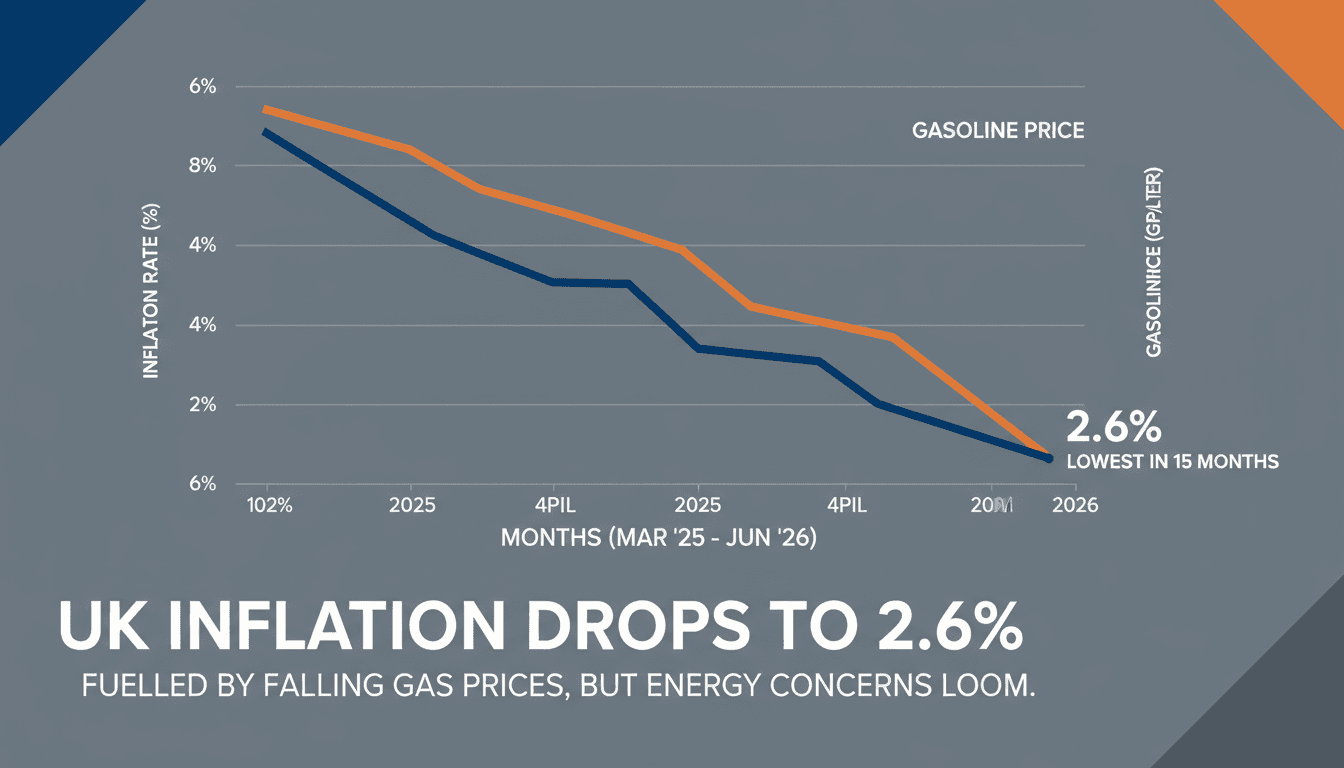
In June 2026, the UK inflation rate fell to 2.6%, marking the lowest level since March 2025. This decrease is a notable drop from the previous rates of 2.8% recorded in both April and May 2026. The decline has been primarily attributed to falling gasoline prices, which have temporarily alleviated inflationary pressures.
Despite this positive development, the outlook remains cautious as rising energy costs are expected to reverse the current trend. Analysts are keeping a close eye on these developments to assess their potential impact on the economy.
The Context
The inflation rate of 2.6% in June 2026 is significant as it reflects a broader economic landscape influenced by fluctuating energy prices. Gasoline prices have played a crucial role in this decline, providing temporary relief to consumers. However, the anticipated increase in energy costs raises concerns about future inflation rates.
Understanding the dynamics of energy pricing is essential for stakeholders, including policymakers and businesses, as they navigate the potential implications for economic stability. The timing of these changes is critical, as they may prompt adjustments in economic policy to address rising inflationary pressures.
Takeaway
As energy prices are expected to rise, the UK may see inflation rates increase again, prompting potential economic adjustments. Stakeholders should monitor energy price trends closely, as these will significantly influence inflation and economic policy responses. The current situation underscores the importance of vigilance in the face of potential volatility.
In the coming months, the economic landscape may shift, and policymakers will need to be prepared to respond to changing inflation rates. Keeping an eye on these developments will be crucial for understanding the broader economic implications.
Corporate news, economic trends, and markets with UK and global scope.
"BBC News is widely regarded as reputable and impartial, with a public service mandate."
— A47 Editor
What is happening to UK prices?
UK inflation has seen a slight decrease, dropping from 2.8% to 2.6% in June 2026, marking the lowest rate in 14 months. This decline is attributed to ongoing economic adjustments, although higher energy costs are anticipated to reverse this trend in ...
Social/economic commentary and analysis relevant to business and markets.
"WSJ blends data-driven economic insight with commentary on policy and society."
— A47 Editor
U.K. Inflation Falls to 15-Month Low but Accelerating Prices Loom
The U.K. inflation rate fell to 2.6% in June, marking its lowest level in 15 months, primarily due to a decrease in gasoline prices. This decline follows a consistent inflation rate of 2.8% in both April and May, indicating a potential easing of pric...
Global political, business, and cultural coverage from WSJ international desks.
"The Wall Street Journal offers extensive international reporting with a reputation for financial insight and a center-right editorial stance."
— A47 Editor
U.K. Inflation Falls to 15-Month Low but Accelerating Prices Loom
The U.K. inflation rate fell to 2.6% in June, marking its lowest level in 15 months, primarily due to a decrease in gasoline prices. This decline follows a consistent inflation rate of 2.8% in both April and May, indicating a potential easing of pric...
Key macro releases (CPI, jobs, PMIs), surprise indexes, and market implications.
"Great for data-print awareness and instant read-through to rates and risk assets."
— A47 Editor
UK inflation eases to 14-month low of 2.6% in June
UK inflation has eased to a 14-month low of 2.6% in June 2026, down from 2.8% in May, according to the Office for National Statistics (ONS). This decline is attributed to ongoing economic adjustments, reflecting a potential easing of inflationary pre...