
ECB raises interest rates for the first time in nearly three years amid inflation concerns linked to Iran war
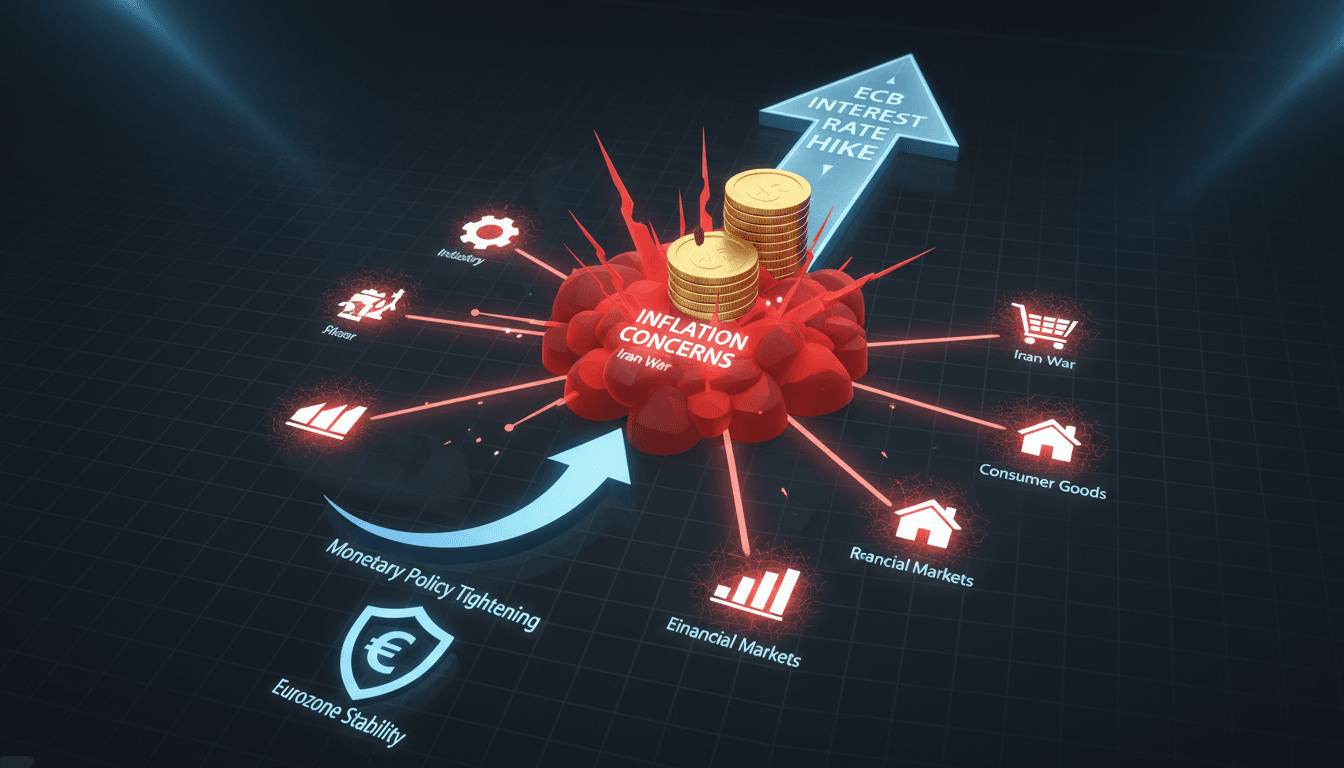
Here's what it means for you.
The European Central Bank's decision to raise interest rates marks a significant shift in monetary policy, reflecting growing concerns over inflation that extends beyond energy prices. This move may impact borrowing costs for consumers and businesses, potentially slowing economic growth in the Eurozone. As inflation pressures persist, stakeholders should prepare for further adjustments in monetary policy.
What happened
On June 11, 2026, the European Central Bank (ECB) raised interest rates for the first time in nearly three years. This decision was driven by rising inflation concerns, particularly those exacerbated by the ongoing Iran war. President Christine Lagarde emphasized that inflation risks are now spreading beyond just energy prices, prompting the ECB to take decisive action.
The rate hike signifies a proactive approach by the ECB to stabilize the Eurozone economy amidst global inflation pressures. This marks a notable shift in the ECB's monetary policy, which had remained unchanged for an extended period.
The Context
The ECB's decision comes at a time when inflation risks are increasingly affecting various sectors, not solely limited to energy. The ongoing geopolitical tensions, particularly the Iran war, have contributed to these inflationary pressures, necessitating a response from the central bank. This rate hike is the first since the ECB last adjusted rates nearly three years ago, indicating a significant change in their approach to monetary policy.
As the Eurozone grapples with these inflationary challenges, the ECB's actions reflect its commitment to maintaining economic stability. Stakeholders, including businesses and consumers, will need to navigate the implications of this rate increase on their financial decisions.
Takeaway
Looking ahead, the ECB's recent rate hike may signal a broader tightening of monetary policy in response to ongoing inflation pressures. Observers should monitor future ECB announcements regarding interest rates, as further hikes could be on the horizon if inflation persists or spreads to additional sectors. Economic indicators will also be crucial in assessing the impact of this rate increase on the Eurozone economy.
As inflation risks continue to evolve, the ECB's monetary policy will likely adapt to address these challenges effectively. Stakeholders should remain vigilant in tracking these developments to understand their potential implications.
Macro commentary, policy analysis, growth/inflation themes, and global outlooks.
"Contextual macro coverage that complements day-to-day market headlines."
— A47 Editor
ECB raises rates to nip war-driven inflation in the bud
The European Central Bank (ECB) has raised interest rates for the first time since 2023, a move aimed at combating inflation driven by ongoing geopolitical tensions and rising energy costs. This decision reflects the ECB's proactive stance in address...
Global markets, investing, and macroeconomics from a premier financial newsroom.
"Bloomberg is respected for in-depth financial reporting and data-driven analysis."
— A47 Editor
ECB Hikes With Lagarde Warning That Inflation Risk Is Spreading
The European Central Bank (ECB) has raised its main deposit rate from 2% to 2.25%, marking its first interest rate hike in nearly three years. This decision comes amid rising inflation pressures attributed to the ongoing conflict in Iran, which has e...
Regional and international reporting focused on Middle Eastern politics, diplomacy, and economics.
"Asharq Al-Awsat is a Saudi-owned international newspaper reflecting mainstream Gulf political perspectives."
— A47 Editor
ECB Set for 'Insurance Hike' as Iran War Fans Euro Zone Inflation
The European Central Bank (ECB) is poised to implement an 'insurance hike' in response to rising inflation in the Euro Zone, exacerbated by the ongoing conflict in Iran. This decision reflects the ECB's efforts to stabilize the economy amid geopoliti...