
Silver prices drop over 10% amid inflation concerns and interest rate outlook
Here's what it means for you.
The recent decline in silver prices signals a volatile period for precious metals, driven by inflation concerns and shifting interest rate expectations. Investors should remain vigilant as these factors can significantly impact market dynamics. The interplay between currency strength and commodity prices will be crucial for future investment strategies.
What happened
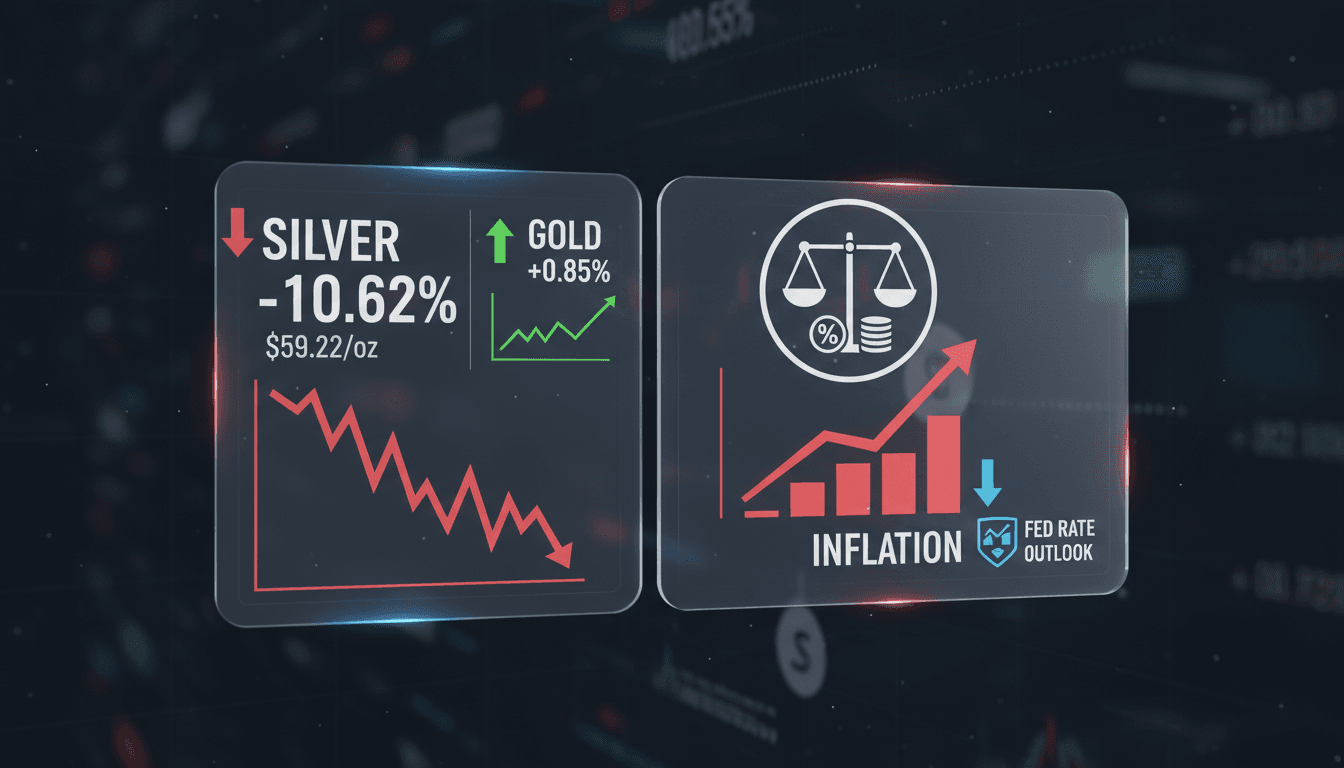
Silver prices experienced a notable drop of 10.62% over the past week, closing at $59.22 per ounce. This decline occurred alongside a slight recovery in gold prices, which were supported by a weaker dollar and reduced expectations for interest rate hikes by the Federal Reserve. Despite these fluctuations, both metals recorded weekly losses, with silver facing the most significant downturn.
The market remains cautious due to ongoing inflationary pressures, which have led to predictions of at least one interest rate hike this year. Federal Reserve officials have expressed concerns about inflation, hinting at potential future adjustments to interest rates. This environment of uncertainty continues to shape the precious metals market.
The Context
The precious metals market is currently navigating a complex landscape influenced by various economic indicators. Silver has lost nearly half its value since reaching a historic high in January, reflecting the volatility that characterizes this sector. The recent geopolitical stability in the Gulf region has contributed to improved market conditions, yet inflation concerns persist.
Market participants are closely monitoring the Federal Reserve's interest rate outlook, which has softened slightly due to stable inflation indicators. The interplay between the strength of the U.S. dollar and commodity prices remains a critical factor for investors. Understanding these dynamics is essential for making informed decisions in the current economic climate.
Takeaway
As inflation remains a pressing concern and interest rate policies evolve, the precious metals market may continue to experience fluctuations. Investors should keep a close eye on potential Federal Reserve interest rate decisions and trends in the U.S. dollar's strength. These factors could significantly influence precious metal prices moving forward.
Staying informed on economic indicators will be crucial for navigating this volatile market. The outlook suggests that market participants will need to adapt their strategies in response to ongoing developments in inflation and interest rates.
Sports reporting with a focus on Saudi and regional competitions.
"Okaz sports coverage is broad and audience-friendly, with strong attention to Saudi teams and leagues."
— A47 Editor
الذهب يرتفع عند التسوية.. و10% خسائر الفضة أسبوعياً
Gold and silver prices increased at the close of trading on Friday, supported by a slight decline in the dollar and reduced expectations for monetary tightening in the U.S. However, both precious metals recorded weekly losses, with silver dropping 10...
Pan-Arab news coverage spanning politics, business, sports, and regional affairs.
"Asharq Al-Awsat reflects a broad Arab editorial perspective with strong attention to regional geopolitics."
— A47 Editor
الذهب يتجه لرابع خسارة أسبوعية بضغط من قوة الدولار وتوقعات الفائدة
Gold prices are on track to record their fourth consecutive weekly loss, driven by the ongoing strength of the U.S. dollar. This trend was observed on Friday, indicating a challenging environment for gold investors.
Pan-Arab news coverage spanning politics, business, sports, and regional affairs.
"Asharq Al-Awsat reflects a broad Arab editorial perspective with strong attention to regional geopolitics."
— A47 Editor
بين دورها الصناعي والمخاوف التضخمية... لماذا تدفع الفضة الثمن الأكبر؟
Silver has lost nearly half of its value since reaching a historic high in January, amid widespread disruptions in the precious metals markets. This decline reflects significant volatility and uncertainty affecting the sector.