
UAE Orders Energy Infrastructure Overhaul and Spare Capacity Build-Out After US-Iran Conflict Disruptions
Why it matters
The UAE's transition toward fortified spare capacity guarantees reliable baseline power and alternate export corridors for international business, decoupling local commerce from regional flashpoints.
What happened (in 30 seconds)
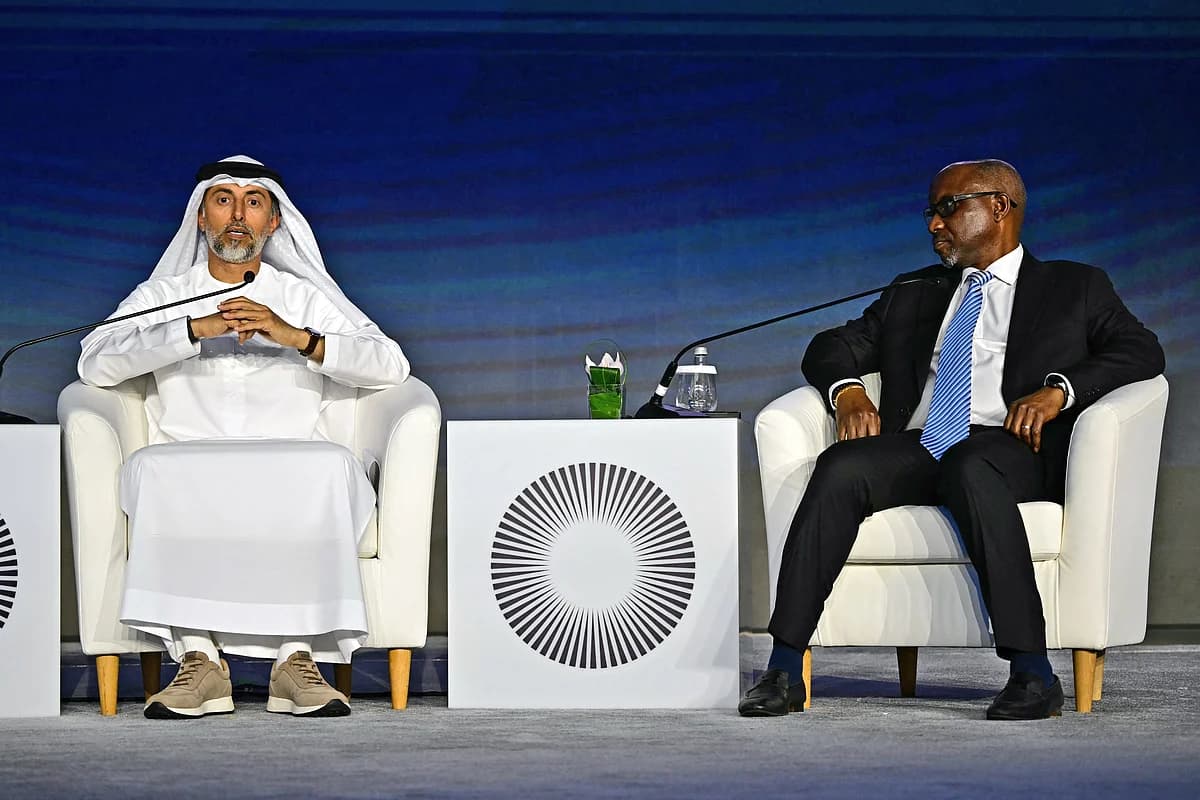
- Infrastructure overhaul announced: At the ADIPEC conference in Abu Dhabi on November 2, 2026, UAE Minister of Energy and Infrastructure Suhail Mohamed Al Mazrouei stated the country will redesign its energy footprint, install multi-layer physical protections, and build spare capacity across oil, gas, and power grids.
- Direct response to operational friction: The policy pivots directly from disruptions caused by the recent US-Iran conflict, which targeted primary operational nodes including Habshan, Ruwais, Shah, and Fujairah, alongside threats to the Strait of Hormuz.
- Targets escalated: The administration raised its national clean-energy objective to 35 percent by 2030–2031, anchored by artificial intelligence network modeling and a $6.1 billion round-the-clock solar-plus-storage installation.
The context you actually need
- Worst-case engineering doctrine: Policymakers have formally discarded standard operational baselines, mandating that utilities, pipelines, and export hubs engineer around worst-case disruption models rather than optimized cost efficiency.
- The $6.1 billion precedent: Abu Dhabi is backing this continuity posture with a project combining 5.2 GW of solar PV with 19 GWh of battery storage to yield 1 GW of uninterrupted, round-the-clock clean electricity by 2027.
- Data center competition: Rapid expansion in regional computing clusters and artificial intelligence workloads requires non-stop grid reliability, creating an economic imperative to guarantee firm, unshakeable power supplies to global technology operators.
What's really happening
The strategic mechanics of UAE infrastructure are undergoing a permanent shift from lean, cost-optimized transport to buffered, defensive redundancy.
Historically, global energy hubs operate on tight margins: extract hydrocarbons, process them at centralized facilities like Ruwais or Habshan, and move them through primary maritime corridors. This system prioritizes capital efficiency over protective slack. When hostilities between the United States and Iran spilled into direct and indirect infrastructure impacts—triggering fires, physical strikes, and logistical bottlenecks around the Strait of Hormuz—the vulnerability of single-point-of-failure distribution networks became acute.
Minister Al Mazrouei’s announcement formalizes a structural capital allocation cycle totaling between Dh150 billion and Dh200 billion through 2030. The incentive structure here is strictly economic. For an economy positioning itself as the premier crossroads for digital capital, advanced manufacturing, and institutional headquarters, unpredictable brownouts or halted crude exports represent unacceptable operational risk.
To mitigate this, state-backed entities are deploying capital across three complementary vectors. First, physical and cyber hardening: applying artificial intelligence across design workflows to simulate cascading failures and build defensive protection layers around critical processing facilities. Second, building structural spare capacity: maintaining operational redundancies across power generation, refining, and pipeline transport so an outage at a primary node like Habshan or Shah does not choke national supply or halt export contracts. Third, accelerating non-hydrocarbon baseload: the clean energy target revision to 35 percent by 2030–2031 is an energy security measure as much as an environmental one. The $6.1 billion Abu Dhabi deployment—pairing 5.2 GW of solar PV with 19 GWh of battery systems—provides 1 GW of baseline electricity independent of fuel feedstock logistics or pipeline integrity.
By diversifying fuel inputs, establishing redundant supply buffers, and reinforcing alternative export bypass routes via Fujairah outside the Persian Gulf, the UAE is insulating its domestic grid and sovereign revenues from external military escalation. The broader play targets enterprise trust: ensuring that global tech firms running high-load AI data centers face zero interruption risk, regardless of regional instability.
Who feels it first (and how)
- Infrastructure and EPC contractors: Engineering, procurement, and construction firms see immediate procurement tenders as Dh150–200 billion flows into utility reinforcement, battery installations, and physical asset hardening through 2030.
- Hyperscalers and data center operators: Regional tech facilities gain access to non-intermittent power contracts backed by 19 GWh of planned utility-scale storage, mitigating business continuity risks.
- Heavy industrial manufacturers: Energy-intensive operators across industrial hubs obtain protection against supply shocks through expanded reserve capacity in oil, gas, and electricity distribution.
- Dubai and Northern Emirates residents: Commercial and residential end-users see insulated grid reliability, eliminating domestic brownout exposure even when upstream processing units face disruption.
What to watch next
- Contract tenders for storage buffers: Track formal procurement notices for the 19 GWh utility-scale battery storage project ahead of its targeted 2027 operational launch, showing real execution speed.
- Alternative routing flow volumes: Monitor pipeline transfer rates directing crude volumes directly to the Gulf of Oman terminal at Fujairah, bypassing the Strait of Hormuz.
- Clean power deployment metrics: Watch annual grid-mix reports to verify progress toward the newly raised 35 percent clean-energy target by 2030–2031.
The UAE will invest Dh150–200 billion by 2030 to redesign its energy infrastructure, expand spare capacity, and increase its clean-energy target to 35 percent by 2030–2031.
Energy operators will prioritize capital expenditure on dispersed battery storage and redundant bypass networks over centralized generation assets to minimize localized disruption risk.
The exact cost overhead that domestic industrial consumers and multinational commercial entities will bear, if any, to fund the multi-layered defense installations and expanded reserve margins.
Frequently Asked Questions
- Why it matters?
- The UAE's transition toward fortified spare capacity guarantees reliable baseline power and alternate export corridors for international business, decoupling local commerce from regional flashpoints.
- What happened (in 30 seconds)?
- Infrastructure overhaul announced: At the ADIPEC conference in Abu Dhabi on November 2, 2026, UAE Minister of Energy and Infrastructure Suhail Mohamed Al Mazrouei stated the country will redesign its energy footprint, install multi-layer physical protections, and build spare capacity across oil, gas, and power grids. Direct response to operational friction: The policy pivots directly from disruptions caused by the recent US-Iran conflict, which targeted primary operational nodes including Habsha
- What's really happening?
- The strategic mechanics of UAE infrastructure are undergoing a permanent shift from lean, cost-optimized transport to buffered, defensive redundancy. Historically, global energy hubs operate on tight margins: extract hydrocarbons, process them at centralized facilities like Ruwais or Habshan, and move them through primary maritime corridors. This system prioritizes capital efficiency over protective slack. When hostilities between the United States and Iran spilled into direct and indirect inf
- Who feels it first (and how)?
- Infrastructure and EPC contractors: Engineering, procurement, and construction firms see immediate procurement tenders as Dh150–200 billion flows into utility reinforcement, battery installations, and physical asset hardening through 2030. Hyperscalers and data center operators: Regional tech facilities gain access to non-intermittent power contracts backed by 19 GWh of planned utility-scale storage, mitigating business continuity risks. Heavy industrial manufacturers: Energy-intensive operators
- What to watch next?
- Contract tenders for storage buffers: Track formal procurement notices for the 19 GWh utility-scale battery storage project ahead of its targeted 2027 operational launch, showing real execution speed. Alternative routing flow volumes: Monitor pipeline transfer rates directing crude volumes directly to the Gulf of Oman terminal at Fujairah, bypassing the Strait of Hormuz. Clean power deployment metrics: Watch annual grid-mix reports to verify progress toward the newly raised 35 percent clean-ener
Oil, metals, and agriculture: supply/demand headlines, OPEC chatter, inventories, and price action.
"Solid tape for energy and metals traders tracking macro and micro catalysts."
— A47 Editor
UAE boosts oil exports despite Iran war, energy minister says
The UAE has boosted its oil exports despite the ongoing Iran war, according to comments from the UAE's energy minister reported by Investing.com. The development comes as the conflict continues to disrupt crude supply and trade flows across the Middl...
UAE-based newspaper covering Gulf politics, society, and international developments.
"Gulf News is one of the UAE’s most prominent English-language publications."
— A47 Editor
SNOC says UAE can have a 100-Kilometre pipeline to bypass Strait of Hormuz
SNOC has said the UAE could build a 100-kilometre pipeline to bypass the Strait of Hormuz, according to a Gulf News report, as the waterway remains at the centre of an escalating standoff between Washington and Tehran.
A curated Gulf News feed featuring major stories across news, business, opinion, and lifestyle.
"Gulf News is a major UAE newspaper whose featured stories feed reflects a broad editorial mix shaped for a Gulf audience."
— A47 Editor
SNOC says UAE can have a 100-Kilometre pipeline to bypass Strait of Hormuz
SNOC has said the UAE could build a 100-kilometre pipeline to bypass the Strait of Hormuz, according to a Gulf News report, as the waterway remains at the centre of an escalating standoff between Washington and Tehran.
Breaking news and analysis from the UAE and Gulf region.
"Khaleej Times is a long-running UAE publication with broad regional coverage."
— A47 Editor
UAE to overhaul energy infrastructure, build spare capacity after conflict, minister says
The UAE plans to overhaul its energy infrastructure and build spare capacity following the recent conflict, according to a minister quoted by Khaleej Times. The announcement comes as the country reassesses its energy resilience amid ongoing regional ...
UAE-based English-language newspaper covering regional politics, economics, and global affairs.
"The National reflects Emirati policy perspectives while maintaining international editorial standards."
— A47 Editor
UAE oil exports surpass prewar levels despite Hormuz disruption, energy minister says
The UAE's energy minister said the country's oil exports have surpassed prewar levels despite ongoing disruption in the Strait of Hormuz, according to a report by The National. The base article is neutral in tone and frames the export recovery agains...
Global markets, investing, and macroeconomics from a premier financial newsroom.
"Bloomberg is respected for in-depth financial reporting and data-driven analysis."
— A47 Editor
UAE Oil Boss Calls for More Stockpiles, Refining Closer to Users
The head of the United Arab Emirates' largest energy company has called for greater oil storage capacity and for fuel production closer to consumers, as a response to severe disruption in the Strait of Hormuz, Bloomberg reported.