
OPEC+ Holds December 2026 Output Targets Steady as Iran War Disruptions Shift Focus to 2027 Quota Framework
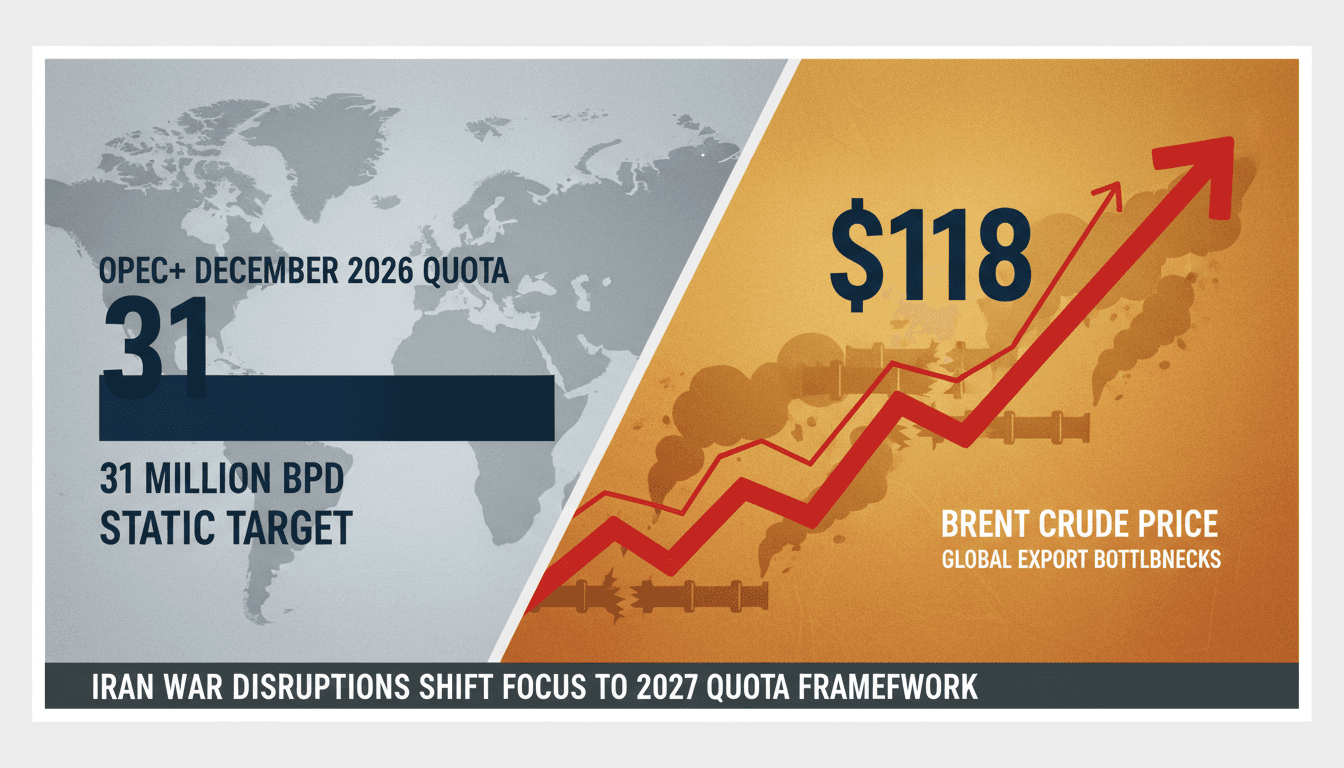
Sustained oil prices near $118 per barrel keep cross-border transport, corporate procurement, and manufacturing fuel overhead elevated through year-end.
Why it matters
The cartel's choice to freeze production targets near 31 million barrels per day holds global energy benchmarks high while punting structural quota disputes into 2027.
What happened (in 30 seconds)
- Seven core nations froze production. Saudi Arabia, Russia, Iraq, Kuwait, Algeria, Kazakhstan, and Oman agreed via virtual session on November 1, 2026, to leave December 2026 output targets unchanged from September levels.
- Supply remains functionally capped. The group preserved an existing baseline near 31 million barrels per day, holding an active tranche of roughly 2 million barrels per day in supply cuts through the close of 2026.
- Crude benchmarks reacted immediately. Brent crude settled near $118 per barrel following a pre-meeting gain of more than 2% on October 30, driven by the anticipated rollover and ongoing Gulf export outages.
The context you actually need
- Rollbacks preceded the hold. OPEC+ concluded a gradual restoration of a separate 1.65 million barrels per day voluntary production cut in September 2026 before pressing pause for the final quarter.
- Physical outages constrain actual delivery. Export flows throughout the Gulf remain impaired by the war in Iran, leaving several member states producing below nominal allocations despite high spot prices.
- A 2027 allocation review looms. Delegations face a mandatory fourth-quarter capacity audit by mid-November, which serves as the statistical foundation for 2027 quotas at the November 29 ministerial summit.
What's really happening
The decision to roll over December quotas represents tactical delay rather than strategic consensus. By reaffirming an aggregate target of roughly 31 million barrels per day for its seven primary producers, OPEC+ avoided opening contentious negotiations over baseline capacity at an online interim meeting. The group previously returned 1.65 million barrels per day to the market through September 2026, yet crude supplies remain tight due to combat-driven logistics disruptions across Gulf export corridors.
Behind this static headline sits a structural reality: nominal quotas diverge sharply from actual wellhead output. Due to infrastructure damage, maritime shipping risks, and wartime bottlenecks connected to the conflict in Iran, multiple producers lack the physical capability to meet their allocated ceilings. Raising output targets on paper would offer zero relief to physical refining hubs if barrels cannot transit shipping terminals. Conversely, cutting formal allocations while Brent hovers around $118 per barrel would risk demand destruction across major importing economies. Holding existing targets provides a predictable benchmark through the close of the calendar year without exposing current member underproduction.
This rollover also insulates the cartel ahead of its November 29 ministerial conference, where member baselines for 2027 must be negotiated. Core producers are conducting a comprehensive production capacity assessment scheduled for completion by mid-November. Establishing each country's verified output potential dictates future revenue shares. Member states that invested in extraction capacity want those investments reflected in higher baseline quotas, whereas states facing capacity constraints resist adjustments that diminish their formal market weight.
Market balances may reverse quickly once the calendar turns. The International Energy Agency has flagged that if Gulf export routes normalize, a supply surplus could materialize across 2027. Under this dynamic, the alliance’s existing 2 million barrels per day of baseline cuts—scheduled to expire at the end of 2026—will require either formal extension or managed redistribution. By freezing December output at September levels, the seven core producers bought four weeks of statistical clarity, allowing the technical capacity audit to conclude before confronting the market oversupply risks projected for 2027.
Who feels it first (and how)
- Aviation and freight operators. Air carriers and maritime shippers face sustained jet fuel and bunker surcharges through the final quarter, preventing anticipated year-end operating margin recovery.
- Gulf trading and regional financial desks. Regional commercial balance sheets benefit from robust state energy revenue distributions, which support liquidity across project finance and real estate.
- Dubai-based corporate treasuries. Operating within the UAE—which departed OPEC in May 2026—enterprises navigate indirect exposure: buoyant regional liquidity paired with persistent local transportation, freight, and utility input costs tied to $118 crude.
- Industrial goods manufacturers. Downstream industrial processors and plastic producers face firm feedstock pricing, forcing them to choose between margin compression or passing price increases to corporate buyers.
What to watch next
- The mid-November capacity audit release. Technical auditors will conclude verified production capacity reviews for core members, establishing the hard baseline data that governs 2027 quota shares.
- The November 29 ministerial conference. Ministers convene to resolve whether the remaining 2 million barrels per day in cuts carry over into 2027 or unwind against projected surplus risks.
- Gulf shipping traffic indices. Tanker clearance rates and freight insurance premiums will signal whether physical export capacity from non-belligerent Gulf terminals is improving ahead of year-end demand peaks.
Seven core OPEC+ members maintained December 2026 output targets at September levels, leaving crude supply targets near 31 million barrels per day while Brent crude trades near $118.
The ministerial summit on November 29 will feature tense baseline disputes, as participants position their 2027 allowances against the International Energy Agency’s surplus warnings.
Whether wartime logistical disruptions in the Gulf will subside quickly enough to permit underperforming producers to hit their December baselines before 2027 allocations take effect.
Frequently Asked Questions
- Why it matters?
- The cartel's choice to freeze production targets near 31 million barrels per day holds global energy benchmarks high while punting structural quota disputes into 2027.
- What happened (in 30 seconds)?
- Seven core nations froze production. Saudi Arabia, Russia, Iraq, Kuwait, Algeria, Kazakhstan, and Oman agreed via virtual session on November 1, 2026, to leave December 2026 output targets unchanged from September levels. Supply remains functionally capped. The group preserved an existing baseline near 31 million barrels per day, holding an active tranche of roughly 2 million barrels per day in supply cuts through the close of 2026. Crude benchmarks reacted immediately. Brent crude settled near
- What's really happening?
- The decision to roll over December quotas represents tactical delay rather than strategic consensus. By reaffirming an aggregate target of roughly 31 million barrels per day for its seven primary producers, OPEC+ avoided opening contentious negotiations over baseline capacity at an online interim meeting. The group previously returned 1.65 million barrels per day to the market through September 2026, yet crude supplies remain tight due to combat-driven logistics disruptions across Gulf export co
- Who feels it first (and how)?
- Aviation and freight operators. Air carriers and maritime shippers face sustained jet fuel and bunker surcharges through the final quarter, preventing anticipated year-end operating margin recovery. Gulf trading and regional financial desks. Regional commercial balance sheets benefit from robust state energy revenue distributions, which support liquidity across project finance and real estate. Dubai-based corporate treasuries. Operating within the UAE—which departed OPEC in May 2026—enterprises
- What to watch next?
- The mid-November capacity audit release. Technical auditors will conclude verified production capacity reviews for core members, establishing the hard baseline data that governs 2027 quota shares. The November 29 ministerial conference. Ministers convene to resolve whether the remaining 2 million barrels per day in cuts carry over into 2027 or unwind against projected surplus risks. Gulf shipping traffic indices. Tanker clearance rates and freight insurance premiums will signal whether physical
Breaking news, politics, business, and entertainment from the U.S. and around the world.
"The New York Post is a tabloid-format newspaper known for its sensationalist headlines and conservative-leaning editorial tone."
— A47 Editor
OPEC+ keeps December oil output targets steady ahead of tougher call for 2027
OPEC+ has kept its oil output targets for December unchanged as it prepares for a tougher decision on production for 2027. Gulf members have been boosting exports after months of disruption caused by the conflict, but most are still pumping well belo...
English-language reporting focused on Saudi Arabia and regional affairs.
"Saudi Gazette provides English-language coverage that often aligns with mainstream Saudi news priorities."
— A47 Editor
OPEC+ agree to keep oil output quota steady for December
OPEC+ agreed in an online meeting on Sunday to keep its oil output level unchanged for December, marking the third consecutive month without adjustments. Seven members, Saudi Arabia, Russia, Iraq, Kuwait, Algeria, Kazakhstan and Oman, made the decisi...
English-language reporting on Saudi politics, policy, and society.
"Saudi Gazette reflects mainstream Saudi institutional perspectives."
— A47 Editor
OPEC+ agree to keep oil output quota steady for December
OPEC+ agreed in an online meeting on Sunday to keep its oil output level unchanged for December, marking the third consecutive month without adjustments. Seven members, Saudi Arabia, Russia, Iraq, Kuwait, Algeria, Kazakhstan and Oman, made the decisi...
Oil, metals, and agriculture: supply/demand headlines, OPEC chatter, inventories, and price action.
"Solid tape for energy and metals traders tracking macro and micro catalysts."
— A47 Editor
OPEC+ keeps December oil output targets steady ahead of tougher call for 2027
OPEC+ has decided to keep its oil production targets unchanged for December 2026, according to reporting by Investing.com, with the group holding output steady ahead of a more difficult policy decision on quotas for 2027. The decision follows the com...
Global markets, investing, and macroeconomics from a premier financial newsroom.
"Bloomberg is respected for in-depth financial reporting and data-driven analysis."
— A47 Editor
OPEC+ Leaves Oil Output Targets Unchanged for December
OPEC+ members, with seven producers agreeing to keep output quotas unchanged for December, have decided to hold their oil production targets steady after completing the unwinding of their last voluntary cuts in September, according to Bloomberg's rep...
U.S. business news, corporate developments, and economy.
"The Wall Street Journal is respected for deep financial and economic reporting with a center-right editorial perspective."
— A47 Editor
OPEC, Allies Keep Output Steady While Gulf Shipping Remains Under Threat
OPEC and its allies have kept crude output steady, yet production remains below prewar levels as key Gulf shipping routes stay under threat, according to The Wall Street Journal.
UAE-based English-language newspaper covering regional politics, economics, and global affairs.
"The National reflects Emirati policy perspectives while maintaining international editorial standards."
— A47 Editor
Opec+ holds December oil output targets steady as Iran war disrupts supply
OPEC+ agreed in an online meeting on Sunday to keep its oil output targets unchanged for December, marking the third consecutive month without adjustments, as the Iran war disrupts global supply. Seven members, Saudi Arabia, Russia, Iraq, Kuwait, Alg...
Global markets, investing, and macroeconomics from a premier financial newsroom.
"Bloomberg is respected for in-depth financial reporting and data-driven analysis."
— A47 Editor
OPEC+ Set to Stick With Plan for Steady Quotas, Delegates Say
OPEC+ major producers are set to keep oil production quotas unchanged in December, according to two delegates, as conflict in the Middle East continues to curb parts of the group's output.