
Brent Crude Holds Near $95 as Houthi Strikes on Saudi Oil Infrastructure Renew Middle East Supply Fears
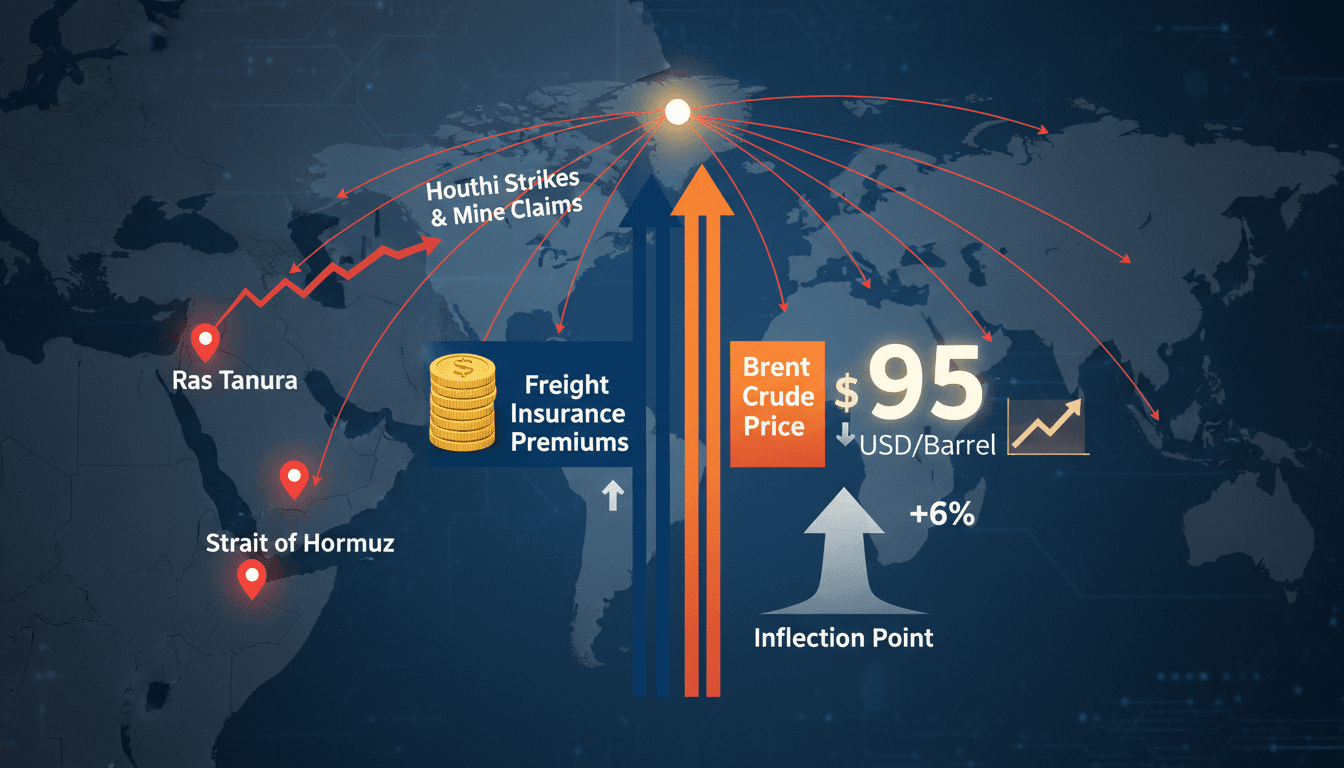
Why it matters
The convergence of physical infrastructure strikes and maritime transit hazards reintroduces an immediate risk premium into global energy markets, challenging balance sheets even as broader inventory figures signal emerging surpluses.
What happened (in 30 seconds)
- Crude benchmarks surged over two consecutive sessions, lifting Brent crude to settle near $95 per barrel and West Texas Intermediate (WTI) toward $84 per barrel.
- Physical energy assets faced direct action as Houthi forces launched strikes against Saudi Arabian infrastructure—including the Ras Tanura export terminal and refinery complex—alongside Red Sea port facilities.
- Maritime claims disrupted trading desks following unconfirmed statements from Tehran regarding naval mines striking commercial vessels traversing the Strait of Hormuz during thin pre-holiday trading.
The context you actually need
- Tit-for-tat escalation patterns have repeatedly targeted regional logistical arteries, following prior strikes on commercial ports, financial zones, and shipping corridors.
- Stalled multilateral diplomacy involving Washington, Beijing, and Moscow has left maritime security frameworks fragmented across the Persian Gulf and Red Sea corridors.
- Shipment volumes showed prior resilience, with Persian Gulf crude outflows staging a partial recovery in the weeks leading directly into this latest round of kinetic disruptions.
What's really happening
The price surge to $95 per barrel represents a classic collision between physical geopolitical disruption and macro-level inventory fundamentals. For trading desks and enterprise planners, the key mechanism is the speed at which localized kinetic events alter freight underwriting and prompt delivery pricing. When Houthi forces target high-volume facilities like Ras Tanura, the market does not merely price the immediate volume of delayed crude; it recalibrates the probability of compounding disruptions across downstream supply networks. Ras Tanura functions as a cornerstone of global maritime crude dispatch, meaning any operational pause radiates outward into global tanker scheduling within hours.
Simultaneously, unverified reports of mine strikes within the Strait of Hormuz inject an asymmetric risk premium into transit insurance rates. Even absent independent verification of hull damage, maritime underwriters adjust war-risk premiums the moment naval mines are cited in official state communication. Because the Strait handles a critical share of global seaborne hydrocarbons, higher freight insurance translates directly into elevated delivered barrel costs across destination markets in Europe and Asia.
Yet, this rally is operating within structural counter-pressures. Global physical crude balances have exhibited emerging surplus signals over recent quarters, and Persian Gulf loading terminals had actually demonstrated a measurable recovery in export throughput immediately preceding these incidents. Consequently, market participants face a stark structural tension: the paper market is pricing the tail risk of severe logistical bottlenecks, while physical inventory tracking still points toward softening baseline demand.
This tension was amplified by seasonal liquidity dynamics. With trading volumes heavily thinned ahead of the U.S. Thanksgiving holiday, modest institutional positioning drove the nearly 6% price advance across two sessions. When liquidity dries up, algorithmic hedging models respond aggressively to security headlines, widening bid-ask spreads and forcing energy buyers to lock in elevated short-term physical supply contracts. The resulting volatility forces energy producers and commercial consumers into opposing hedging incentives: regional exporters seek to capture transient pricing spikes before surplus trends resume, while corporate procurement desks face the costly prospect of locking in fuel surcharges based on panic-driven holiday pricing.
Who feels it first (and how)
- Aviation and Fleet Operators: Immediate increases in jet A-1 and marine gasoil bunkering charges, raising variable operating expenses before ticket or freight yields can adjust.
- Enterprise Procurement Directors: Forced reassessment of fourth-quarter freight surcharges and packaging inputs tied to petrochemical feedstocks.
- Gulf-Based Manufacturing and Logistics Firms: Higher local transport and utility input costs, coupled with potential delays in maritime container dispatches through regional straits.
- Commodity Trading Desks: Margin expansion from widening regional arbitrage spreads, balanced against heightened settlement risk and thinned pre-holiday liquidity.
What to watch next
- OPEC+ Ministerial Positioning: Whether the group interprets the $95 level as an artificial headline rally or grounds to recalibrate scheduled output policies.
- Independent Maritime Verification: Satellite tracking and naval patrol data from the Strait of Hormuz to confirm or debunk the presence of active naval minefields.
- Refinery Utilization Rates at Ras Tanura: Operational run data revealing whether strikes inflicted substantive mechanical damage or merely caused brief precautionary shutdowns.
Brent crude advanced nearly 6% over two days to hover near $95 per barrel, with WTI settling near $84 per barrel amid strikes on Saudi infrastructure and Red Sea ports.
Shipping lines will face increased war-risk insurance premiums for Persian Gulf and Red Sea transits, raising end-to-end container and tanker freight rates.
Whether independent confirmation of naval mine strikes in the Strait of Hormuz will emerge, or if underlying surplus balances will erase the geopolitical premium once full market liquidity returns.
Frequently Asked Questions
- Why it matters?
- The convergence of physical infrastructure strikes and maritime transit hazards reintroduces an immediate risk premium into global energy markets, challenging balance sheets even as broader inventory figures signal emerging surpluses.
- What happened (in 30 seconds)?
- Crude benchmarks surged over two consecutive sessions, lifting Brent crude to settle near $95 per barrel and West Texas Intermediate (WTI) toward $84 per barrel. Physical energy assets faced direct action as Houthi forces launched strikes against Saudi Arabian infrastructure—including the Ras Tanura export terminal and refinery complex—alongside Red Sea port facilities. Maritime claims disrupted trading desks following unconfirmed statements from Tehran regarding naval mines striking commercial
- What's really happening?
- The price surge to $95 per barrel represents a classic collision between physical geopolitical disruption and macro-level inventory fundamentals. For trading desks and enterprise planners, the key mechanism is the speed at which localized kinetic events alter freight underwriting and prompt delivery pricing. When Houthi forces target high-volume facilities like Ras Tanura, the market does not merely price the immediate volume of delayed crude; it recalibrates the probability of compounding disru
- Who feels it first (and how)?
- Aviation and Fleet Operators: Immediate increases in jet A-1 and marine gasoil bunkering charges, raising variable operating expenses before ticket or freight yields can adjust. Enterprise Procurement Directors: Forced reassessment of fourth-quarter freight surcharges and packaging inputs tied to petrochemical feedstocks. Gulf-Based Manufacturing and Logistics Firms: Higher local transport and utility input costs, coupled with potential delays in maritime container dispatches through regional st
- What to watch next?
- OPEC+ Ministerial Positioning: Whether the group interprets the $95 level as an artificial headline rally or grounds to recalibrate scheduled output policies. Independent Maritime Verification: Satellite tracking and naval patrol data from the Strait of Hormuz to confirm or debunk the presence of active naval minefields. Refinery Utilization Rates at Ras Tanura: Operational run data revealing whether strikes inflicted substantive mechanical damage or merely caused brief precautionary shutdowns.
Global markets, investing, and macroeconomics from a premier financial newsroom.
"Bloomberg is respected for in-depth financial reporting and data-driven analysis."
— A47 Editor
Latest Oil Market News and Analysis for Nov. 26
Oil prices held a two-day gain as continued hostilities in the Middle East threatened to disrupt the recovery in the region's crude exports, according to Bloomberg's markets coverage for Nov. 26.
Global political, business, and cultural coverage from WSJ international desks.
"The Wall Street Journal offers extensive international reporting with a reputation for financial insight and a center-right editorial stance."
— A47 Editor
Oil Futures Pick Up as Middle East Tensions Persist
Oil futures settled higher for a second straight session as ongoing tensions in the Middle East counter expectations of a coming global supply surplus, according to The Wall Street Journal.
Oil, metals, and agriculture: supply/demand headlines, OPEC chatter, inventories, and price action.
"Solid tape for energy and metals traders tracking macro and micro catalysts."
— A47 Editor
Oil prices fall as supply glut concerns offset Middle East disruption fears
Oil prices fell as traders weighed expectations of a coming global supply surplus against persistent disruption fears in the Middle East, according to Investing.com's markets coverage. The decline reflects concern that crude supply will exceed demand...