
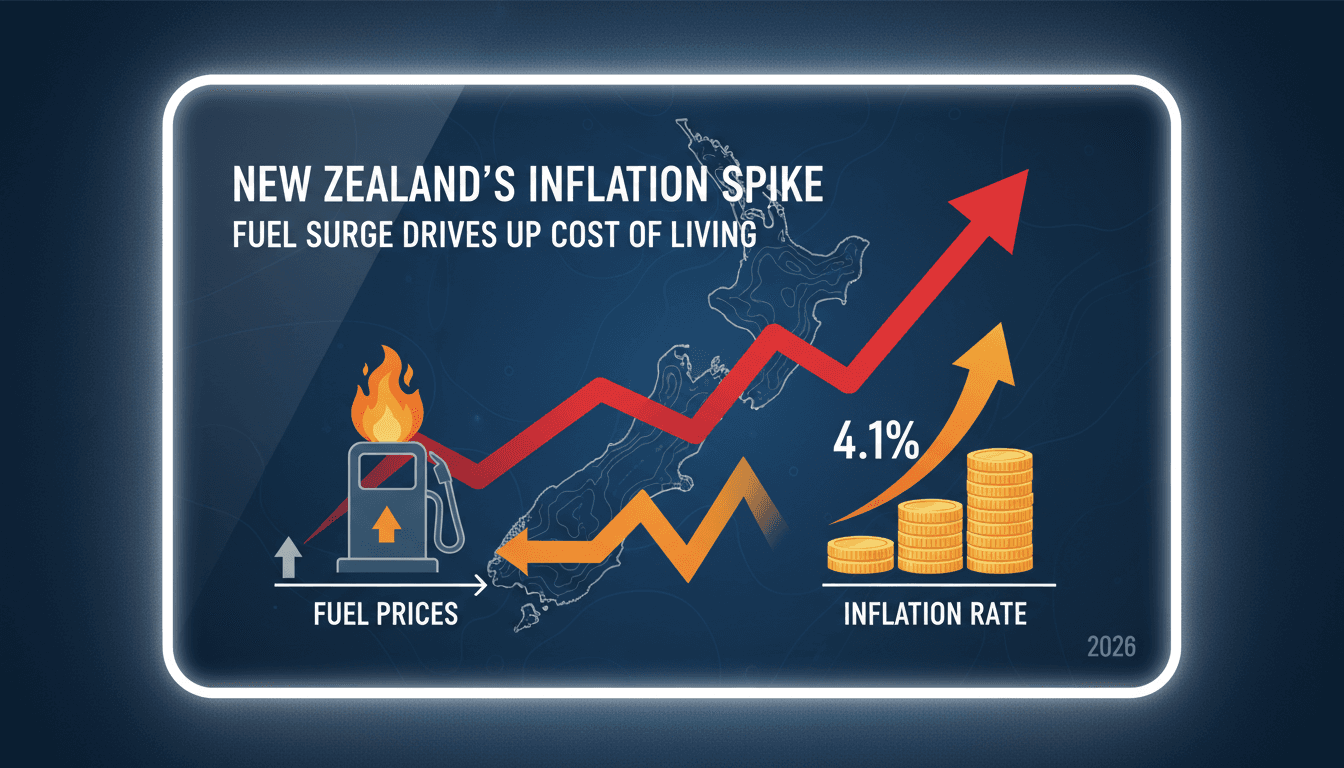
New Zealand's inflation rate rises to 4.1% driven by soaring fuel prices
Here's what it means for you.
The recent rise in New Zealand's inflation rate to 4.1% signals increasing cost pressures that could affect consumers and businesses alike. As fuel prices soar, the potential for interest rate hikes by the Reserve Bank of New Zealand may reshape borrowing costs and spending behaviors. Stakeholders should prepare for a possible tightening of monetary policy that could influence economic growth. This inflationary trend may also impact investment strategies, as higher rates could lead to shifts in market dynamics. Keeping an eye on these developments will be crucial for navigating the evolving economic landscape.
What happened
New Zealand's annual inflation rate surged to 4.1% in the second quarter of 2026, exceeding expectations and marking the highest level in over two years. This increase is primarily driven by soaring fuel prices, which have significantly impacted overall cost pressures in the economy. Analysts suggest that this inflation spike raises concerns about the need for the Reserve Bank of New Zealand to implement consecutive interest rate hikes.
The reported inflation rate reflects a broader trend of rising costs that could affect various sectors. As the economy grapples with these pressures, the implications for monetary policy are becoming increasingly significant.
The Context
The inflation rate of 4.1% is the highest seen in over two years, highlighting a critical moment for New Zealand's economy. Rising fuel prices are a significant contributor to this increase, affecting not only transportation costs but also the prices of goods and services across the board. The Reserve Bank of New Zealand is now faced with the challenge of addressing these inflationary pressures while balancing economic growth.
The timing of this inflation surge coincides with ongoing global economic uncertainties, which further complicate the situation. Stakeholders, including consumers and businesses, will need to navigate the potential impacts of changing monetary policy in the coming months.
Takeaway
With inflation rising and economic pressures mounting, the Reserve Bank of New Zealand faces critical decisions regarding interest rates. Upcoming meetings will be pivotal as the bank considers its response to the accelerating inflation. Monitoring global fuel prices will also be essential, as they continue to influence local inflation dynamics.
As the situation evolves, stakeholders should remain vigilant about potential shifts in monetary policy that could shape the economic landscape. The implications of these developments will be felt across various sectors, making it crucial to stay informed.
Social/economic commentary and analysis relevant to business and markets.
"WSJ blends data-driven economic insight with commentary on policy and society."
— A47 Editor
New Zealand’s Second-Quarter Inflation Jumps on Fuel-Price Surge
New Zealand's inflation rate surged to 4.1% in the second quarter of 2026, driven primarily by rising fuel prices, which has heightened concerns about potential interest rate hikes by the Reserve Bank of New Zealand. This increase marks a significant...
Market-moving headlines impacting equities, bonds, and related risk assets.
"Real-time catalysts and volatility drivers across indices and sectors."
— A47 Editor
New Zealand Q2 inflation rises more than expected at 4.1%
New Zealand's inflation rate for the second quarter has risen to 4.1%, exceeding expectations and marking a significant increase driven by higher fuel prices. This rise indicates persistent inflationary pressures within the economy, which may influen...
Macro commentary, policy analysis, growth/inflation themes, and global outlooks.
"Contextual macro coverage that complements day-to-day market headlines."
— A47 Editor
New Zealand Q2 inflation at 4.1% y/y, above forecast
New Zealand's inflation rate for the second quarter of 2026 has risen to 4.1% year-on-year, surpassing forecasts and indicating persistent inflationary pressures, primarily driven by higher fuel prices. This increase marks a significant economic deve...
Global markets, investing, and macroeconomics from a premier financial newsroom.
"Bloomberg is respected for in-depth financial reporting and data-driven analysis."
— A47 Editor
New Zealand’s Faster Inflation Bolsters Case for More Rate Hikes
New Zealand's annual inflation rate has accelerated to its highest level in over two years, driven by rising fuel prices, prompting speculation about consecutive interest rate hikes by the Reserve Bank of New Zealand.