
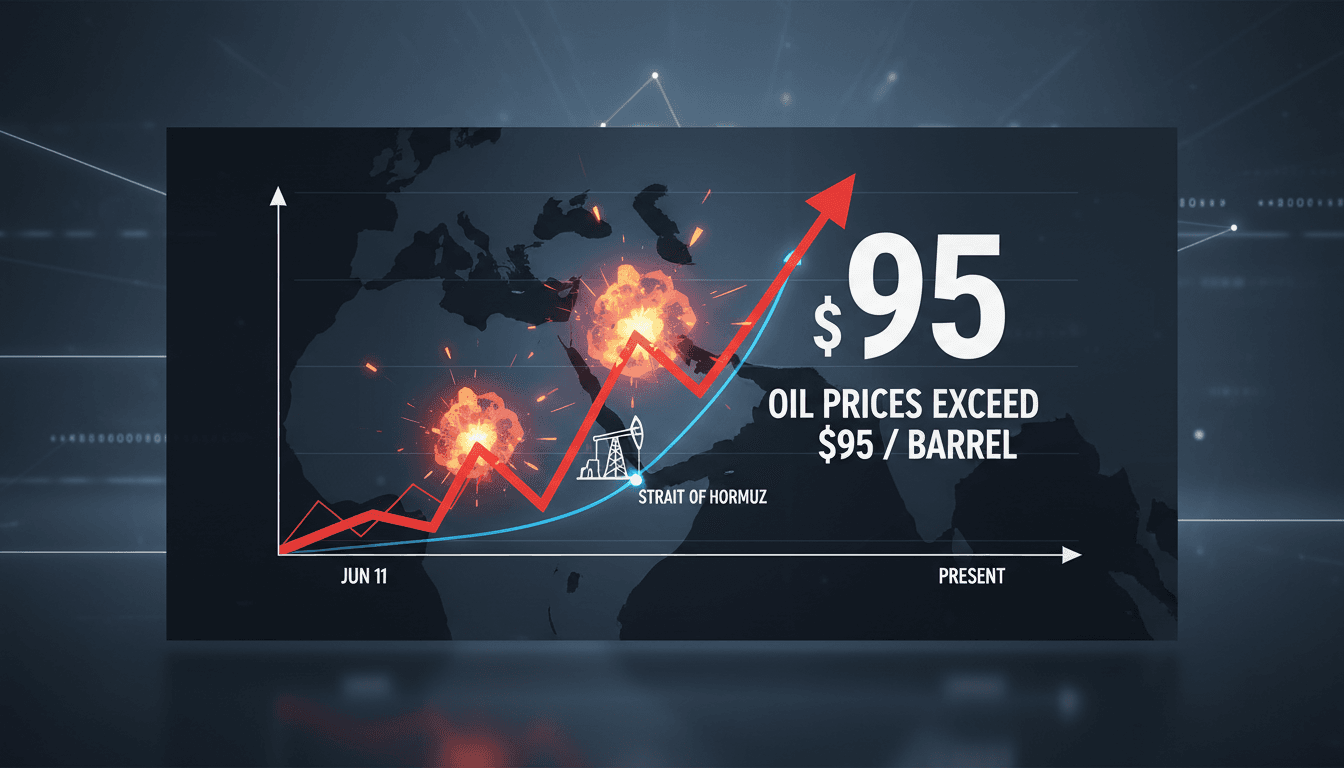
Oil prices exceed $95 per barrel amid Middle East tensions
Here's what it means for you.
The recent surge in oil prices to over $95 per barrel signals heightened market volatility, primarily driven by geopolitical tensions in the Middle East. This increase could have significant implications for global markets, affecting everything from fuel costs to inflation rates. Investors and policymakers alike should remain vigilant as these developments unfold, as they may influence economic stability and energy strategies worldwide. As tensions escalate, the potential for supply disruptions in critical shipping routes like the Strait of Hormuz raises concerns about the reliability of oil supplies. This situation could lead to further price fluctuations, impacting consumers and businesses reliant on stable energy costs.
What happened
Oil prices have surged to a six-week high, exceeding $95 per barrel for the first time since June 11. This increase is largely attributed to fears of supply disruptions stemming from ongoing conflicts in the Middle East. Reports indicate that concerns are particularly focused on critical maritime routes, including the Strait of Hormuz and the Red Sea.
The rise in oil prices reflects a broader trend of market volatility influenced by geopolitical tensions affecting oil-producing regions. As these conflicts continue, the oil market is likely to experience further fluctuations, prompting reactions from investors and analysts.
The Context
The Strait of Hormuz is a vital passage for global oil shipments, making it a focal point for concerns about supply stability. Recent conflicts in the Middle East have intensified fears regarding the reliability of oil supplies, which are crucial for economies worldwide. Stakeholders, including oil-producing nations and global markets, are closely monitoring the situation as it develops.
The timing of this price increase coincides with heightened geopolitical tensions, which have historically led to significant market reactions. As the situation evolves, the implications for oil supply and pricing will be critical for both consumers and businesses.
Takeaway
Looking ahead, it is essential to monitor developments in Middle Eastern conflicts and their potential impact on oil supply. Analysts will be watching for responses from oil-producing nations regarding production levels, which could further influence market dynamics. The ongoing volatility in oil prices suggests that stakeholders should prepare for continued fluctuations in the near future.
As geopolitical tensions persist, the oil market will likely remain sensitive to any signs of escalation or resolution. This situation underscores the interconnectedness of global energy markets and the importance of strategic planning for businesses and policymakers alike.
UAE-based English-language newspaper covering regional politics, economics, and global affairs.
"The National reflects Emirati policy perspectives while maintaining international editorial standards."
— A47 Editor
Oil prices hit six-week high on Hormuz and Red Sea supply disruption fears
Oil prices have reached a six-week high, driven by fears of supply disruptions in the Strait of Hormuz and the Red Sea, as geopolitical tensions escalate. These concerns have been exacerbated by renewed hostilities between the United States and Iran,...
Oil, metals, and agriculture: supply/demand headlines, OPEC chatter, inventories, and price action.
"Solid tape for energy and metals traders tracking macro and micro catalysts."
— A47 Editor
Oil price tops $95 for first time since June 11 amid widening Mideast conflict
Oil prices have surged past $95 for the first time since June 11, driven by escalating tensions in the Middle East, particularly between the United States and Iran. This increase reflects ongoing geopolitical instability, which has raised concerns ab...
Regional and international reporting focused on Middle Eastern politics, diplomacy, and economics.
"Asharq Al-Awsat is a Saudi-owned international newspaper reflecting mainstream Gulf political perspectives."
— A47 Editor
Oil Extends Gains to Near Six-Week Highs on New Middle East Supply Risks
Oil prices have extended gains to near six-week highs, driven by new supply risks emerging from the Middle East. This surge is attributed to escalating geopolitical tensions, particularly in the Strait of Hormuz and the Red Sea, which have raised con...