
U.S. crude oil stockpiles decline by 7.9 million barrels amid rising exports
Here's what it means for you.
The recent decline in U.S. crude oil stockpiles signals a tightening market that could lead to increased prices for consumers and businesses alike. As exports surge and domestic supply diminishes, stakeholders in the energy sector must prepare for potential shifts in pricing strategies and supply chain dynamics. This trend may also prompt policymakers to reassess energy strategies to ensure stability in the market.
What happened
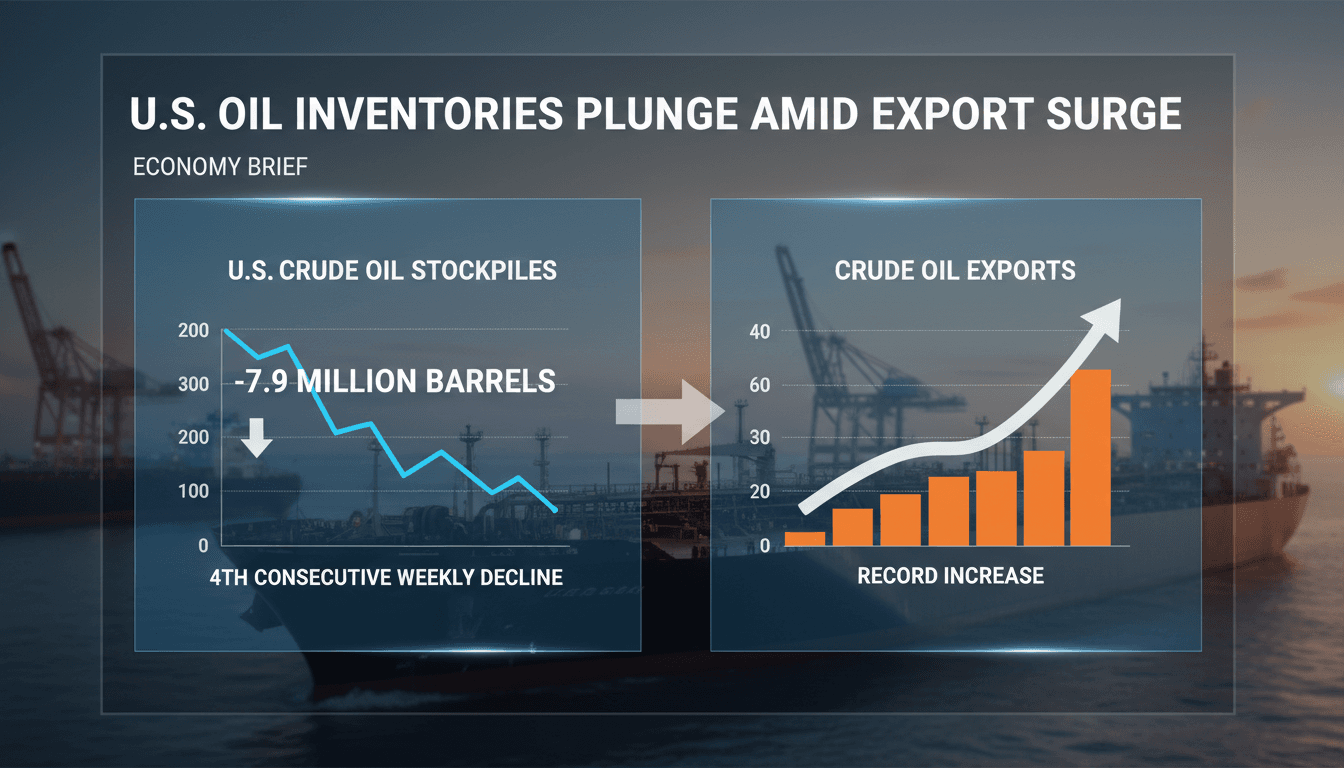
Commercial crude oil stocks in the U.S. fell by 7.9 million barrels last week, marking the fourth consecutive weekly decline. This significant drop is attributed to soaring exports that are outpacing domestic supply, leading to a record decrease in inventories. Analysts had predicted a decrease of only 3 million barrels, highlighting the unexpected severity of the situation.
The decline encompasses both commercial and strategic reserves, indicating a broader impact on the overall oil supply landscape. The current figures reflect a notable shift in supply dynamics, raising concerns about future availability and pricing.
The Context
The U.S. crude oil market is currently experiencing a contraction in stockpiles, driven primarily by a surge in exports. This trend is significant as it affects not only domestic supply but also the global oil market. The timing of this report, released on May 20, 2026, comes as analysts had set expectations for stockpile changes prior to its publication.
With the ongoing reduction in inventories, stakeholders must consider the implications for energy policy and market stability. The situation underscores the delicate balance between domestic production and international demand, which is crucial for maintaining adequate supply levels.
Takeaway
As exports continue to rise, the U.S. may face increasing pressure on its crude oil supply, potentially leading to higher prices. It will be essential to monitor export trends closely to assess their ongoing impact on domestic supply. Additionally, fluctuations in inventory levels could prompt significant price adjustments in the near future.
The current trajectory suggests that market participants should prepare for tighter oil markets, which may influence both consumer behavior and energy policy decisions moving forward.
U.S. business news, corporate developments, and economy.
"The Wall Street Journal is respected for deep financial and economic reporting with a center-right editorial perspective."
— A47 Editor
U.S. Crude Oil Stockpiles Post Fourth Straight Weekly Draw
U.S. commercial crude oil stocks fell by 7.9 million barrels last week, marking the fourth consecutive weekly draw, which exceeded analysts' expectations of a 3 million barrel decrease. This decline indicates a tightening supply in the market, reflec...
Global markets, investing, and macroeconomics from a premier financial newsroom.
"Bloomberg is respected for in-depth financial reporting and data-driven analysis."
— A47 Editor
US Crude Inventories Drop by Most on Record as Exports Surge
US crude inventories, including strategic reserves, have dropped by a record amount as soaring exports begin to deplete domestic supply buffers. This significant decline reflects the growing pressure on the US oil market amid rising global demand.
Oil, metals, and agriculture: supply/demand headlines, OPEC chatter, inventories, and price action.
"Solid tape for energy and metals traders tracking macro and micro catalysts."
— A47 Editor
U.S. crude stockpiles fall 7.9 million barrels, EIA reports
The U.S. Energy Information Administration (EIA) reported a significant decline in crude oil stockpiles, with inventories falling by 7.9 million barrels for the week ending May 20, marking the fourth consecutive weekly draw. This drop exceeds analyst...