
European airline stocks decline as oil prices surge amid U.S.-Iran tensions
Here's what it means for you.
The recent surge in oil prices, now exceeding $90 a barrel, is a significant concern for investors, particularly in the travel and leisure sectors. As inflation fears rise, the impact on economic growth becomes a focal point for market participants. Stakeholders will need to closely monitor upcoming central bank meetings and earnings reports to gauge the broader implications of these developments.
What happened
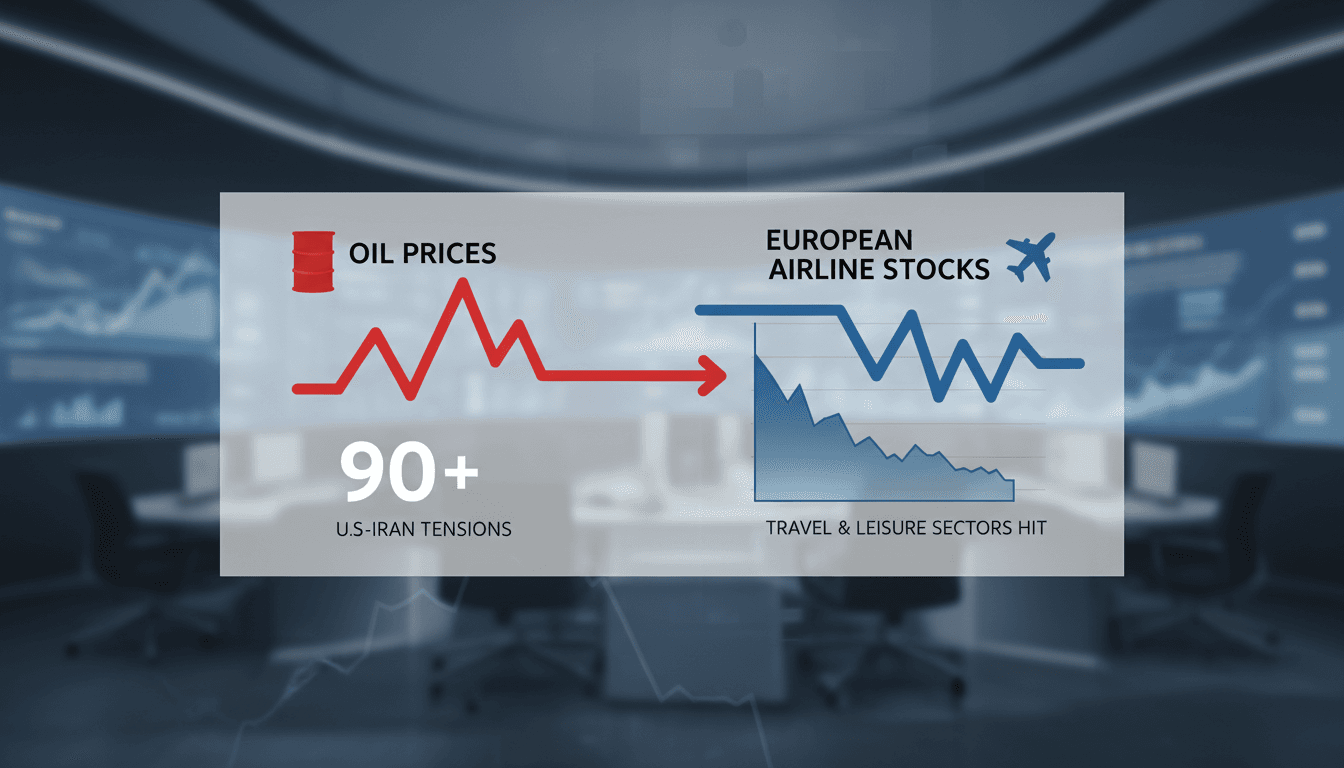
European airline stocks have experienced a notable decline as oil prices surged due to escalating tensions between the U.S. and Iran. The pan-European STOXX 600 index fell by 0.2% in early trading, reflecting the broader market's response to rising fuel costs. Brent crude oil prices increased for the first time in a month, surpassing the critical threshold of $90 a barrel.
Travel and leisure stocks, particularly Ryanair, reported significant declines as higher fuel costs began to take their toll. Ryanair specifically noted a 34% drop in first-quarter profit, underscoring the financial strain on airlines amid rising oil prices. This situation has raised concerns about inflation and its potential impact on economic growth across Europe.
The Context
The escalation of hostilities between the U.S. and Iran has led to heightened geopolitical risks, which are now reflected in the rising oil prices. This situation is particularly concerning for sectors sensitive to fuel costs, such as airlines and travel-related businesses. As oil prices rise, the implications for inflation and economic growth become increasingly significant.
Investors are now focused on the upcoming European Central Bank policy meeting, where interest rates are expected to remain unchanged. Additionally, earnings reports from major U.S. technology companies could further influence market sentiment. The interplay between these factors will be crucial in determining the trajectory of European stocks in the coming weeks.
Takeaway
As geopolitical tensions continue to influence oil prices, market participants will need to assess the potential economic ramifications. The impact on inflation and economic growth will be closely monitored, particularly in sectors sensitive to fuel costs. Investors should keep an eye on the upcoming central bank meetings and earnings reports, as these will provide critical insights into market dynamics.
The situation remains fluid, and the response from central banks will be pivotal in shaping investor sentiment. With rising oil prices posing challenges for the travel and leisure sectors, the broader economic outlook will depend on how these factors unfold in the near future.
Pan-Arab news coverage spanning politics, business, sports, and regional affairs.
"Asharq Al-Awsat reflects a broad Arab editorial perspective with strong attention to regional geopolitics."
— A47 Editor
مخاوف النفط والتضخم تقود تراجعاً طفيفاً للأسهم الأوروبية
European stocks experienced a slight decline on Monday amid escalating tensions between the United States and Iran, which led to rising oil prices and heightened inflation concerns.
Business, markets, economy, and corporate news with strong UAE and regional relevance.
"Emirates 24|7 business coverage tends to center UAE markets, property, regulation, and regional economic developments."
— A47 Editor
European shares slip as oil rises above US$90 on Middle East concerns
European shares experienced a slight decline as oil prices surged above $90 a barrel, driven by escalating tensions between the United States and Iran, which have raised concerns about inflation and economic growth. The pan-European STOXX 600 index f...
Markets desk coverage, trading insights, and investor updates.
"WSJ’s markets reporting provides in-depth analysis and context for investors."
— A47 Editor
European Airline Stocks Drop After Oil Rises on U.S.-Iran Attacks
European airline stocks experienced a decline as oil prices surged following heightened tensions between the U.S. and Iran over the weekend, reflecting investor concerns about geopolitical instability.