
US Strategic Petroleum Reserve hits lowest level since 1983
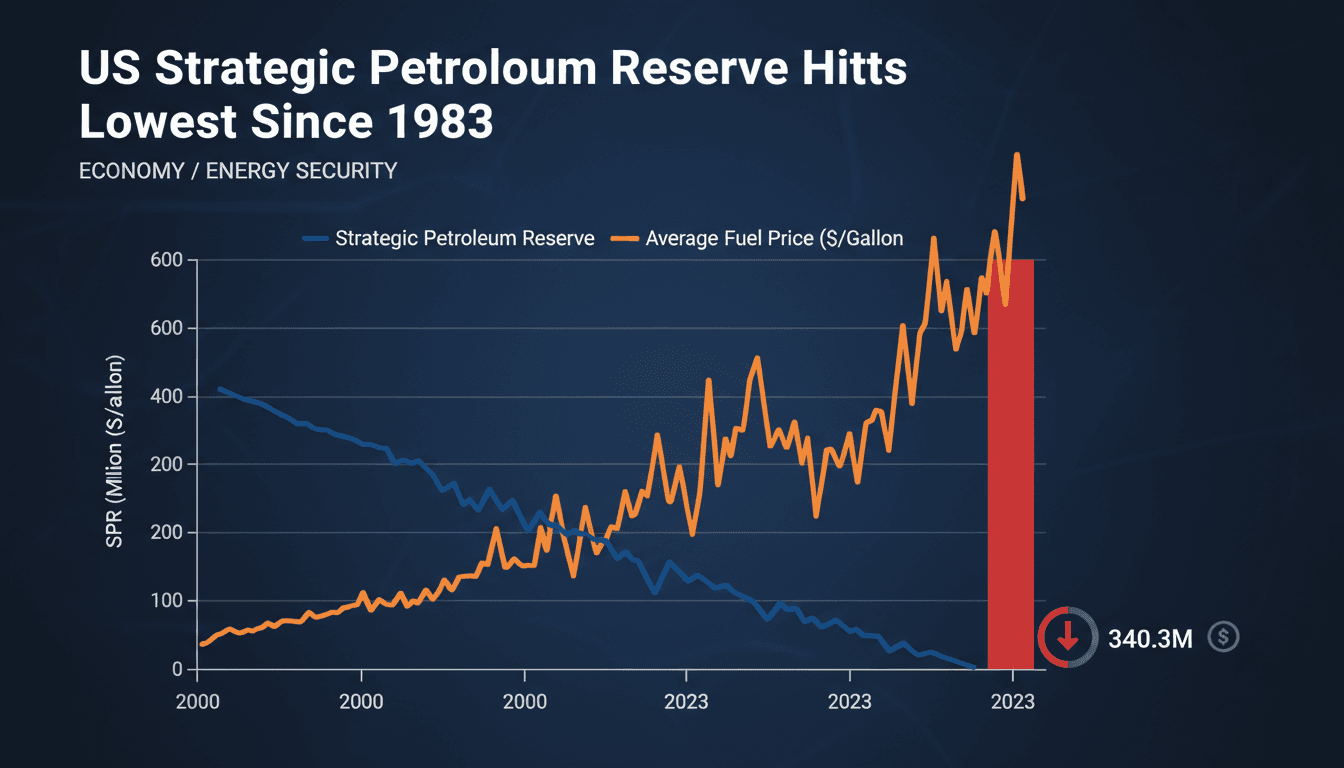
Here's what it means for you.
The U.S. Strategic Petroleum Reserve (SPR) has reached a critical low, which could have significant implications for energy security and fuel prices. As the government continues to release oil to combat rising costs, the depletion of reserves raises concerns about the nation's ability to respond to future energy crises. This situation may prompt policymakers to reconsider current energy strategies and explore alternative energy sources. The current reserve level of 340.3 million barrels is the lowest since 1983, highlighting vulnerabilities in the U.S. energy landscape. Stakeholders across the energy sector will be closely monitoring developments as the situation evolves.
What happened
The U.S. Strategic Petroleum Reserve has fallen to 340.3 million barrels, marking its lowest level since 1983. This decline is a result of ongoing oil releases aimed at addressing rising fuel prices, which have been influenced by geopolitical tensions. The last time the reserve was at such a low level was during the Reagan administration, underscoring the significance of this moment.
The current administration's strategy involves releasing oil to mitigate the impact of escalating fuel costs on consumers and businesses. As the SPR serves as a critical resource during energy crises, its depletion raises alarms about the nation's energy security.
The Context
The SPR was established to provide emergency oil supplies in times of crisis, making its current low levels particularly concerning. The ongoing geopolitical tensions have exacerbated the situation, leading to increased scrutiny of U.S. energy policies and their effectiveness in stabilizing fuel prices. The Trump administration's plan to release 172 million barrels is part of a broader strategy to manage these challenges.
As the U.S. navigates this complex energy landscape, the implications of low reserve levels could influence future policy decisions. Stakeholders, including government officials and energy companies, are likely to engage in discussions about the need for alternative energy strategies to ensure stability in fuel supply and prices.
Takeaway
The depletion of the SPR may lead to further releases of oil as the government seeks to combat rising prices. Observers should watch for potential impacts of geopolitical events on U.S. oil supply and pricing dynamics. The current situation may prompt a reevaluation of energy policies, with an increased focus on alternative energy sources to enhance resilience.
As the U.S. faces ongoing energy challenges, the low SPR levels could catalyze significant policy shifts aimed at ensuring long-term energy security and price stability.
Capitol Hill news, legislation, and policy insight.
"The Hill specializes in U.S. politics and policy, with a focus on Capitol Hill developments and a reputation for insider reporting."
— A47 Editor
US strategic oil reserve hits lowest level since 1983
The U.S. Strategic Petroleum Reserve (SPR) has reached its lowest level since 1983, now standing at 340.3 million barrels, according to newly released federal data. This significant decline highlights the challenges faced by the U.S. in maintaining i...
Oil, metals, and agriculture: supply/demand headlines, OPEC chatter, inventories, and price action.
"Solid tape for energy and metals traders tracking macro and micro catalysts."
— A47 Editor
Stocks of oil in US Strategic Petroleum Reserve falls to lowest since 1983
The stocks of oil in the US Strategic Petroleum Reserve have fallen to their lowest level since 1983, reflecting a significant decrease in the nation's emergency oil supply. This decline raises concerns about the country's ability to respond to poten...
Oil, metals, and agriculture: supply/demand headlines, OPEC chatter, inventories, and price action.
"Solid tape for energy and metals traders tracking macro and micro catalysts."
— A47 Editor
US emergency oil reserve drops to lowest since 1983
The U.S. emergency oil reserve has dropped to its lowest level since 1983, reflecting a significant decline in available crude oil supplies amid rising fuel prices. This situation has prompted the government to consider releasing 172 million barrels ...
Global markets, investing, and macroeconomics from a premier financial newsroom.
"Bloomberg is respected for in-depth financial reporting and data-driven analysis."
— A47 Editor
US Oil Reserve Hits 43-Year Low as Trump Aims to Tame Prices
The U.S. emergency supply of crude oil has reached its lowest level since 1983, as the Trump administration prepares to release 172 million barrels to combat rising fuel prices exacerbated by the ongoing conflict in Iran.